American Manufacturers Explore Recycled Component Sourcing for Legacy PC Builds in Midwest Facilities
Sage Schulz · Jul 18, 2026
American Manufacturers Explore Recycled Component Sourcing for Legacy PC Builds in Midwest Facilities
Facilities across the Midwest have begun systematic tests of recycled component sourcing to support legacy PC builds, with operations centered in states like Michigan, Ohio, and Illinois. These efforts focus on older hardware platforms that remain in use for specialized applications where modern replacements fall short. Data from industry tracking shows increased activity in component recovery programs since early 2025, driven by supply constraints on certain discontinued parts.
Regional Testing Programs Underway
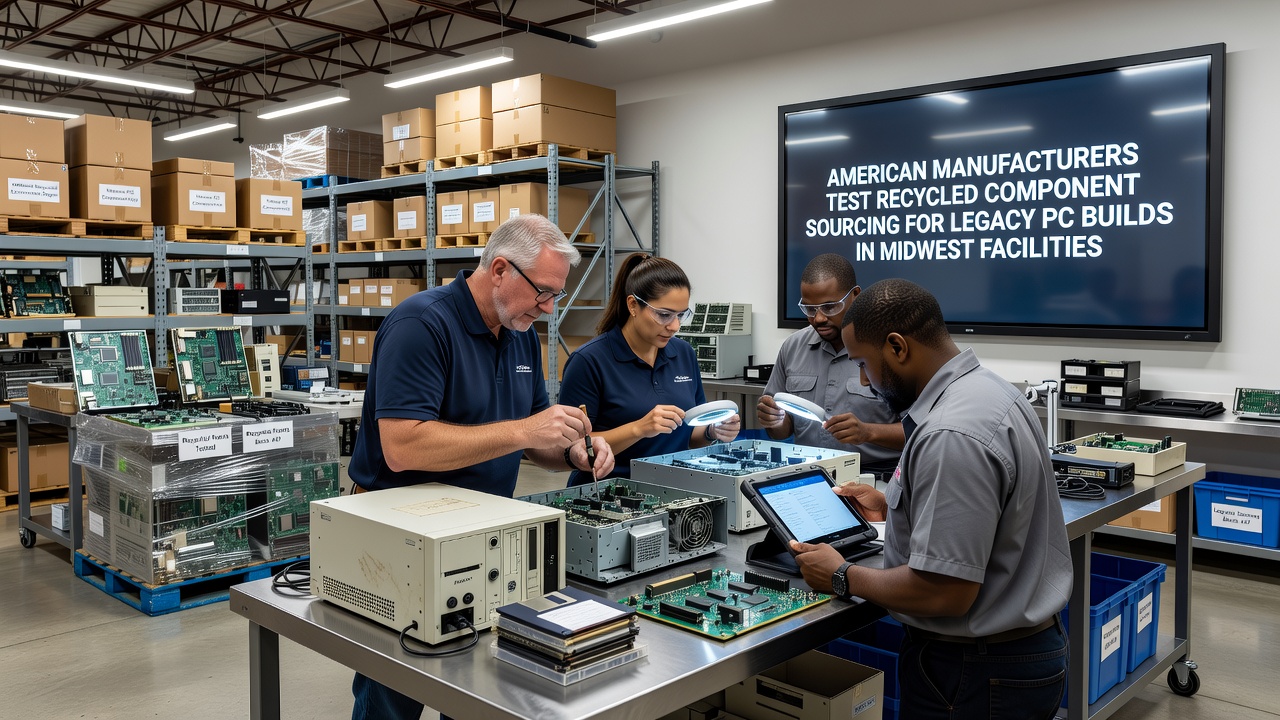
Manufacturers in Detroit and Cleveland areas have set up dedicated lines to evaluate reclaimed motherboards, power supplies, and storage units pulled from decommissioned systems. Workers sort materials through established recycling streams, then test each part against original specifications before integration into new builds. According to reports compiled by the U.S. Environmental Protection Agency, electronics recovery volumes in the Great Lakes region rose 18 percent between 2024 and 2025.
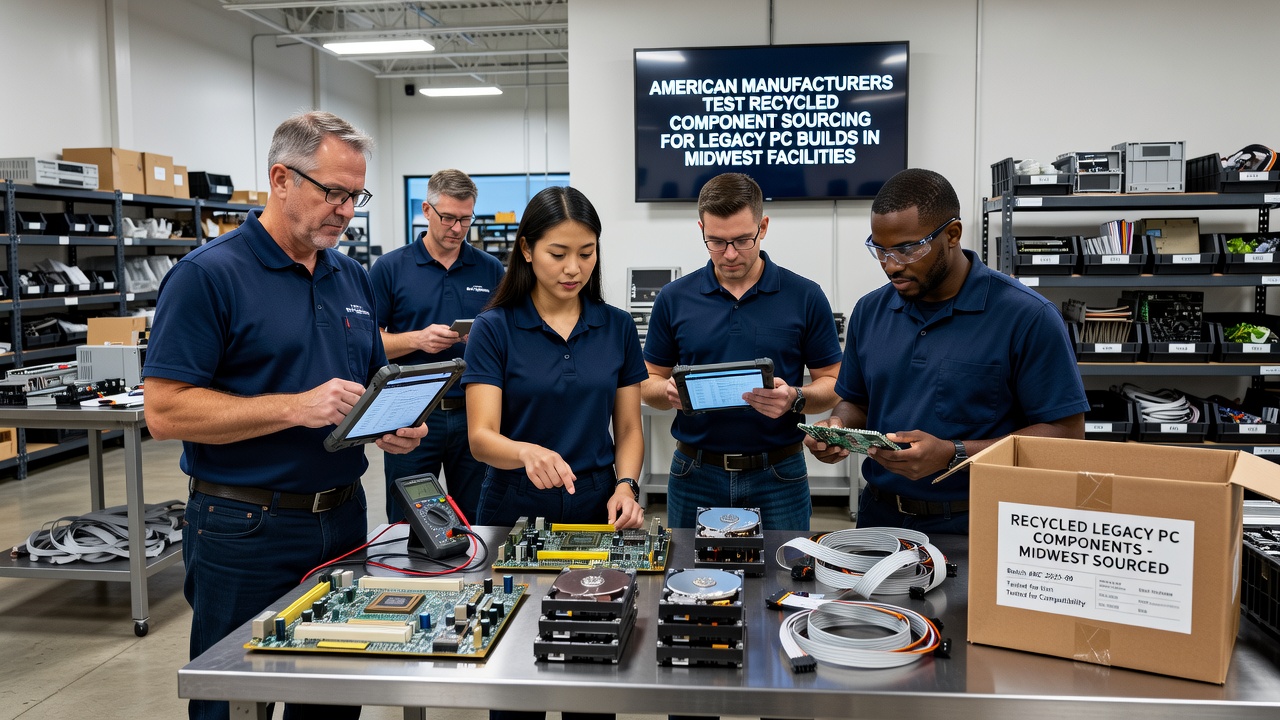
Testing protocols emphasize compatibility verification for systems running legacy operating environments and specialized software. Engineers measure thermal performance, signal integrity, and power draw on each reclaimed unit, logging results in centralized databases shared among partner facilities. Plants in Indiana have reported successful integration rates above 70 percent for certain processor generations after applying updated firmware patches developed in-house.
Supply Chain Adjustments and Material Flows
Suppliers coordinate with municipal recycling centers and corporate IT asset disposition firms to secure steady inflows of usable components. Logistics teams track shipments through standardized manifests that detail part origin, condition grades, and refurbishment history. This approach reduces reliance on overseas sourcing for older inventory while meeting domestic demand from sectors such as manufacturing automation and archival data processing.
Facilities have adopted modular testing stations that allow rapid assessment of multiple component types in parallel. One Ohio plant processes over 2,000 units monthly, routing functional parts to assembly areas and directing non-viable materials to certified downstream recyclers. European Commission circular economy directives have influenced some documentation standards adopted by these Midwest operations, providing frameworks for traceability that align with international best practices.
Technical Challenges in Component Validation
Variability in part condition remains the primary hurdle, as age-related degradation affects performance consistency across batches. Technicians apply accelerated stress tests and extended burn-in periods to identify units likely to fail under sustained loads. Research from Midwest university engineering departments indicates that pre-screening with non-destructive imaging techniques can improve yield by identifying micro-cracks before full assembly.
Firmware compatibility presents another layer of complexity when integrating recycled controllers with modern BIOS revisions. Teams develop custom flash routines that preserve original feature sets while addressing known security vulnerabilities in older chipsets. Collaboration with component manufacturers has produced updated microcode packages released in July 2026 that extend support windows for several legacy platforms.
Industry Data and Adoption Metrics
Trade association surveys reveal that 42 percent of participating Midwest electronics firms now maintain at least one active recycled-component pilot program. These initiatives track metrics including mean time between failures and total cost of ownership compared with new-part equivalents. Figures released by the Institute of Scrap Recycling Industries show steady growth in domestic electronics feedstock recovery, supporting broader manufacturing resilience goals.
Training programs at community colleges in the region have expanded to include certification tracks focused on electronics refurbishment and quality assurance. Graduates enter facilities equipped with skills in diagnostic software and reverse-logistics documentation, contributing to standardized processes across multiple sites.
Conclusion
Midwest manufacturing sites continue refining their approaches to recycled component integration for legacy PC systems, with ongoing data collection guiding process improvements. The combination of regional recovery networks, technical validation methods, and cross-border standards alignment has established measurable pathways for sustaining older hardware fleets. Additional facilities plan expanded testing capacity through the remainder of 2026 based on performance benchmarks accumulated to date.