American Universities Launch Dedicated Labs for Testing Latency in Wireless Peripherals Used Across Various Gaming Platforms
Uma Carter · Jun 6, 2026
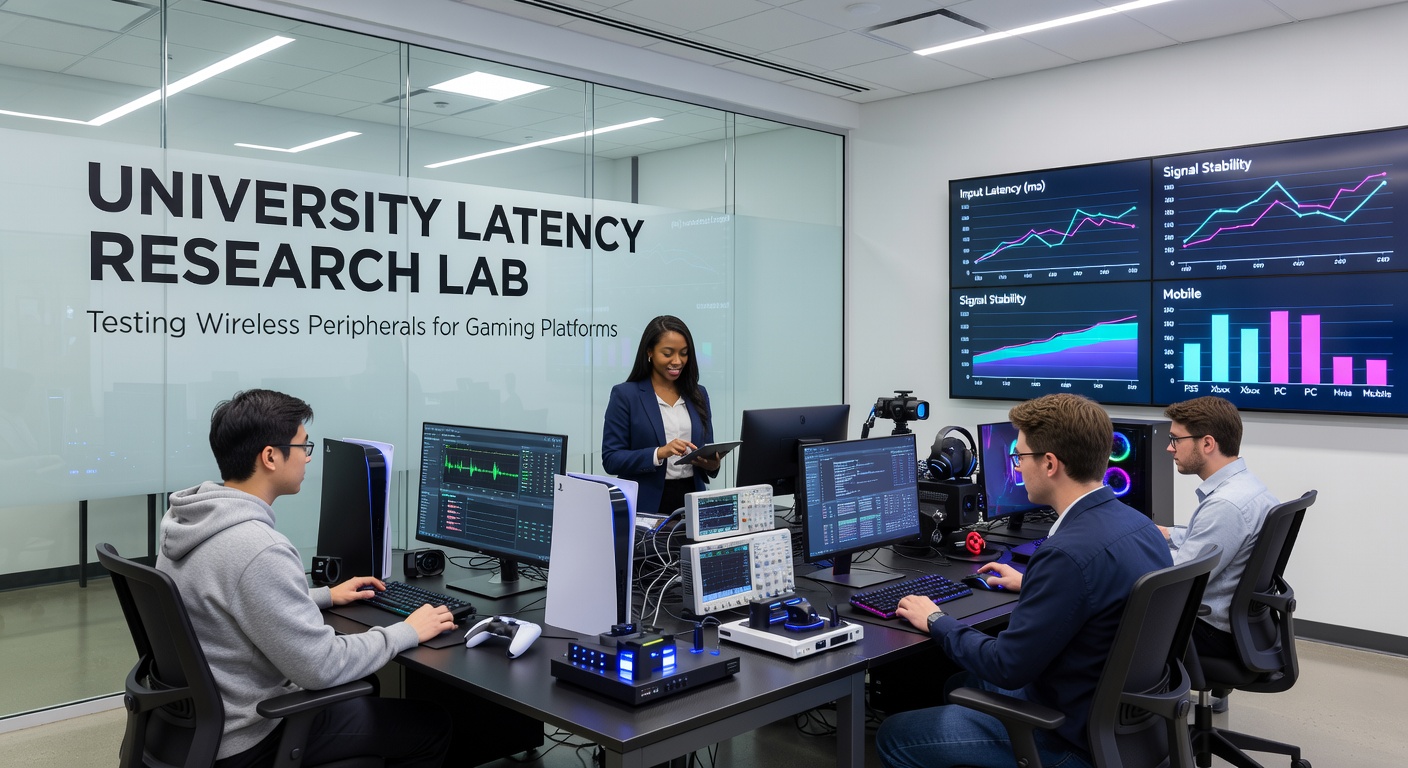
American Universities Launch Dedicated Labs for Testing Latency in Wireless Peripherals Used Across Various Gaming Platforms
Several prominent American universities have opened specialized laboratories dedicated to measuring latency in wireless peripherals such as controllers, mice, keyboards, and headsets that operate across PC, console, and mobile gaming platforms, and these facilities address growing demands for precise performance data in competitive and casual environments alike.
Background on Wireless Peripherals in Gaming
Wireless technologies including 2.4 GHz proprietary protocols, Bluetooth variants, and emerging Wi-Fi 6 implementations have become standard in gaming hardware, yet they introduce variable delays that affect input registration and overall responsiveness, while researchers have documented these issues through controlled experiments that compare wired baselines against wireless setups on devices from manufacturers like Logitech, Razer, and Sony.
Data from industry reports show that latency variations range from under 5 milliseconds in optimized 2.4 GHz systems to over 20 milliseconds in crowded Bluetooth environments, and this range influences player performance in fast-paced titles across platforms where timing precision matters most.
University Initiatives and June 2026 Developments
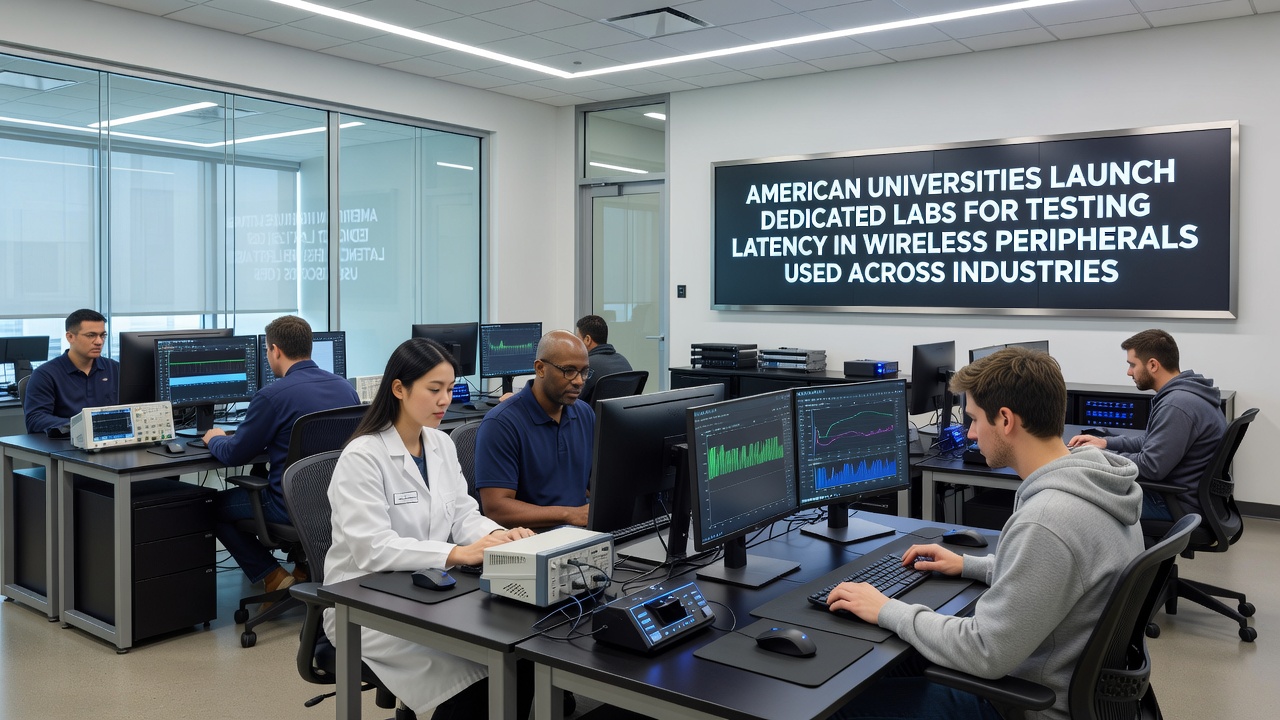
Institutions such as the University of Michigan, Stanford University, and the Georgia Institute of Technology have each established dedicated latency testing labs equipped with high-speed oscilloscopes, signal analyzers, and multi-platform test rigs that simulate real-world conditions on Windows PCs, PlayStation 5, Xbox Series X, Nintendo Switch, and Android or iOS devices, and these labs began full operations with initial benchmark releases scheduled around June 2026.
Teams at these sites employ standardized protocols that capture end-to-end input lag from peripheral activation through system processing to on-screen feedback, while collaborations with hardware vendors provide access to pre-release firmware for iterative testing cycles that refine connection algorithms.
Testing Methodologies Across Platforms
Lab procedures involve synchronized capture systems that record timestamped events from wireless signals, game engine responses, and display outputs, and researchers apply consistent environmental variables including interference from other devices, distance variations, and battery levels to generate comparable datasets.
Tests on console platforms focus on controller polling rates and adaptive frequency hopping, whereas PC evaluations examine mouse and keyboard inputs through USB receiver configurations, and mobile assessments track touch-integrated peripherals alongside Bluetooth gamepads under varying network loads.
- High-resolution timing equipment measures intervals down to the microsecond level
- Software tools log frame-by-frame data during scripted gameplay sequences
- Statistical analysis identifies patterns in latency spikes tied to specific hardware combinations
One study revealed consistent advantages for 2.4 GHz dongles over Bluetooth in multi-device households, while another highlighted platform-specific optimizations that reduce average lag by up to 30 percent when firmware updates address known bottlenecks.
Industry Collaborations and Data Applications
University labs partner with gaming associations and component suppliers to share anonymized findings that inform product development cycles, and these partnerships extend to regulatory considerations around spectrum allocation for consumer wireless devices, with references drawn from bodies such as the IEEE for technical standards and the Entertainment Software Association for market usage statistics.
Findings from these centers feed into broader research on accessibility features, where reduced latency supports adaptive controllers for players with motor impairments, and they also contribute to esports training protocols that rely on equipment performance metrics for fair competition standards.
Future Directions in Latency Research
Expansion plans include integration of AI-driven predictive models that anticipate latency under dynamic conditions, and cross-institutional data sharing networks aim to build comprehensive databases covering hundreds of peripheral models tested through 2027 and beyond.
Academic teams continue to refine measurement techniques that account for emerging standards such as ultra-wideband connectivity, while maintaining focus on backward compatibility with existing gaming ecosystems that span multiple generations of hardware.
Conclusion
American university labs focused on wireless peripheral latency have created systematic frameworks for evaluating performance across diverse gaming platforms, and their outputs provide objective benchmarks that manufacturers, developers, and players can reference when selecting or optimizing equipment, with ongoing work scheduled through June 2026 and subsequent periods ensuring continued relevance as wireless technologies evolve.