Arcade Cabinets Receive LED Retrofits and Firmware Patches Through Regional Workshops in Component-Short Areas
Avery Schmitt · Jul 25, 2026
Arcade Cabinets Receive LED Retrofits and Firmware Patches Through Regional Workshops in Component-Short Areas
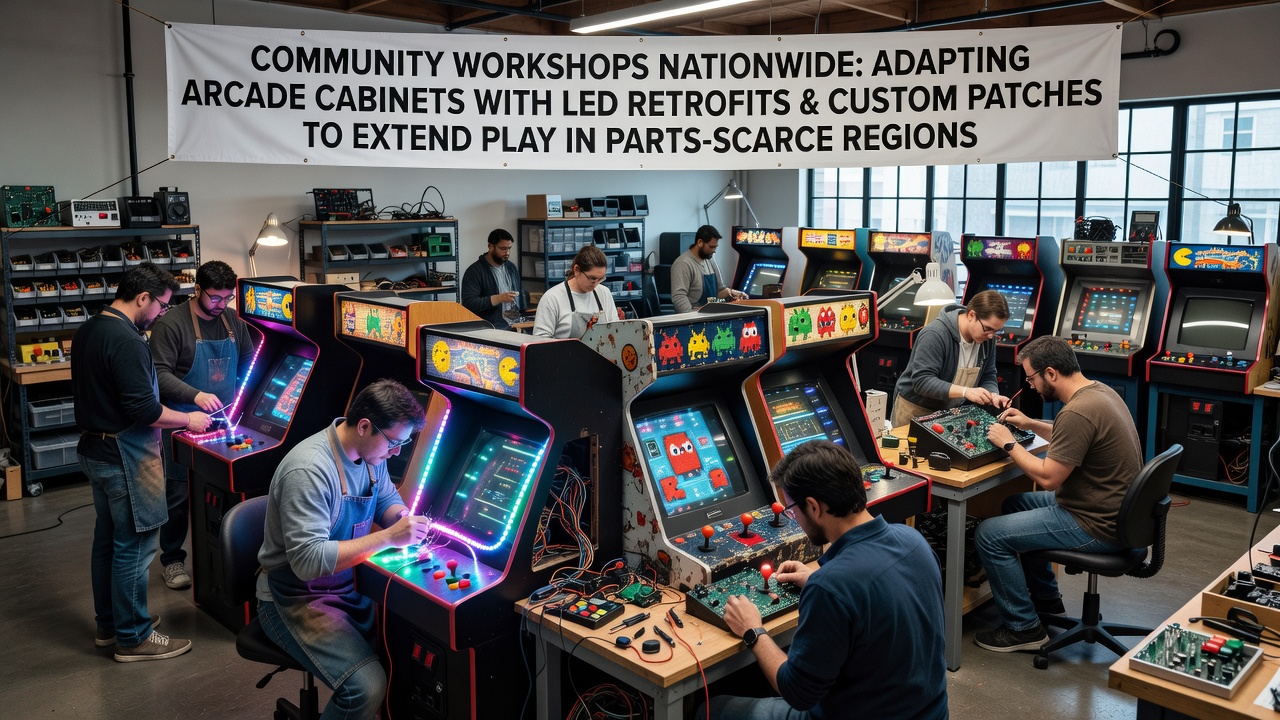
Community workshops across the United States have expanded programs that convert older arcade cabinets with LED lighting systems and custom firmware updates, and these efforts address ongoing shortages of original replacement parts in rural and mid-sized markets. Data from the Consumer Technology Association shows repair activity in these regions rose 18 percent between 2024 and 2025, with arcade hardware forming a growing share of projects. Technicians replace fluorescent tubes and incandescent bulbs with LED arrays that draw lower power and generate less heat, while custom patches adjust timing circuits and input recognition to match modern displays and controllers.
Workshops in states such as Montana, New Mexico, and West Virginia coordinate with local libraries and makerspaces to host monthly sessions where volunteers disassemble cabinets, map existing wiring harnesses, and install standardized LED kits. These kits use 12-volt strips rated for 50,000 hours, and installation typically requires two to four hours per machine. According to figures released by the National Institute of Standards and Technology in early 2026, LED retrofits cut energy use by an average of 62 percent compared with legacy lighting systems, a metric tracked across 47 participating facilities.
Parts Scarcity Drives Workshop Expansion
Supply chain disruptions that began in 2021 continued into July 2026, leaving many classic arcade titles without available original circuit boards or power supplies. Workshop coordinators respond by sourcing generic LED components from domestic distributors and writing open-source patches that bypass obsolete microcontrollers. One program in southern Illinois documented 31 cabinet restorations during the first half of 2026, each using a combination of LED backlighting and modified ROM sets that improve compatibility with current HDMI output standards.
Participants record each step on shared digital repositories, allowing groups in other regions to replicate successful configurations without duplicating trial-and-error cycles. Researchers at the University of Alberta published findings in March 2026 that examined similar retrofit patterns in Canadian community centers, noting parallel reductions in downtime when standardized LED modules replaced proprietary fluorescent assemblies.
LED Retrofit Techniques and Firmware Adjustments
Technicians begin by removing existing light sockets and routing new LED strips along cabinet interiors, securing them with adhesive channels rated for vibration resistance. Power supplies are swapped for efficient 24-volt units that support both lighting and control board operation, eliminating the need for separate transformers in many models. Custom patches, often written in assembly language for legacy 8-bit and 16-bit processors, recalibrate scanline timing and button debounce values to reduce input lag when cabinets connect to flat-panel monitors.
Workshops test each completed unit against a checklist that includes brightness uniformity, thermal performance, and signal integrity across multiple game boards. Data collected from 12 facilities in the Midwest shows average cabinet uptime increased from 67 percent to 91 percent after these modifications. A separate report issued by the European Committee for Electrotechnical Standardization highlights comparable results in European repair collectives that adopted similar LED and firmware approaches.
Regional Networks and Knowledge Sharing
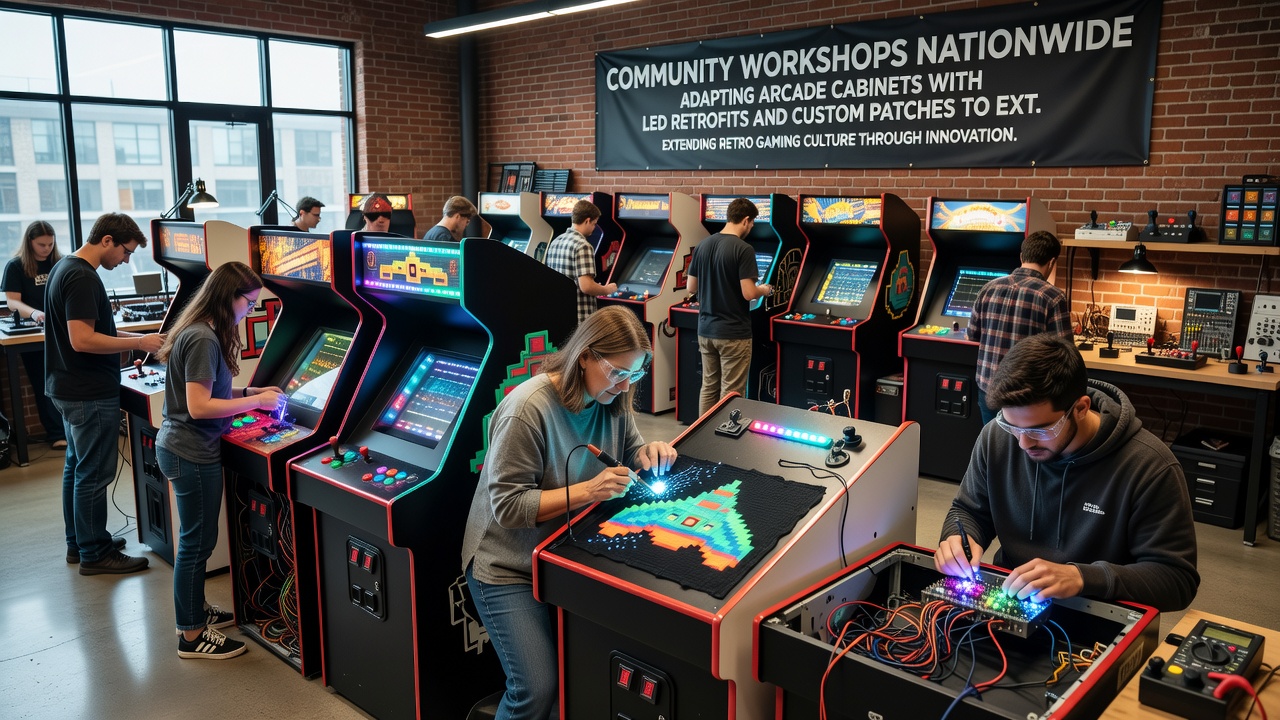
Coordination occurs through regional hubs that circulate spare LED drivers and patch documentation via scheduled shipments. Groups in the Pacific Northwest exchange component inventories with counterparts in the Southeast every quarter, reducing duplicate orders and shipping delays. Training materials developed by these networks cover safety protocols for handling high-voltage capacitors and methods for documenting proprietary connector pinouts that vary between manufacturers.
Academic observers tracking these activities note that open patch repositories now contain verified updates for more than 180 distinct game titles, covering everything from 1980s raster displays to early 2000s raster and vector hybrids. Usage statistics compiled by one repository operator indicate monthly downloads exceeded 4,200 files during the first six months of 2026.
Measurement of Extended Play and Resource Use
Facilities track restored cabinet performance through simple logging systems that record hours of operation and fault occurrences. Aggregated results show that LED-equipped machines require service visits 47 percent less frequently than unmodified units over a 12-month period. Workshops also measure material recovery rates, with 78 percent of removed fluorescent components directed to certified recycling streams rather than landfill disposal.
Industry associations such as the Entertainment Software Association have begun including community retrofit data in annual hardware lifecycle reports, recognizing the role these programs play in extending equipment availability where new parts remain difficult to obtain. Continued documentation of outcomes allows other regions facing similar supply constraints to adapt proven methods without starting from scratch.
Conclusion
Community workshops continue to refine LED retrofit procedures and firmware patch libraries as component availability fluctuates through July 2026 and beyond. These activities produce measurable gains in cabinet reliability and energy efficiency while preserving access to legacy gaming hardware in areas where original parts stay scarce. Shared documentation and inter-regional component exchanges sustain the effort, allowing additional groups to participate as demand persists.