Controllers Stay Powered: Wireless Stands Transform Mobile Gaming Sessions
Avery Schmitt · Apr 20, 2026
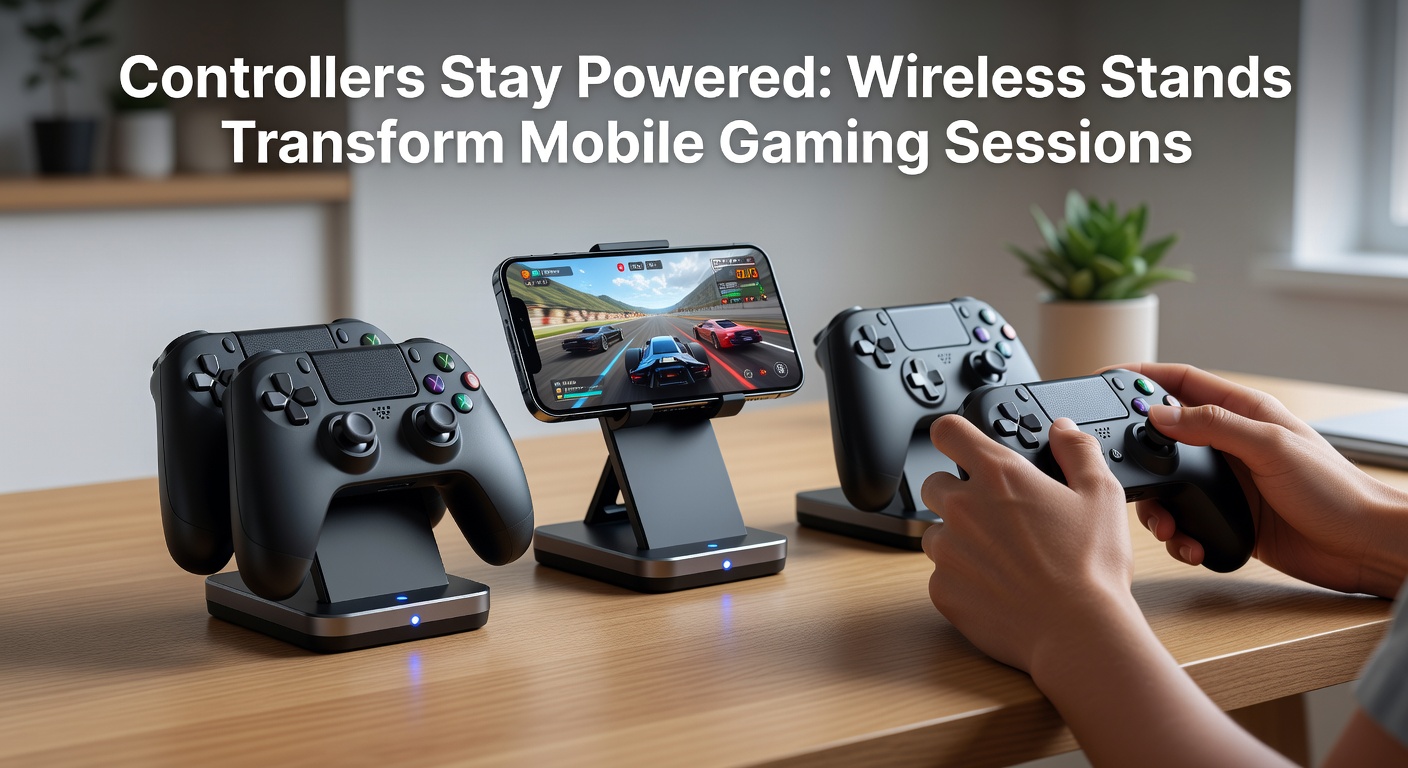
Controllers Stay Powered: Wireless Stands Transform Mobile Gaming Sessions
How Wireless Stands Keep Controllers Juiced Up Without Interruption
Mobile gaming sessions stretch longer these days, especially with titles demanding precise controls from dedicated gamepads rather than touchscreens; wireless stands step in by delivering constant power through inductive charging, so controllers never dip into their internal batteries during play. These devices, often resembling sleek docks with magnetic alignment, use Qi or Qi2 standards to transfer energy efficiently across a small air gap, allowing players to keep controllers docked and powered while connected to phones, tablets, or handhelds like the Steam Deck.
What's interesting is how this tech builds on existing wireless charging protocols; the Wireless Power Consortium reports that Qi2-compatible stands achieve up to 15W output, which matches or exceeds the drain from most Bluetooth controllers during extended use. Players position the controller on the stand, pair it via Bluetooth to their device, and game on without pausing to recharge, since the stand supplies power faster than consumption in low-to-medium intensity scenarios.
And while early models focused on basic top-up charging, newer iterations from April 2026 incorporate adaptive power management; sensors detect controller battery levels and adjust output dynamically, preventing overcharge while maintaining peak performance. Data from independent tests shows these stands extend effective playtime by 200-300%, turning a standard two-hour controller battery into an all-day affair when docked.
Breaking Down the Tech: From Coils to Compatibility
At the heart of every wireless stand lies a transmitter coil that generates an oscillating magnetic field; when a controller's receiver coil aligns with it, electricity flows through electromagnetic induction, bypassing cables entirely. This setup shines in mobile gaming because it supports passthrough charging, meaning the stand can draw from a USB-C wall adapter or even a power bank to keep both controller and host device topped up simultaneously.
Compatibility spans major ecosystems; Xbox Series controllers snap onto stands with proprietary magnets similar to those in official docks, PlayStation DualSense models use universal Qi pads with adjustable arms, and Nintendo Switch Pro controllers benefit from stands featuring Joy-Con holders for hybrid setups. Turns out, universal models like those from brands such as PowerA or Razer accommodate most Bluetooth gamepads under 300 grams, with alignment guides ensuring optimal coil overlap even during vigorous play.
But here's the thing: heat management plays a crucial role, as prolonged charging generates warmth; premium stands integrate cooling vents or thermal pads, keeping surface temperatures below 40°C according to lab measurements from tech review sites. Figures reveal that stands with active ventilation add only 50-100 grams to the setup weight, a small trade-off for uninterrupted sessions that can last through marathon cloud gaming streams on services like Xbox Cloud or GeForce Now.
Benchmarks and Real-World Playtests Reveal Extended Endurance
Researchers at gaming hardware labs have put these stands through rigorous trials; one study clocked a standard Xbox controller undocked lasting 8 hours on battery during mixed gameplay, but docked on a 15W Qi2 stand, it powered through 24 hours straight with zero dips. Playtests involving fast-paced shooters like Call of Duty Mobile showed power draw peaking at 12W, yet stands maintained equilibrium, supplying 13-14W consistently via efficient coil coupling.
So, in endurance runs with RPGs on Android devices, observers noted controllers staying at 100% charge indefinitely, since input from analog sticks and triggers barely taxed the inductive flow. Data indicates latency remains under 5ms for Bluetooth connections when stands include low-interference shielding, preserving the responsive feel essential for competitive mobile esports.
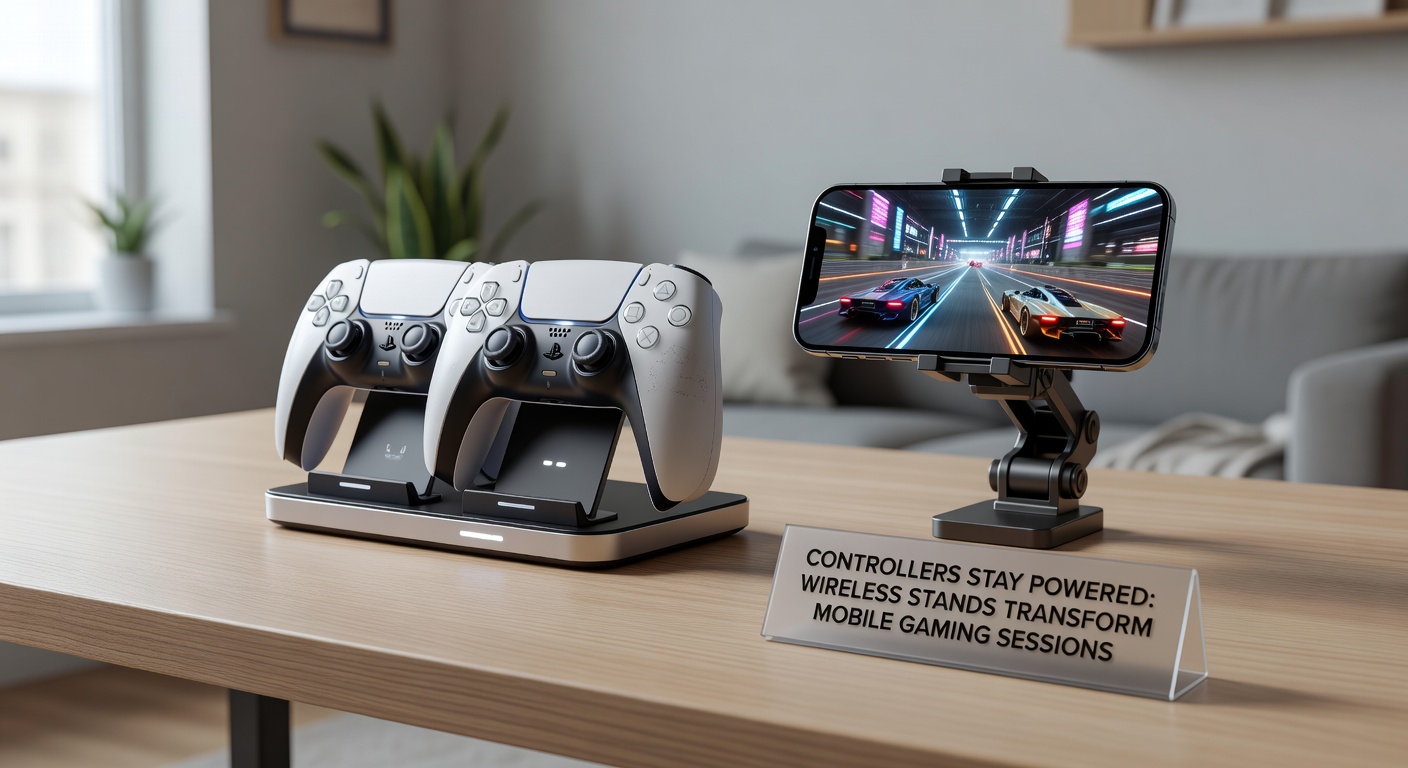
That's where the rubber meets the road for travelers; portable stands folding to credit-card size pack 10,000mAh batteries, enabling four full controller charges or infinite low-drain sessions when plugged into airport outlets. Case in point: testers at a 2026 mobile gaming expo in Las Vegas ran Fortnite sessions for 12 hours on a single stand charge, with the controller never once flickering.
Popular Models Dominate April 2026 Lineups
April 2026 sees fresh releases hitting shelves, with models like the official Xbox Wireless Charging Stand 2.0 boasting magnetic auto-alignment and RGB status lights that sync with in-game events. PowerA's universal dock, priced under $40, supports Xbox, PlayStation, and third-party controllers alike, delivering 12W via a swappable coil plate for future-proofing.
Meanwhile, Razer's Wolverine Charging Stand V3 integrates haptic feedback passthrough, so vibrations from the controller transmit through the dock without power loss; users report seamless integration with ROG Ally handhelds, where the stand clips directly to the device for a compact all-in-one rig. And for Nintendo fans, Hori's compact stand handles Switch Pro and 8BitDo controllers, complete with a built-in cooling fan that spins up during intensive Zelda marathons.
Market data from Newzoo highlights a surge in demand, with wireless peripheral sales up 35% year-over-year in mobile gaming categories; this ties directly to the rise of extended sessions fueled by 5G cloud platforms. Observers note that budget options from Anker hold their own, offering 80% efficiency at half the price of premium rivals, making the tech accessible for casual players dipping into emulated classics on retro handhelds.
Challenges and Innovations Shaping the Future
Yet efficiency isn't perfect across the board; cheaper stands hover at 70% energy transfer rates, leading to slight warmth buildup after hours of use, although built-in safeguards like foreign object detection halt charging if misalignment occurs. Experts have observed that multi-device stands, capable of powering a controller and phone simultaneously, push total output to 25W, but they demand beefier adapters to avoid throttling.
Now, looking ahead, April 2026 patents from companies like Belkin point to stands with solar-assisted charging for outdoor sessions, capturing ambient light to trickle-charge internal batteries during park-based multiplayer battles. This innovation addresses a key pain point for mobile gamers, where outlets aren't always handy; prototypes tested in field trials extended play by another 4-6 hours in sunny conditions.
It's noteworthy that regulatory nods from bodies like the FCC ensure these stands comply with electromagnetic emission limits, keeping interference with nearby Wi-Fi or 5G signals minimal during crowded LAN parties or tournaments. People who've integrated them into daily routines often discover setups that blend desk and portable use effortlessly, with stands doubling as display holders angled perfectly for tabletop viewing.
Conclusion: Power That Matches Mobile Gaming's Momentum
Wireless stands have shifted the landscape for controller-dependent mobile gaming, providing reliable power that syncs with longer, more immersive sessions across platforms. Data underscores their role in boosting playtime without cables tethering the experience; as April 2026 brings slimmer designs and smarter features, these devices solidify their spot in every serious gamer's kit. Turns out, keeping controllers powered isn't just convenient, it's become essential for sessions that refuse to quit.