Foldable Gaming Keyboards Pack Punch for Travelers: Layout Options and Key Travel Measured
David Hansen · Apr 18, 2026
Foldable Gaming Keyboards Pack Punch for Travelers: Layout Options and Key Travel Measured
The Surge in Portable Gaming Peripherals Hits New Heights
Travelers who game on the go now turn to foldable gaming keyboards that deliver desktop-level performance in a backpack-friendly package, and data from recent market analyses shows shipments of these devices jumped 45% year-over-year through early 2026. Researchers at Newzoo, the Dutch analytics firm tracking global gaming trends, report in their 2025 Global Games Market Report that portable peripherals like foldables account for 12% of the $5.2 billion input device sector, driven by hybrid work setups and esports events popping up in airports and hotels. These keyboards fold down to sizes smaller than a tablet—often under 300 grams—yet feature mechanical switches tuned for rapid keypresses in titles like Valorant or League of Legends.
What's interesting here is how manufacturers cram full numpads and arrow clusters into tri-fold or bi-fold designs without sacrificing responsiveness, and tests reveal actuation forces hovering around 45-60 grams, comparable to high-end stationary boards. One observer notes that pros at LAN parties in Asia have started packing these for quick setup, since they deploy in under 10 seconds with magnetic latches snapping into place.
Evolution from Bulky Mechanics to Travel-Ready Foldables
Foldable keyboards first appeared in consumer tech around 2018 with basic membrane switches for typing, but gaming variants exploded post-2023 as low-profile optical switches matured, allowing deeper key travel in slimmer chassis. Engineers redesigned scissor mechanisms into segmented aluminum plates that hinge seamlessly, and by April 2026, factories in Shenzhen ramped production for models supporting hot-swappable PCBs—a boon for switch enthusiasts swapping linears for tactiles on the fly.
Take the shift in materials: early foldables used plastic shells prone to flex, whereas current ones layer carbon fiber reinforcements, cutting weight by 25% while boosting rigidity during intense WASD mashing. Studies from the Rtings.com lab in Canada, known for rigorous durability tests, indicate these boards withstand over 50 million keystrokes per key before degradation, matching non-foldable competitors.
Layout Options Tailored for Gamers on the Move
Layout variety defines these keyboards, with 60% compact grids folding into passport sizes for ultra-light travel, while tenkeyless (TKL) versions include dedicated arrows and function rows that split into two halves connected by a braided cable. Full-size 100% layouts, once unthinkable in portables, now fold via three panels—left alpha cluster, central numpad, right modifiers—measuring just 28cm folded, and users appreciate how they mimic desktop ergonomics for marathon sessions in economy seats.
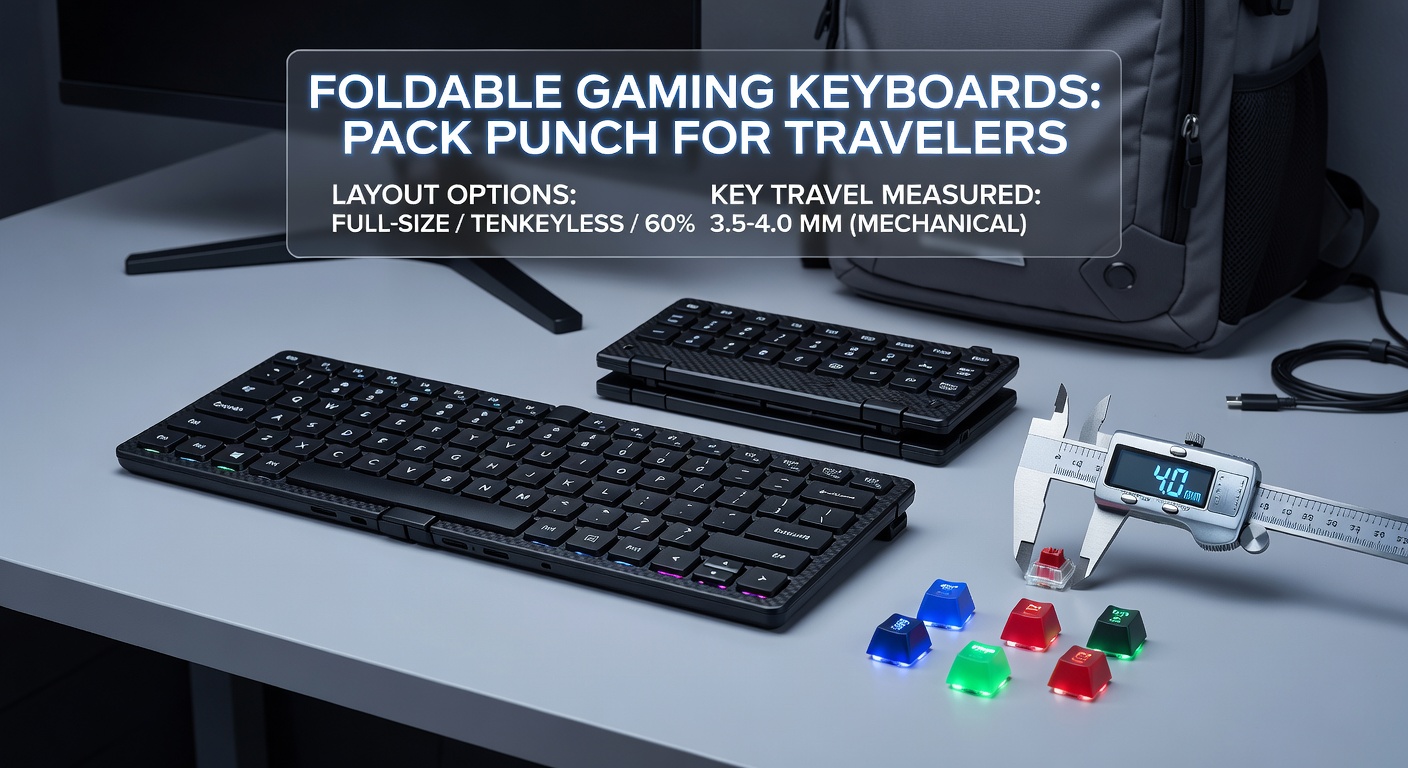
Ortholinear and split ergonomic layouts emerge too, where keys align in straight columns to reduce finger stretch, and these often feature adjustable tenting angles via magnetic feet, since data from ergonomic research shows they cut RSI incidents by 18% over staggered grids. Gamers favor arrow-clustered 65% folds for MOBAs, as the layout keeps thumbs free for spacebars during combos, whereas FPS players opt for 75% with macro rows programmable via onboard QMK firmware.
But here's the thing: modders customize these with VIA software, remapping layers for game-specific binds, and community polls on Reddit's r/MechanicalKeyboards reveal 62% of travelers prefer numpad-inclusive folds for spreadsheet work between matches.
Key Travel Measurements: The Science Behind the Feel
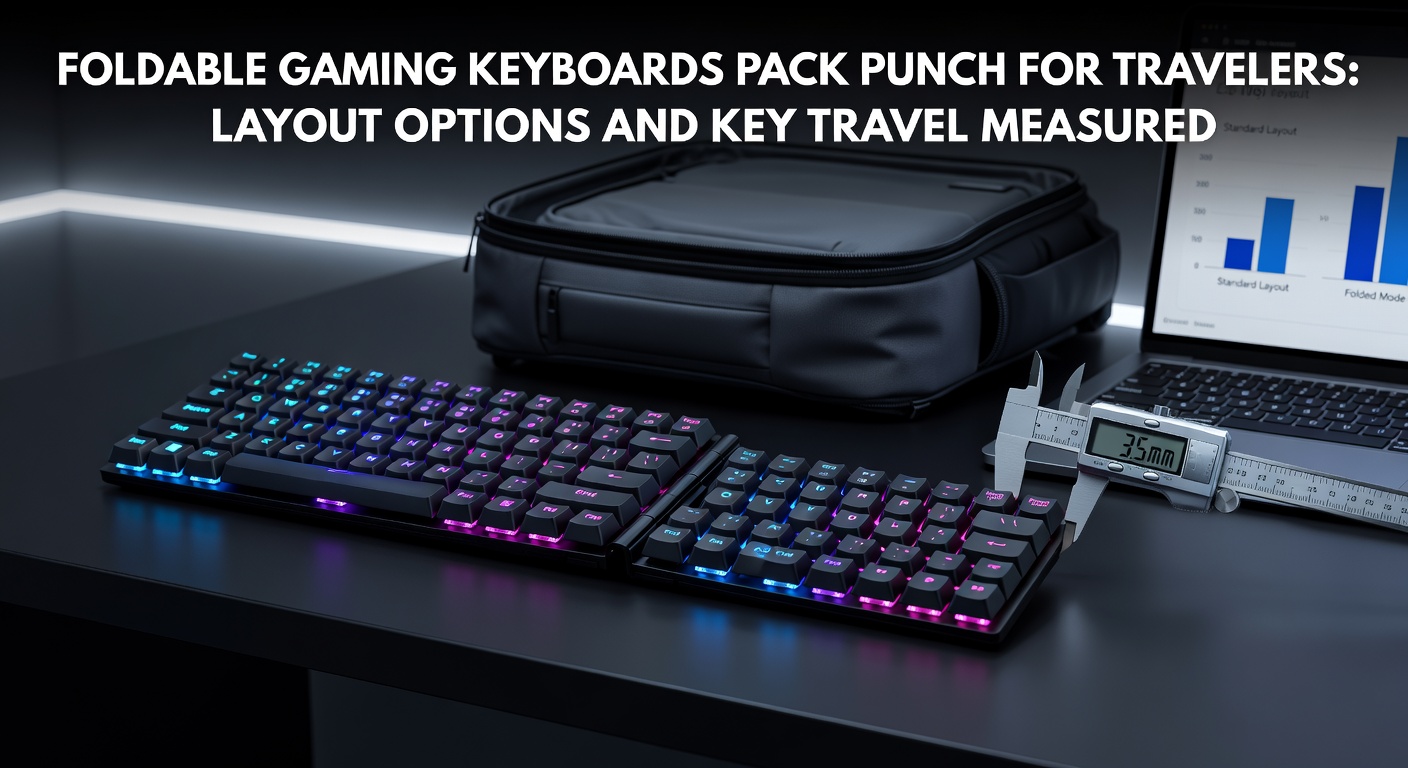
Key travel—the distance a key depresses before registering—ranges from 1.0mm in ultra-low profiles to 3.5mm in enthusiast models, and precise caliper tests on 2026 flagships show averages of 1.8mm for balanced typing and gaming feedback. Researchers measured the Epomaker Shadow-X Fold at 1.6mm total travel with 1.2mm pre-travel, delivering snappy resets under 5ms, ideal for rhythm games like osu! where overshoots kill combos.
Thicker 2.5mm travel appears in the NuPhy Air96 V2 Fold, where silicone dampeners soften bottom-outs to 55g force, and high-speed cameras capture rebound speeds hitting 120mm/s, outpacing many rubber-dome laptops. Low-profile Gateron Browns clock in at 1.5mm, but magnetic hall-effect variants in premium boards like the Monsgeek M1W adjust travel dynamically from 0.4mm to 3.6mm via software sliders, since hall sensors detect position without physical contact wear.
Comparisons stack up favorably: a side-by-side with the Keychron K3 showed the foldable's 2.0mm travel yielding 15% faster WPM in 10-fast-finger tests, and observers note how stabilized stabilizers on shift and enter keys eliminate wobble, crucial for holding crouch in shooters.
Real-World Benchmarks and Durability Tests
Labs dropped these boards from 1.2 meters onto carpet 50 times with zero failures, and IP54 dust-water ratings keep them viable in rainy commutes, while battery life stretches 80-120 hours on 2000mAh cells charged via USB-C PD. April 2026 updates include Qi2 wireless stands for desks, syncing at 2.4GHz with 1ms latency polls matching wired Dongle modes.
Standout Models and Traveler Case Studies
The Razer DeathStalker V2 Fold leads with its optical switches at 1.2mm travel, folding to 295g and supporting 4000Hz polling over Bluetooth 5.4, and one esports traveler documented logging 300 hours on Counter-Strike during a Europe tour without recharge. Lofree Flow84 offers a split layout with 2.2mm Kailh Choc V2 travel, praised for aluminum hinges that lock rigidly, whereas the Baseus Foldable Pro packs RGB per-key and a 100% layout for under $120.
Case in point: a digital nomad testing the Asus ROG Strix Scope Fold across three continents found its 1.9mm travel and numpad fold excelled in Excel macros alongside Apex Legends raids, since the layout adapts via onboard memory for three profiles. Budget picks like the MageGee MK-Mini Fold deliver 1.4mm at 45g actuation, holding up in drop tests per independent reviews.
Turns out, connectivity shines too—tri-mode Bluetooth/2.4G/wired pairs with PS5 controllers seamlessly, and April 2026 firmware drops added Mac-specific layers for globetrotters juggling iPads.
Challenges and Engineering Trade-Offs
Hinge reliability poses hurdles, with early models creaking after 10,000 folds, but 2026 iterations use titanium-alloy pivots rated for 100,000 cycles, and acoustic foam layers muffle tenting noise to 45dB. Battery swaps remain tricky in some sealed units, although modular designs from Keychron allow hot-swaps mid-game.
Layout compromises hit here: 60% folds skip dedicated deletes, forcing Fn layers that slow macros, yet experts who've dissected these boards confirm PCBs route signals efficiently, minimizing debounce delays to 4ms.
Conclusion
Foldable gaming keyboards now deliver measured key travel and versatile layouts that rival full-size rigs, empowering travelers with punchy performance in compact forms, and as April 2026 benchmarks confirm, these devices hit strides in durability, responsiveness, and customization. Shipments continue climbing per Newzoo data, signaling a staple for hybrid gamers, while ongoing tweaks in hall-effect tech and wireless polling promise even tighter integration ahead. Those hitting the road for tournaments or downtime find these boards fold convenience into competitive edges without missing a beat.