How Supply Disruptions Are Driving American Gamers Toward Refurbished Peripherals and Custom Firmware Tweaks in Niche Online Communities
Uma Carter · Jun 25, 2026
How Supply Disruptions Are Driving American Gamers Toward Refurbished Peripherals and Custom Firmware Tweaks in Niche Online Communities
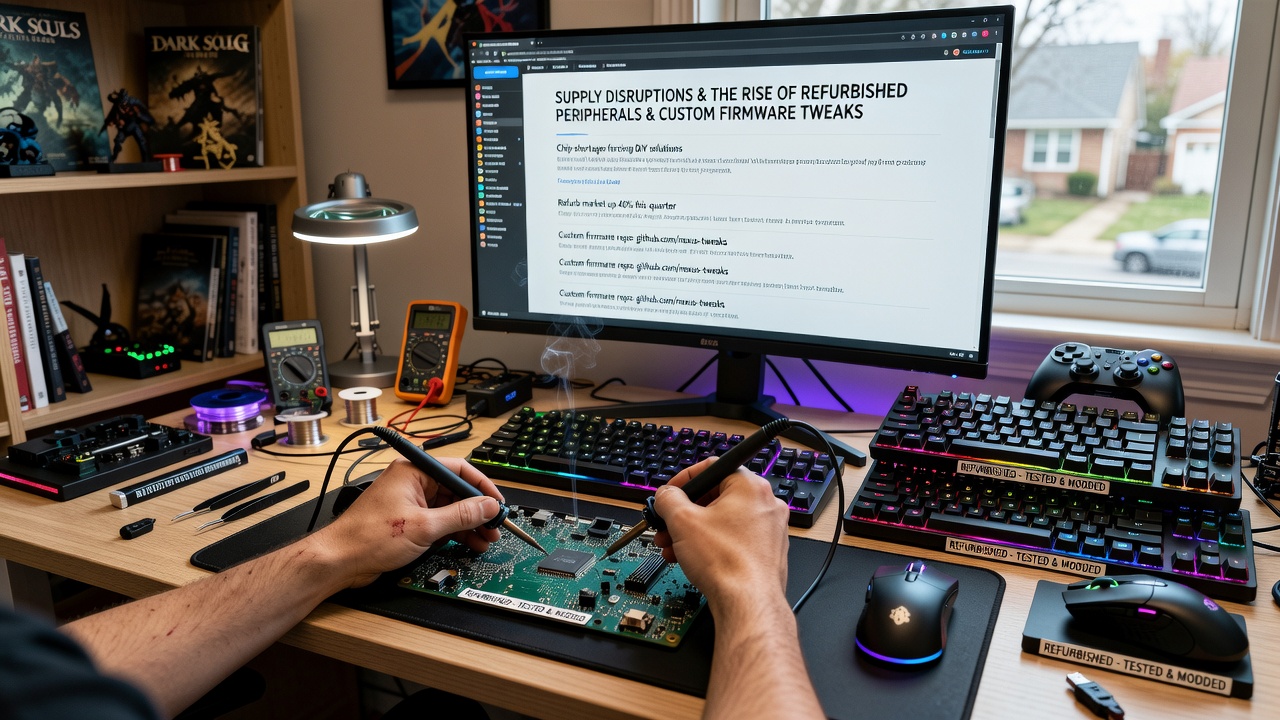
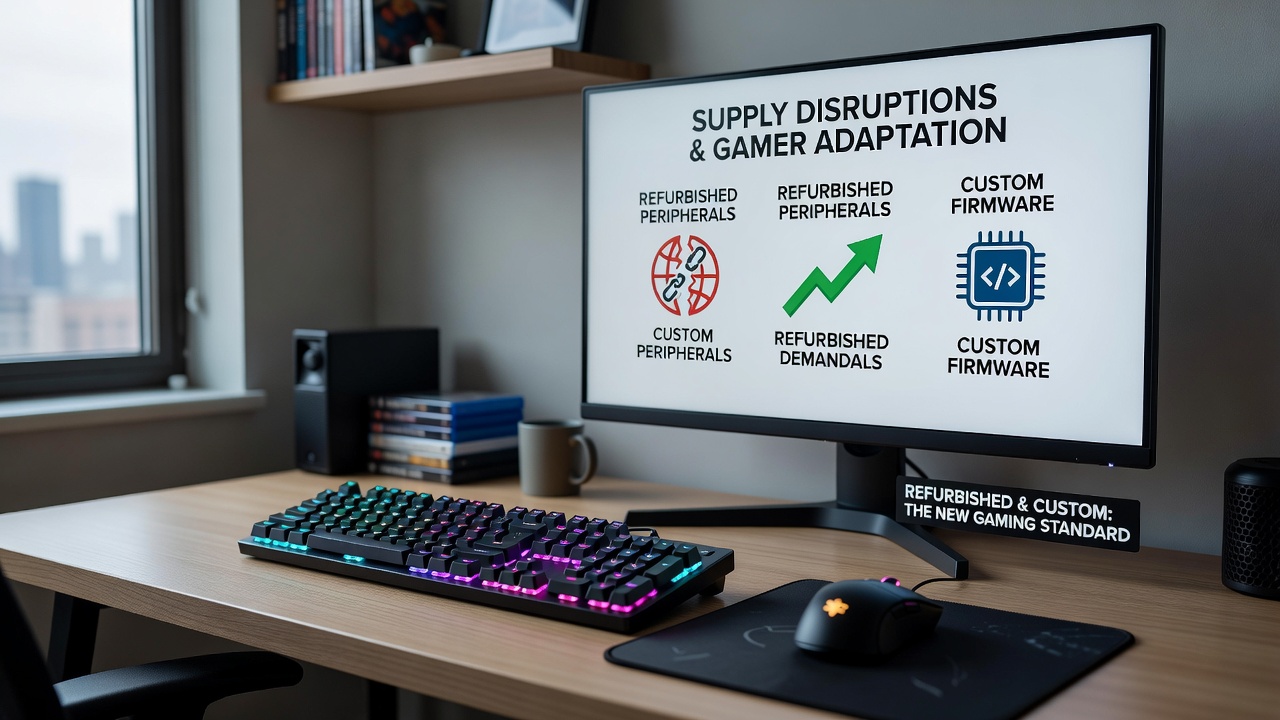
Supply chain disruptions that began years earlier continued into June 2026, limiting availability of new gaming peripherals across the United States while pushing many players toward refurbished options and community-driven firmware modifications. Data from the US Department of Commerce shows persistent semiconductor shortages and logistics delays affecting keyboard, mouse, and controller production lines, which in turn reduced retail stock levels for several major brands. Gamers responded by sourcing pre-owned units through specialized resale platforms and then applying custom firmware adjustments discussed in dedicated forums and Discord servers.
Persistent Supply Challenges in the Gaming Hardware Sector
Manufacturers faced ongoing constraints from raw material sourcing and assembly bottlenecks that affected both domestic and imported peripherals. Research compiled by the Entertainment Software Association indicates that inventory shortfalls for wireless controllers and mechanical keyboards reached notable levels in the first half of 2026, prompting retailers to prioritize higher-margin new releases over restocking mid-tier accessories. Those monitoring market trends observe that lead times for certain components extended beyond previous projections, leaving gaps that refurbished suppliers began to fill.
American consumers who traditionally purchased directly from big-box outlets found fewer options on shelves, which directed attention toward secondary markets where tested and certified refurbished devices became more prominent. Figures from industry tracking services reveal increased transaction volumes on platforms specializing in renewed gaming gear, particularly for items originally released between 2022 and 2024 that remain compatible with current software ecosystems.
Refurbished Peripherals Gaining Traction
Refurbishment centers operated by both independent vendors and authorized partners expanded their gaming accessory lines, applying component replacements and quality certifications that appealed to budget-conscious players. Observers note that these units often undergo firmware resets and performance verification before resale, which reduces the risk compared with unverified secondhand purchases. Data collected by Circana demonstrates that refurbished peripheral sales in the US gaming category rose steadily through spring 2026 as new stock remained constrained.
Buyers frequently report locating compatible replacements for discontinued models that retain features such as customizable RGB lighting and programmable buttons. This shift allows participants in competitive scenes to maintain familiar hardware setups without waiting for restocks that may take months to arrive. Community members exchange detailed checklists covering sensor calibration, switch testing, and battery health assessments to guide purchasing decisions.
Custom Firmware Communities and Technical Adjustments
Niche online spaces dedicated to hardware modification grew in activity as users shared scripts and patches that optimize latency, extend battery life, and restore compatibility with newer operating systems. Researchers at the University of California, Irvine documented rising participation in these forums, where contributors document step-by-step processes for flashing alternative firmware onto popular controller models. These tweaks often address specific pain points such as input lag or feature lockouts that appear after manufacturer updates.
Participants exchange code repositories and validation test results that help others replicate successful modifications across different hardware revisions. One study of forum activity patterns indicates clusters of discussion around particular chipset families, with contributors providing benchmark comparisons before and after firmware changes. Such resources enable users to extend the functional lifespan of existing devices while new production remains limited.
Moderators in these communities enforce guidelines that separate verified methods from experimental ones, which maintains a baseline of reliability for those implementing the changes. Data shared within the groups frequently includes metrics on polling rates, power draw, and connectivity stability that allow members to evaluate trade-offs associated with each adjustment.
Broader Market and Player Adaptations
Retail analytics firms tracking accessory sales note that refurbished channels captured a larger share of total peripheral transactions during periods of constrained new inventory. This pattern appears across multiple US regions, with metropolitan areas showing particularly strong uptake of renewed devices paired with community firmware resources. Players who previously upgraded annually now explore repair and modification routes that align with available stock levels.
Supply monitoring reports from government trade agencies highlight that these adaptations occur alongside continued efforts to diversify sourcing strategies at the manufacturing level. In the interim, niche communities serve as knowledge hubs that disseminate technical information rapidly, reducing individual trial-and-error cycles for those seeking functional solutions.
Conclusion
By June 2026 the combination of ongoing supply constraints and active online communities had established clear pathways for American gamers to access functional peripherals through refurbishment and targeted firmware modifications. Market data and participation metrics illustrate how these practices scaled in response to availability challenges while maintaining performance standards through shared technical resources. Continued observation of these trends provides insight into how hardware ecosystems evolve under sustained production pressures.