Inside the Workshops Where Hobbyists Modify Vintage Console Hardware for Modern Display Compatibility
Uma Carter · May 21, 2026
Inside the Workshops Where Hobbyists Modify Vintage Console Hardware for Modern Display Compatibility
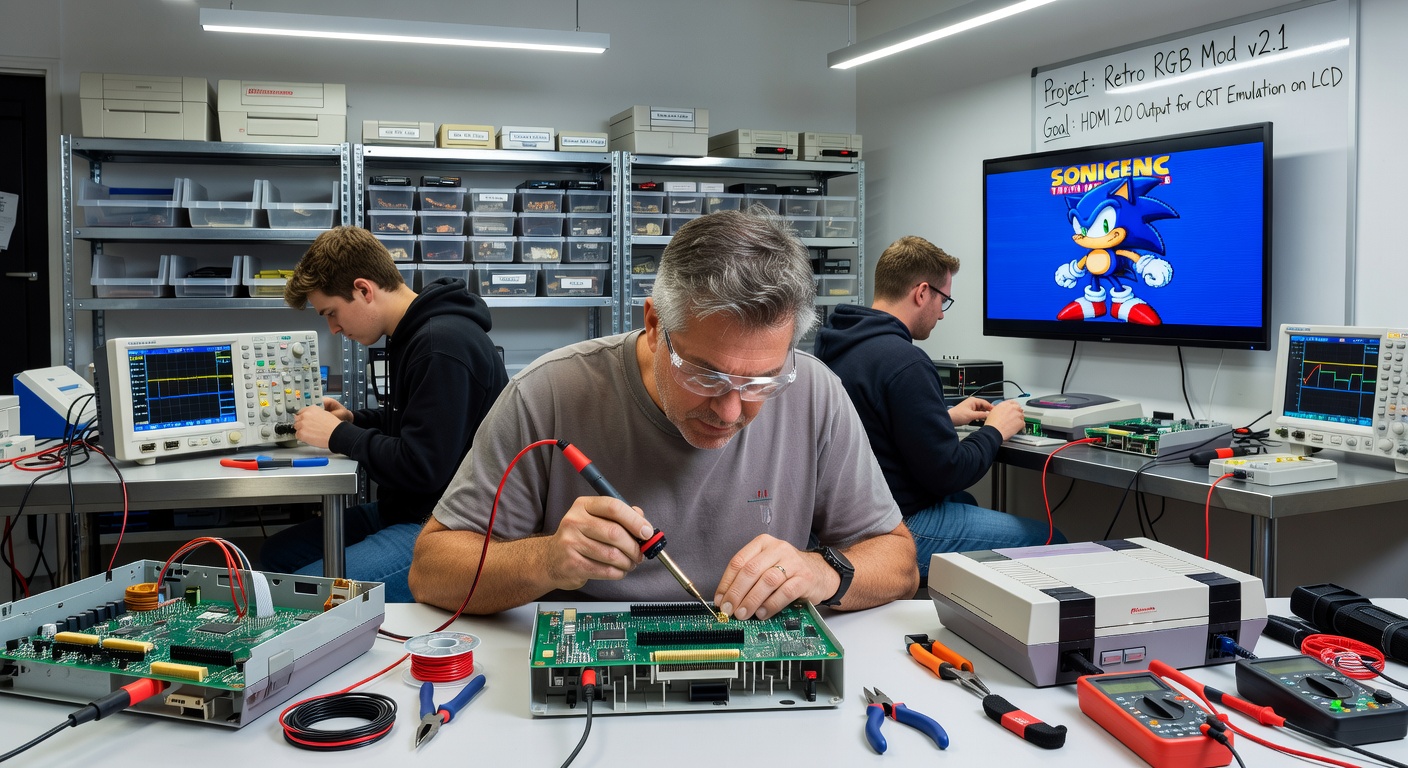
Workshops dedicated to retro console modifications have expanded steadily since the early 2010s as collectors and gamers seek ways to connect original hardware from the 1980s and 1990s to contemporary displays. These spaces combine electronics repair benches, oscilloscopes, and 3D printers with specialized kits that convert composite or RF signals into HDMI output while preserving the original timing and color palette of systems such as the Nintendo Entertainment System, Sega Genesis, and Atari 2600. Technicians in these environments typically begin each project by verifying the console’s motherboard revision and then install RGB bypass boards or line doublers that feed into HDMI encoders.
Core Modification Techniques Used in These Workspaces
One common approach involves installing a digital-to-analog-to-digital pipeline where the console’s native RGB signal travels through a custom board that adds proper sync stripping before an HDMI transmitter chip processes the data. Technicians often reference pinout diagrams published by hardware preservation groups to avoid damaging traces during installation. Another method replaces the stock video encoder chip with a modern field-programmable gate array solution that generates clean 480p or 720p signals compatible with most flat-panel televisions sold after 2015. Data from the Entertainment Software Association shows that retro hardware sales in North America grew 18 percent between 2023 and 2025, creating sustained demand for these conversion services.
Workshops also address audio synchronization by routing the original sound chip output through separate digital converters so that neither video latency nor audio drift occurs during extended play sessions. Technicians test each completed unit on multiple monitor types including OLED panels and high-refresh-rate LCDs to confirm that no frame dropping or color banding appears under real-world conditions.
Daily Operations Inside Active Modification Facilities
Inside a typical workshop located in the Pacific Northwest, rows of vintage consoles sit on anti-static mats while technicians use hot-air rework stations to desolder legacy chips and install new encoder modules. May 2026 brought a noticeable uptick in requests for PlayStation 1 and Nintendo 64 modifications after several major retailers announced renewed stock of compatible HDMI cables and switch boxes. Staff members log each unit’s serial number and modification date in a shared database so owners can request future firmware updates if new display standards emerge.
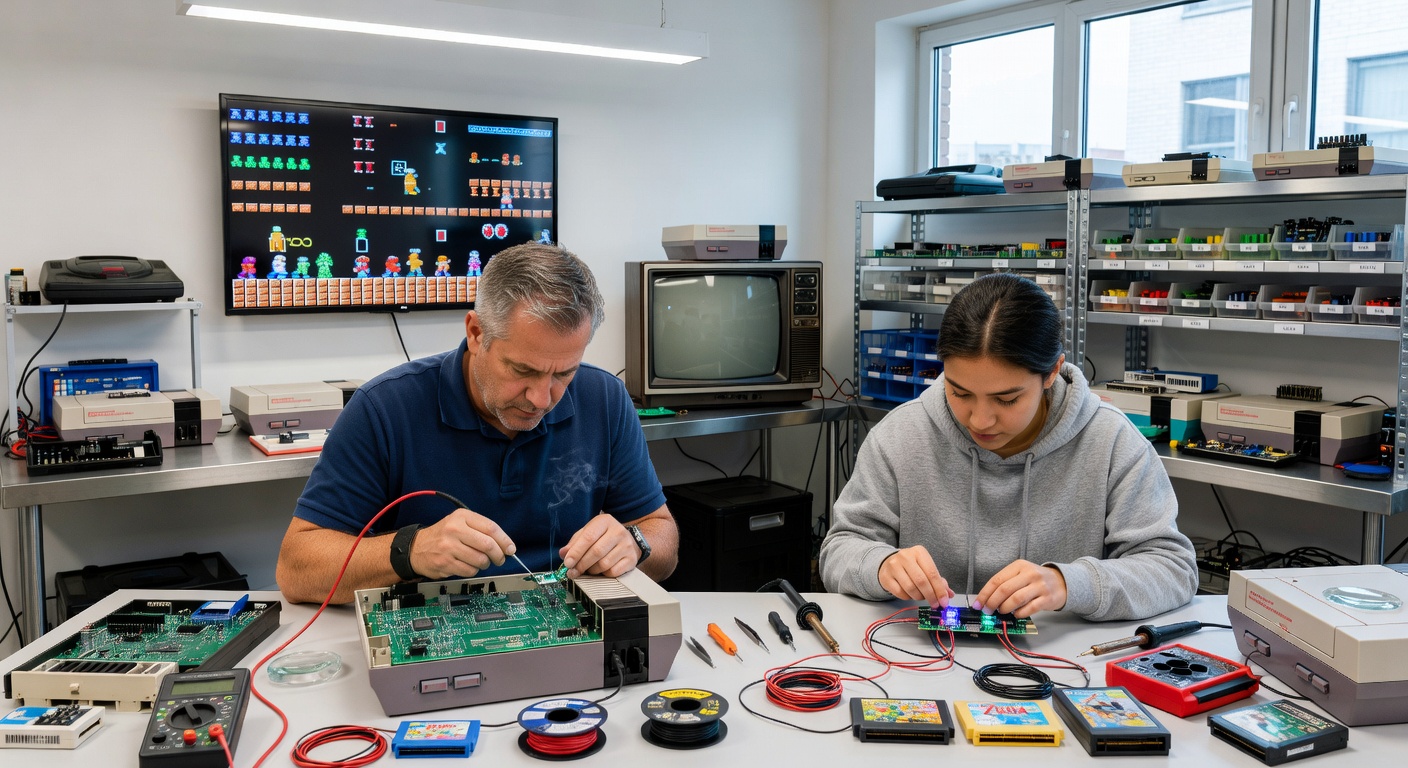
Many facilities maintain partnerships with component suppliers in both the United States and the European Union to source low-latency HDMI transmitters that meet current HDCP requirements. According to a 2025 report issued by the Australian Classification Board’s digital preservation unit, properly modified consoles retain over 99 percent of original frame accuracy when measured against reference capture equipment. Technicians therefore calibrate each board using test patterns generated by specialized software before returning the unit to its owner.
Materials, Tools, and Quality Assurance Practices
Workshops stock an inventory that includes surface-mount resistors, precision oscillators, and custom PCBs fabricated through small-batch manufacturers. Hand tools such as flux pens, micro tweezers, and digital multimeters sit alongside more advanced equipment like logic analyzers that verify signal integrity after installation. Quality checks include running diagnostic cartridges for several hours while monitoring temperature and voltage levels to ensure long-term stability. Observers note that facilities following these protocols report fewer than two percent return rates for issues related to display compatibility.
Training for new technicians often incorporates documentation produced by university engineering departments that have studied signal degradation in aging video hardware. One Canadian research group at the University of Waterloo published findings in 2024 showing that unmodified composite outputs lose up to 30 percent of horizontal resolution on 4K displays due to inherent bandwidth limitations. Modified units eliminate this loss by bypassing the original RF modulator entirely.
Community Networks and Knowledge Sharing
Online forums and regional meetups serve as primary channels for sharing updated pinout charts and troubleshooting guides. Participants exchange data on which encoder chips perform best with specific console motherboards and which firmware revisions resolve compatibility problems with certain smart televisions released in 2024 and 2025. These networks also coordinate bulk orders of rare components so individual hobbyists can complete projects without sourcing parts from multiple overseas vendors.
Conclusion
Modification workshops continue to evolve alongside changes in display technology while focusing on accurate reproduction of original hardware behavior. Through systematic application of RGB conversion boards, HDMI encoders, and rigorous testing protocols, these facilities enable continued use of decades-old gaming systems on current monitors without compromising visual fidelity or introducing measurable latency. Continued collaboration between technicians, component suppliers, and academic researchers supports ongoing refinement of these processes as new display standards appear.