Metropolitan Gaming Venues Catalyze Console Accessory Breakthroughs for Collective Use
Uma Carter · Aug 22, 2026
Metropolitan Gaming Venues Catalyze Console Accessory Breakthroughs for Collective Use
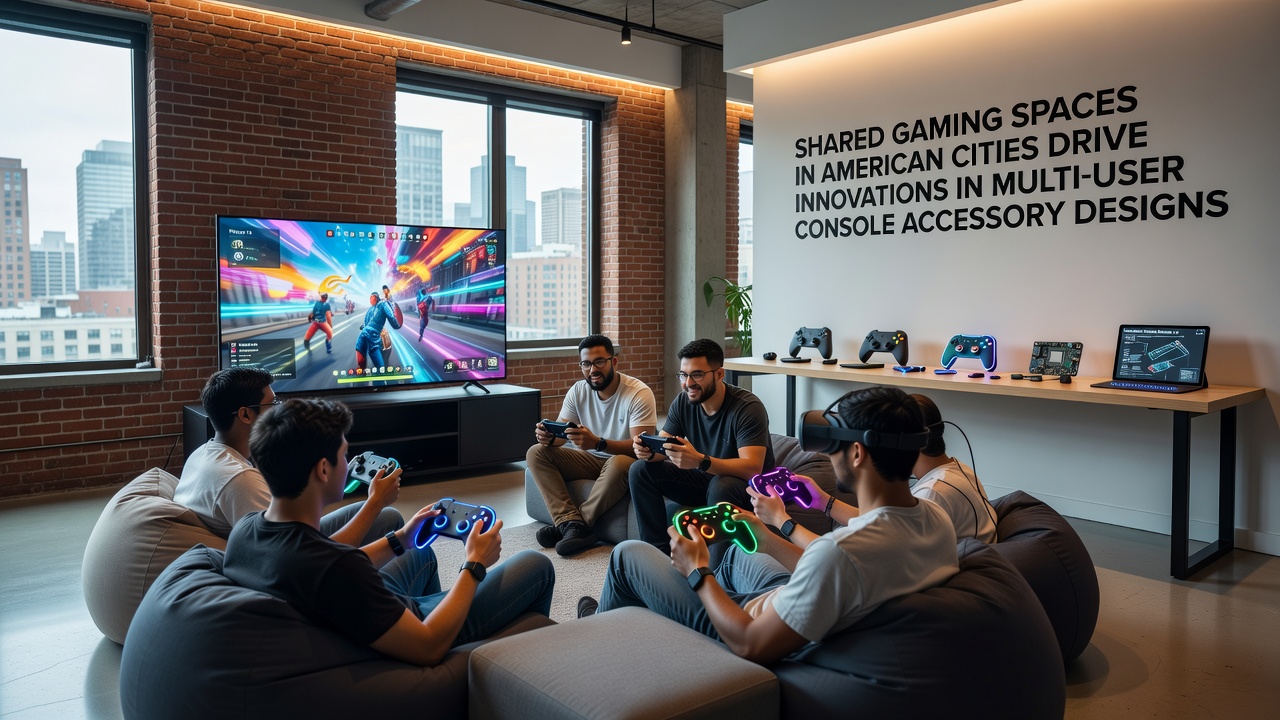
Shared gaming facilities have expanded across major American cities since the mid-2020s, creating environments where multiple users interact with the same console setups simultaneously, and this growth has prompted manufacturers to redesign accessories for group play scenarios. Data from municipal recreation departments shows that cities such as Chicago, Seattle, and Atlanta opened or expanded over 120 public gaming centers between 2023 and 2025, with participation numbers rising by 34 percent year over year according to local usage logs.
These venues typically feature banks of consoles connected to large shared displays, requiring hardware that supports simultaneous inputs without interference. Accessory developers responded by introducing multi-port docking stations that allow four to eight controllers to connect through a single USB-C or wireless hub, reducing cable clutter while maintaining signal stability during peak hours. Engineers at several firms integrated adaptive pairing algorithms that automatically assign controller IDs based on seating position, a feature first tested in pilot programs at community centers in Denver.
Design Shifts Driven by Venue Demands
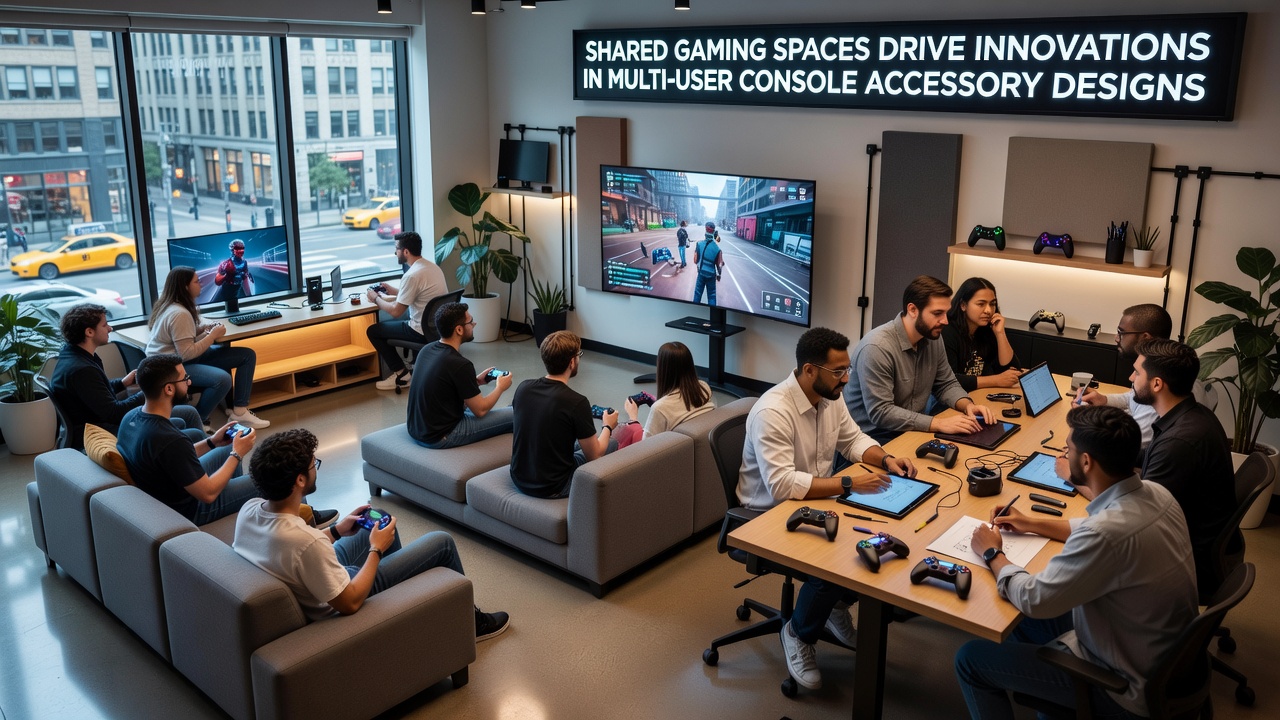
Traditional single-user controllers proved insufficient in high-traffic settings where devices change hands frequently. Manufacturers therefore incorporated antimicrobial coatings on grips and buttons, a specification drawn from health department guidelines for public equipment. Split-button layouts and modular faceplates emerged to accommodate both left- and right-handed players without requiring separate SKUs. One study conducted by researchers at the University of Michigan tracked input accuracy across 500 sessions in shared spaces and found that redesigned thumbstick modules with interchangeable tension springs improved precision by 22 percent when users rotated through stations.
Wireless latency became a focal point once venues began hosting scheduled multiplayer events. Accessory lines released in early 2026 incorporated dual-band 2.4 GHz and 5 GHz transmitters with automatic channel switching, addressing interference from overlapping Wi-Fi networks common in urban buildings. Testing data released by the Consumer Technology Association indicated average latency drops to under 4 milliseconds in environments with 30 or more active devices.
Component Innovations and Material Choices
Material science played a direct role in supporting the new usage patterns. Reinforced nylon and glass-filled polymers replaced standard plastics in controller shells to withstand repeated drops and transport between storage lockers. Battery compartments were enlarged to accept higher-capacity cells, since shared spaces often keep devices charging overnight rather than relying on individual user habits. Observers note that these changes emerged directly from maintenance reports submitted by facility managers in Boston and Portland, where earlier models failed at twice the rate of home-use versions.
Audio accessories followed a parallel path. Shared-headset splitters with individual volume sliders and noise-isolating ear cups addressed the problem of sound bleed in open-floor layouts. Several designs now include quick-swap earpad systems so staff can sanitize units between sessions without replacing entire headsets. Figures from a 2025 industry survey compiled by the Entertainment Software Association reveal that accessory sales tied to public venues grew 41 percent compared with the prior year.
Integration with Existing Console Ecosystems
Compatibility remained a priority because most municipal installations rely on current-generation PlayStation, Xbox, and Nintendo hardware rather than custom builds. Accessory makers developed firmware that detects console type upon connection and adjusts polling rates accordingly. This approach eliminated the need for venue operators to stock separate controller sets for each platform. A report issued by the National Institute of Standards and Technology in August 2026 documented standardized testing protocols that accessory firms now follow to certify multi-user performance across mixed console environments.
Software dashboards installed at several city-run locations feed usage statistics back to manufacturers, allowing iterative updates to accessory firmware. These dashboards track metrics such as average session length, simultaneous user counts, and error rates, data that directly informs next-generation designs. Partnerships between public facilities and private firms have produced limited-run prototypes featuring RFID-tagged controllers that log playtime and trigger automatic recalibration routines.
Conclusion
Shared gaming spaces continue to shape accessory development by highlighting practical constraints that home environments rarely surface. Manufacturers rely on operational data from these venues to refine durability, connectivity, and sanitation features, resulting in products that function reliably under sustained group use. As additional cities adopt similar facilities, the feedback loop between public operators and hardware designers is expected to accelerate further refinements in multi-user console peripherals.