Nationwide Surveys of Gaming Lounge Operators Uncover Trends in Software Tool Adoption Tied to Regional Hardware Availability
Xander Carter · Jul 13, 2026
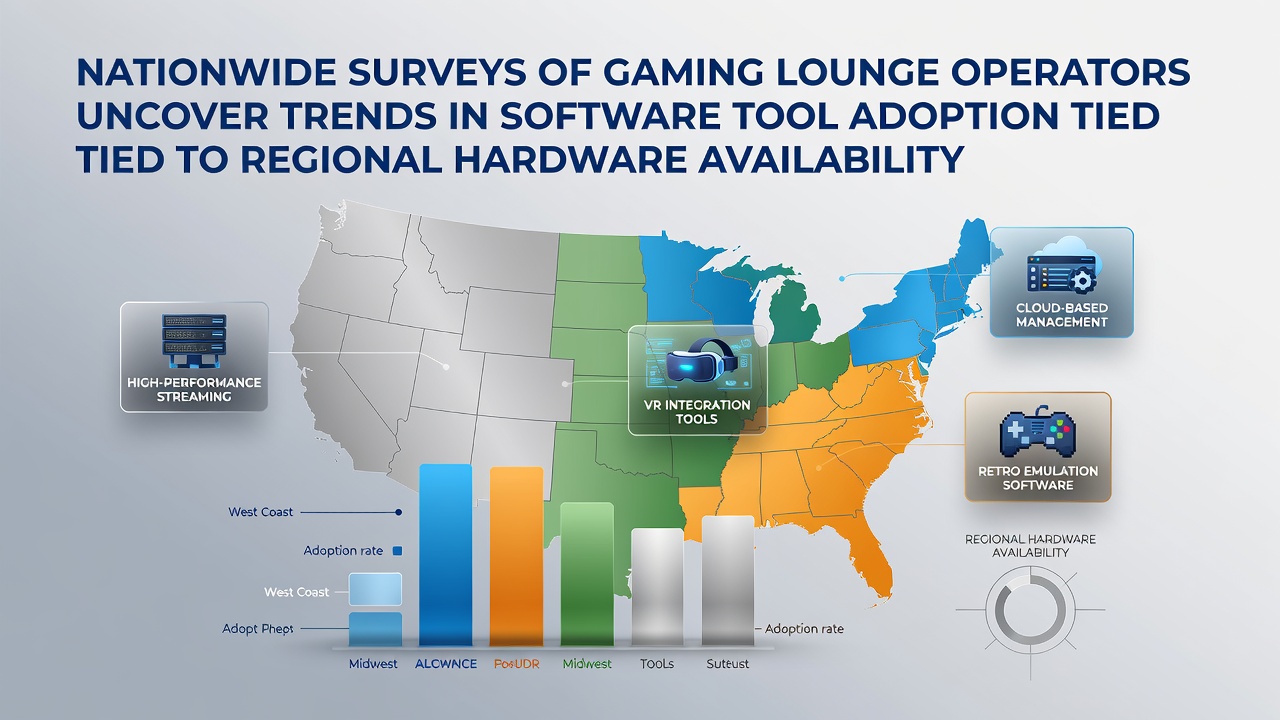
Nationwide Surveys of Gaming Lounge Operators Uncover Trends in Software Tool Adoption Tied to Regional Hardware Availability
Nationwide surveys conducted among gaming lounge operators reveal distinct patterns in how software tools get adopted, patterns that align closely with the availability of hardware across different regions. Data collected from operators in 2025 and early 2026 highlight connections between local access to components like graphics cards, consoles, and networking equipment and the specific management platforms, analytics suites, and reservation systems that lounges choose to implement.
Researchers at multiple institutions tracked responses from over 400 lounge locations spread across urban centers, suburban zones, and rural markets. The findings show that areas with steady hardware supply chains tend to integrate advanced scheduling and performance monitoring software more quickly, while regions facing component shortages lean toward simpler, locally hosted tools that require less frequent updates or specialized maintenance.
Survey Methodology and Scope
Survey teams distributed questionnaires through industry associations and direct outreach to lounge owners between January and June 2026, with follow-up interviews completed in July 2026. Questions focused on the types of software deployed for customer management, game library organization, hardware inventory tracking, and payment processing. Operators also reported on the age and specifications of their installed hardware, including processor generations, GPU models, and console counts. Cross-referencing these details with regional supply reports from distributors produced the observed correlations.
Regional Hardware Supply Influences Choices
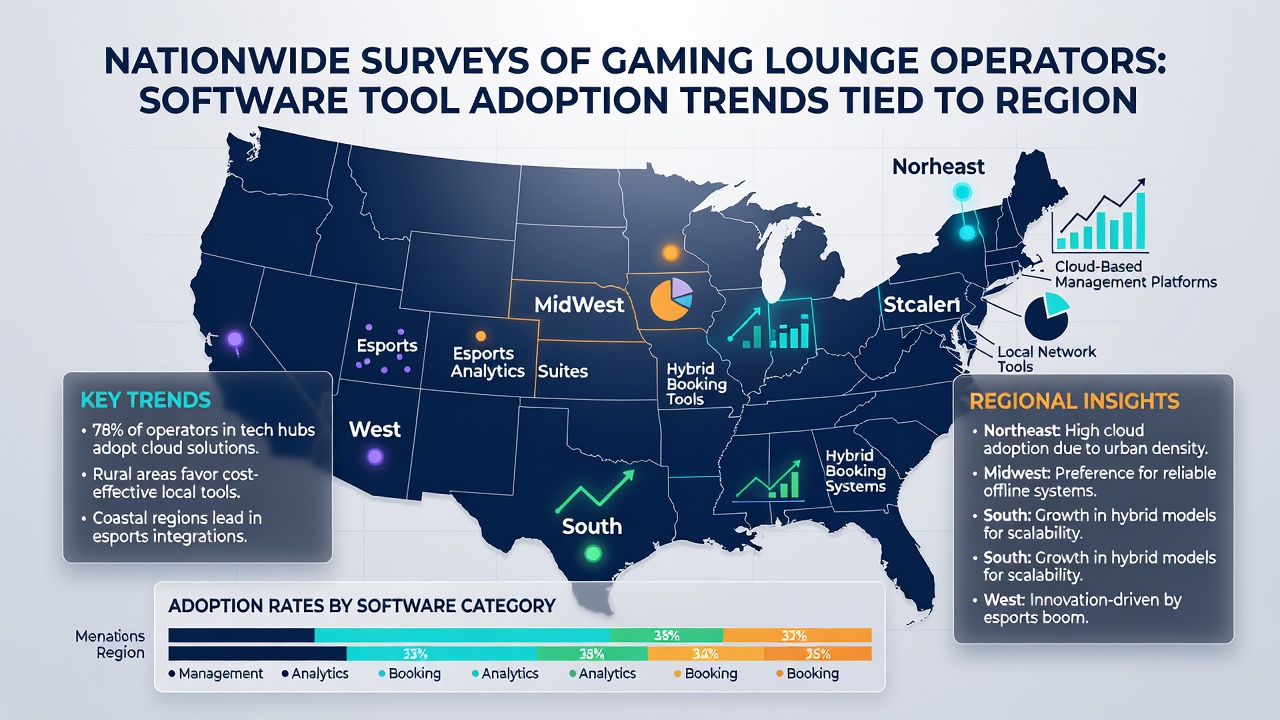
In the Pacific Northwest and parts of the Northeast, where component distributors maintain consistent stock levels, operators report higher adoption rates of cloud-based analytics platforms that pull real-time data from connected machines. These systems allow lounges to monitor utilization rates, session lengths, and hardware health without manual logging. By contrast, facilities in the South and Midwest, where delivery delays for newer GPUs remain common, more frequently select offline-capable software packages that function independently of constant internet connectivity and require minimal ongoing hardware upgrades.
One study compiled by analysts at the University of Toronto noted similar supply-driven patterns in Canadian gaming centers, where provinces with stronger logistics networks showed faster uptake of integrated booking modules. The same report indicated that operators adjust software feature sets to match the capabilities of whatever hardware they can reliably source locally.
Hardware availability also shapes decisions around peripheral support tools. Lounges in regions with abundant access to high-refresh-rate monitors and mechanical keyboards integrate calibration utilities and driver management suites that optimize those peripherals automatically. Facilities operating with older or mixed-spec equipment often stick with basic configuration scripts that avoid compatibility checks altogether.
Software Categories Showing Strongest Ties
Reservation and membership management platforms appear most sensitive to hardware density. Areas reporting higher numbers of active stations per square foot adopt multi-location synchronization features that let owners track bookings across several sites from a single interface. In contrast, single-site operations in hardware-constrained regions continue using standalone point-of-sale systems that do not require server clusters or redundant storage arrays.
Performance benchmarking applications follow a comparable split. Operators in well-supplied zones deploy tools that compare frame rates and thermals across dozens of machines simultaneously, feeding the results into predictive maintenance alerts. Facilities limited by sporadic hardware shipments rely instead on periodic manual testing routines supported by lighter spreadsheet templates or basic logging scripts.
Data Patterns Across Major Markets
Figures from the Entertainment Software Association indicate that metropolitan areas with established esports infrastructure maintain the highest ratios of automated software deployment. Cities such as Los Angeles, Seattle, and Austin show elevated usage of API-driven inventory systems that sync directly with supplier catalogs, reducing the time operators spend checking stock levels manually. Markets with more variable hardware inflows, including many mid-sized cities in the central states, demonstrate greater dependence on community-developed scripts shared through regional operator forums.
July 2026 updates to several distribution reports confirmed that lead times for certain GPU models had shortened in coastal hubs while remaining extended in inland territories, reinforcing the software adoption divide already captured in the lounge surveys.
Operational Adjustments and Tool Customization
Operators describe adapting their software stacks in response to hardware realities rather than the reverse. When new graphics cards arrive in limited batches, lounges often disable advanced telemetry modules that would otherwise track detailed performance metrics, because the modules require consistent hardware baselines to function accurately. In areas where hardware refreshes occur on predictable cycles, those same modules stay active and contribute to usage forecasting models.
Payment and access control software also reflect regional differences. Lounges equipped with newer networking hardware integrate contactless entry systems that tie directly into session timers, whereas locations still running older routers maintain separate manual check-in procedures supported by simpler time-tracking applications.
Conclusion
The surveys establish clear linkages between regional hardware availability and the software tools that gaming lounge operators select. Patterns documented through 2026 point to supply chain conditions as a primary driver of technology decisions at the operational level. As distributors continue adjusting inventory flows, further shifts in software preferences are expected to follow the same geographic contours already observed.