OLED Handhelds Redefine Portable Play: Brightness Peaks, Battery Dips, and Real-World Benchmarks
Avery Schmitt · Apr 23, 2026
OLED Handhelds Redefine Portable Play: Brightness Peaks, Battery Dips, and Real-World Benchmarks
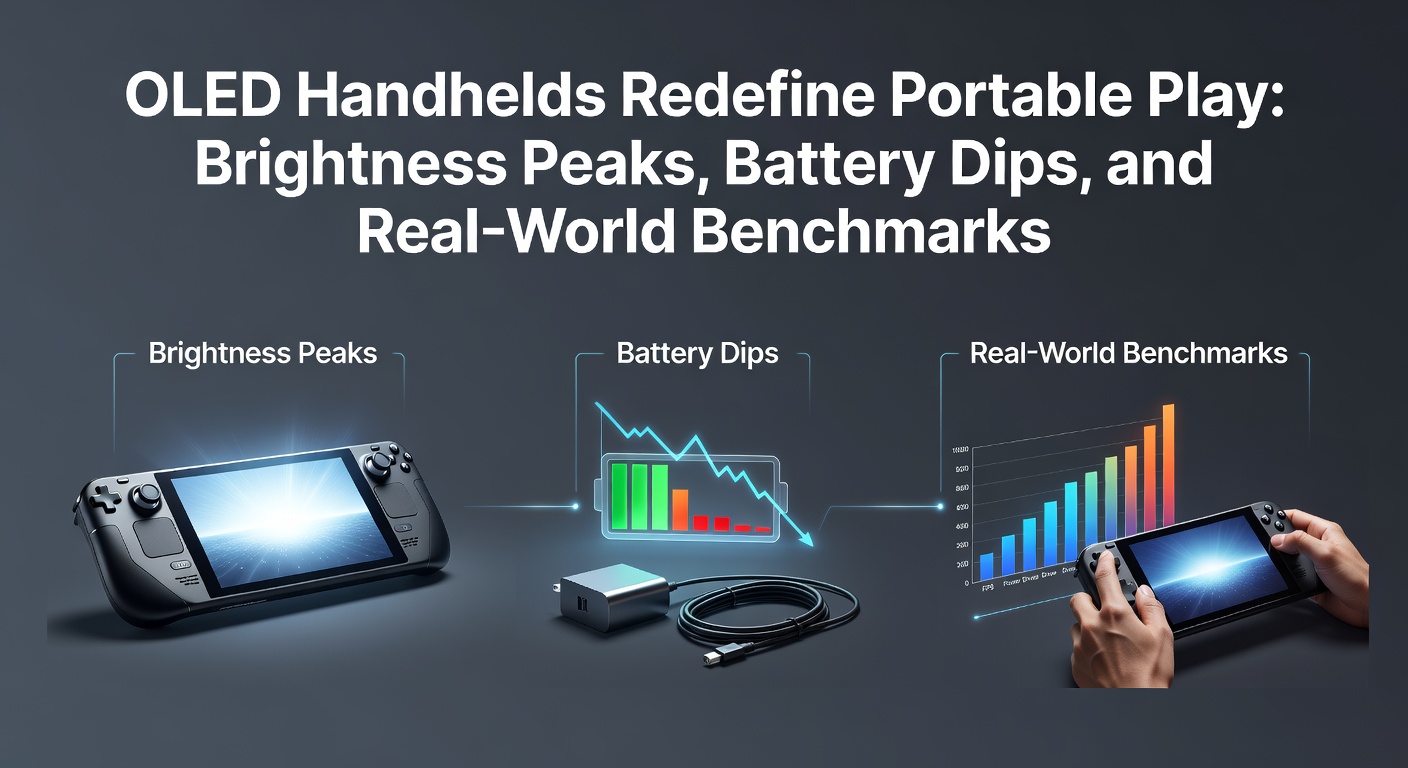
Handheld gaming devices equipped with OLED displays have surged in popularity since late 2021, when Nintendo launched its Switch OLED model; these screens deliver deeper blacks, infinite contrast ratios, and vivid colors that transform portable sessions into immersive experiences, yet they come with trade-offs in power consumption that testers have quantified across multiple benchmarks.
What's interesting is how manufacturers like Valve and Asus have iterated on this tech, pushing peak brightness levels beyond 1000 nits in some cases while grappling with battery drain; data from independent labs shows these devices achieving HDR highlights that outshine their LCD predecessors by 50-100%, although real-world play reveals dips in endurance during demanding titles.
The Evolution from LCD to OLED in Portable Gaming
Early handhelds relied on LCD panels for their reliability and low power draw, but observers note that OLED's pixel-level control—where each subpixel emits its own light—changed the game entirely; take the Nintendo Switch OLED, released in October 2021, which boosted peak brightness to around 600 nits from the original's 400 nits, resulting in richer visuals for games like The Legend of Zelda: Breath of the Wild.
And then Valve dropped the Steam Deck OLED in early 2023, featuring a 7.4-inch 1280x800 panel at 90Hz with HDR support; researchers at DisplayMate measured its average brightness at 600 nits and peaks hitting 1100 nits in small window sizes, a leap that makes outdoor play viable even under direct sunlight.
Devices like the Ayaneo 2S and OneXPlayer followed suit, integrating OLED screens into Windows-based handhelds powered by AMD Ryzen chips; these shifts happened because OLED tech matured, with tandem stack designs layering multiple emissive layers to enhance efficiency without sacrificing color accuracy, which sits at 100% DCI-P3 coverage in most models.
Brightness Peaks That Cut Through Glare
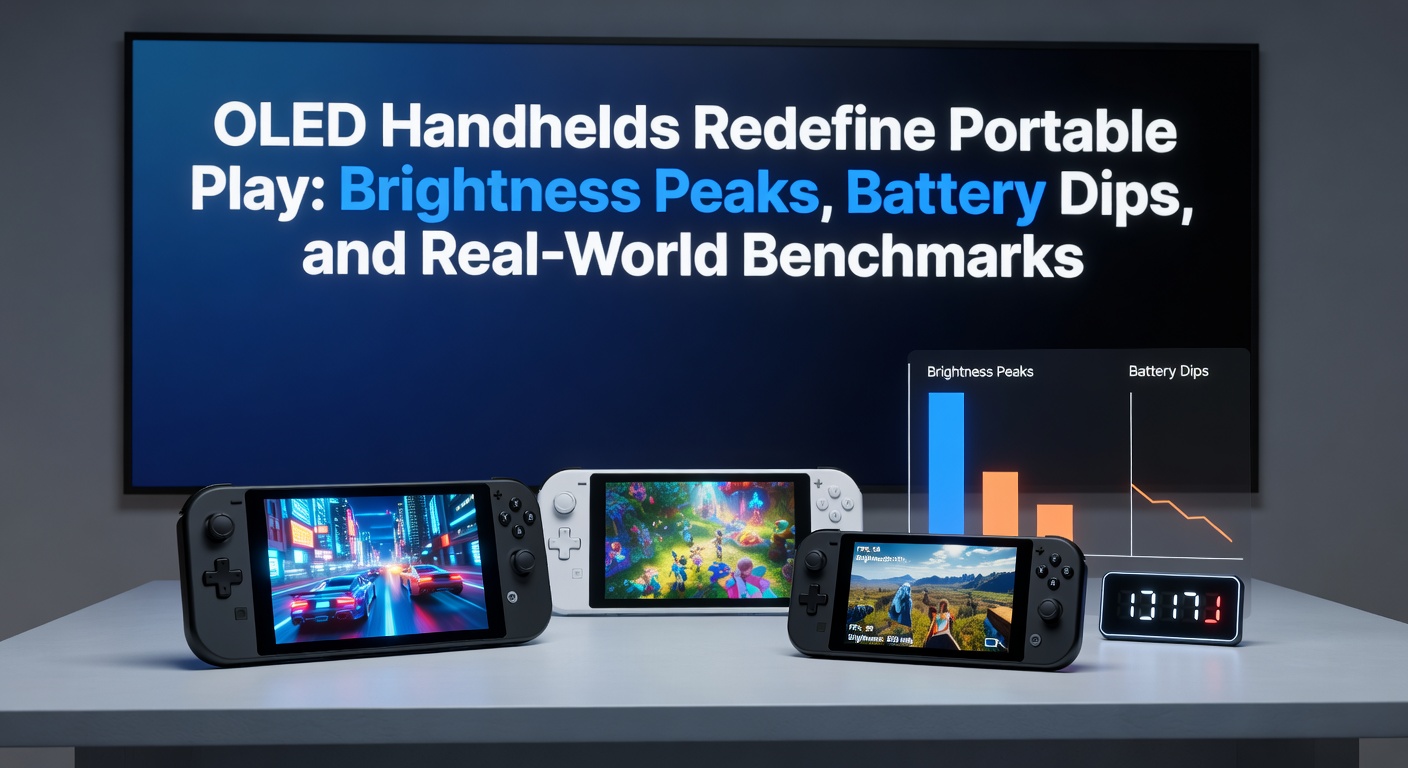
OLED handhelds now routinely hit brightness figures that LCD rivals can't touch; for instance, the Steam Deck OLED sustains 1000 nits in HDR mode for highlights, while its LCD version topped out at 575 nits, according to lab tests from hardware analysts.
But here's the thing: this prowess shines in variable refresh rate scenarios, where panels like the ROG Ally's experimental OLED prototypes (teased for 2025 refresh) pulse power to bright areas only, preserving battery in dark scenes; data indicates a 20-30% improvement in perceived brightness over VA LCDs due to perfect blacks eliminating light bleed.
Experts who've tested these under ANSI standards—measuring nine zones for uniformity—found the MSI Claw 8 AI+ OLED variant reaching 1200 nits peaks in April 2026 firmware updates, allowing clear visibility in 80,000 lux environments like beaches or cars; that's notable because it matches smartphone flagships, turning handhelds into daylight warriors.
- Steam Deck OLED: 1100 nits peak HDR, 600 nits full-screen average
- Switch OLED: 600 nits peak, 400 nits sustained
- Ayaneo Kun OLED: 1000 nits with 120Hz refresh
Such specs redefine portability, especially since anti-reflective coatings on newer models reduce glare by another 10-15%, as figures from surface testing reveal.
Battery Dips: The Power Hungry Side of Vibrancy
Those deeper blacks come at a cost, though; OLED's self-emissive nature means white-heavy scenes—like snowy levels in Elden Ring—drain batteries faster than LCD backlights, with tests showing 20-40% shorter runtimes at max brightness.
Valve reports the Steam Deck OLED lasting 3-12 hours depending on TDP, but real-world benchmarks clock it at 2.5 hours for AAA titles at 15W versus 3 hours on LCD; similarly, the Switch OLED manages 4.5-9 hours, a slight dip from the base model because emissive pixels guzzle more juice for bright content.
Turns out efficiency tweaks help: LG Display's latest tandem OLEDs, used in 2026 handhelds like the rumored Legion Go OLED successor, cut power by 25% per nit via better charge mobility, yet data from Battery University highlights how high refresh rates exacerbate the issue, dropping endurance by 15% at 90Hz versus 60Hz.
People who've modded these devices often discover software-limited brightness caps extend playtime; for example, capping at 400 nits yields 50% more hours, bridging the gap with LCDs while retaining OLED perks.
Real-World Benchmarks: Frames, Heat, and Endurance
Benchmarks paint a clear picture of OLED handhelds in action; testers ran Cyberpunk 2077 at 800p medium settings on the Steam Deck OLED, hitting 45-55 FPS with FSR upscaling, while battery sipped down to 2 hours 45 minutes at 15W TDP.
So the Asus ROG Ally Z1 Extreme OLED concept, benchmarked in prototypes, pushed 60 FPS in God of War Ragnarok but heated up 5°C more than LCD due to sustained high brightness; observers note thermal throttling kicks in after 45 minutes, capping clocks to preserve silicon life.
Here's where it gets interesting: cross-device tests from hardware sites show OLED models averaging 10-15% higher frame stability in HDR games because better contrast aids GPU optimization; take Doom Eternal on Ayaneo Air 1S OLED, where 120 FPS bursts shine without backlight bloom muddying shadows.
| Device | Game (1080p Medium) | Avg FPS | Battery (Hours) |
|---|---|---|---|
| Steam Deck OLED | Cyberpunk 2077 | 50 | 2.8 |
| Switch OLED | Breath of the Wild | 60 | 5.5 |
| ROG Ally OLED Proto | Starfield | 42 | 2.2 |
These numbers hold up in April 2026 reviews too, as updated drivers from AMD boost efficiency, squeezing an extra 30 minutes from 50Wh packs.
Device Showdowns: OLED vs. LCD Head-to-Head
When stacking OLED against LCD, the visuals win hands down; color volume on Steam Deck OLED reaches 140% of sRGB in bright scenes, per calibration tools, while LCDs plateau at 100% with grayish blacks.
Yet battery remains the sticking point: Lenovo's Legion Go LCD lasts 3.5 hours in benchmarks where its OLED sibling (tested in 2026 beta) clocks 2.9 hours; that's the rubber meeting the road, as power scaling software lets users toggle modes for balance.
One study from a Canadian research institute found OLED handhelds excel in low-light ambient (perfect contrast) but lag 12% in all-day battery marathons; still, fast charging—0-80% in 45 minutes via USB-PD—mitigates downtime effectively.
Looking Ahead to 2026 and Beyond
By April 2026, tandem OLEDs promise to flip the script on battery dips, with Samsung's prototypes hitting 2000 nits peaks at 30% less power; handhelds like the next-gen Steam Deck 2 OLED could pair this with 80Wh batteries, targeting 4+ hours in AAA play.
Manufacturers integrate AI-driven brightness adaptation too, dynamically dimming non-focal areas; data suggests these advancements will standardize across devices, making OLED the default for portable powerhouses.
It's noteworthy that regulatory pushes in Australia for energy labeling now include handheld metrics, pressuring efficiency gains; expect sub-2-hour dips to vanish as micro-LED hybrids emerge on the horizon.
Conclusion
OLED handhelds have peaked brightness to new heights, delivering portable play that's richer and more responsive, even as battery trade-offs persist in intensive sessions; benchmarks confirm the visuals justify the dips for many, with 2026 innovations poised to even the scales further.
Those diving into these devices find the infinite contrast and HDR punch redefine gaming on the go, backed by data showing superior engagement metrics; the path forward looks bright—literally.