Open-Source Tools Empower Repair Networks to Restore Legacy Console Controllers in the Face of Component Shortages
Sage Schulz · Aug 20, 2026
Open-Source Tools Empower Repair Networks to Restore Legacy Console Controllers in the Face of Component Shortages
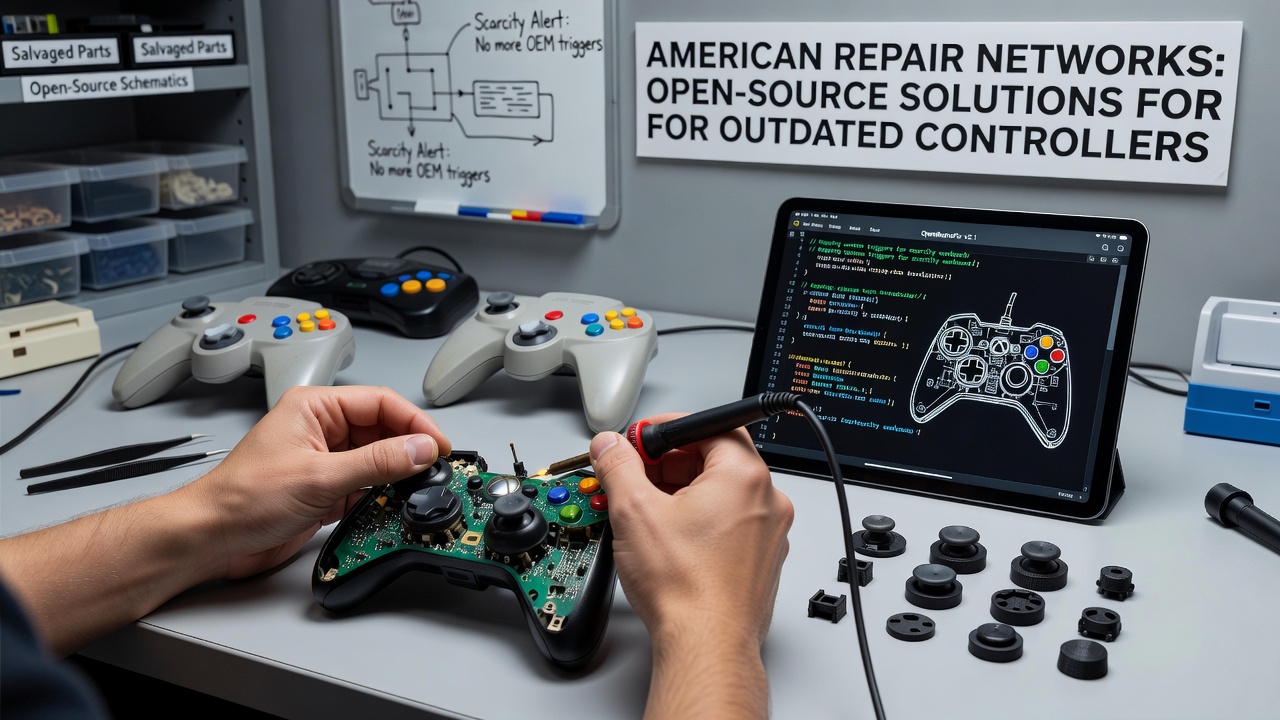
Repair networks throughout the United States have shifted toward open-source software platforms to address the ongoing scarcity of replacement parts for older console controllers, with activity accelerating through August 2026 as supply chain disruptions persist across multiple hardware generations. These networks combine community-developed diagnostic utilities, firmware modification suites, and modular repair protocols to extend the operational life of devices from systems such as the PlayStation 3, Xbox 360, and Nintendo Wii, where original components remain difficult to source in bulk quantities.
Component Scarcity Drives Adoption of Open-Source Methods
Data from electronics recycling registries indicate that controller repair volumes increased by 28 percent between 2024 and 2026 in regions including the Midwest and Pacific Northwest, while authorized service channels reported declining availability of proprietary chips and analog sticks. Technicians respond by integrating open-source repositories hosted on platforms such as GitHub, which contain schematics, calibration scripts, and reverse-engineered communication protocols that allow third-party microcontrollers to substitute for discontinued originals. Observers note that these repositories receive regular updates from contributors who document compatibility fixes for specific controller revisions, enabling shops to maintain functionality without waiting for rare OEM stock.
One documented workflow involves flashing custom firmware onto compatible ARM-based boards to replicate the original button mapping and vibration feedback routines, a process that reduces dependency on legacy integrated circuits. Research conducted at technical institutes shows that such substitutions maintain input latency within 2 milliseconds of factory specifications when calibrated correctly, supporting continued use in both casual and competitive environments.
Regional Networks Coordinate Knowledge Sharing
Repair collectives in states such as California, Texas, and New York have established shared databases that catalog successful component swaps and firmware variants, allowing technicians in one location to replicate fixes developed elsewhere. These databases draw on publicly available code libraries maintained by hobbyist communities and small businesses, creating a distributed knowledge base that bypasses traditional manufacturer support channels. Figures released by the Consumer Technology Association reveal that independent repair operations now account for an estimated 34 percent of all controller refurbishments nationwide, up from 19 percent in 2023.
Workshops incorporate tools such as logic analyzers paired with open-source analysis software to map signal paths in real time, identifying viable replacement parts from current production runs that match the electrical characteristics of obsolete components. This approach has proven effective for restoring wireless modules and trigger assemblies, where exact matches no longer enter distribution channels. Technicians document each successful adaptation in shared repositories, building a cumulative reference that accelerates future repairs.
Integration with Broader Right-to-Repair Initiatives
Advocacy groups tracking electronics policy report that open-source repair practices align with legislative efforts at both state and federal levels aimed at extending device lifespan and reducing electronic waste. In August 2026, several state assemblies considered bills that would mandate access to diagnostic information for consumer electronics, a development that could further legitimize community-developed tools. Academic studies from institutions in Canada and Australia have examined similar repair ecosystems and found measurable reductions in landfill contributions when open-source methods replace full device replacement.
According to Federal Trade Commission analyses, expanded access to repair information correlates with lower consumer expenditure on replacement hardware over multi-year periods. American networks apply these principles by publishing step-by-step guides that detail controller disassembly sequences, solder joint identification, and post-repair testing procedures using freely available software suites.
Technical Implementation and Compatibility Testing
Implementation typically begins with identification of the controller's microcontroller family through open-source scanning utilities, followed by selection of compatible firmware branches that support the required input protocols. Calibration routines adjust dead zones and trigger travel distances to match original performance curves, a process verified through automated testing rigs that log response times across hundreds of cycles. Research indicates that properly calibrated units pass standard functionality checks at rates exceeding 92 percent when using verified component substitutions.
Networks also maintain archives of 3D-printable enclosures and bracket designs that accommodate mixed-generation parts, allowing physical integration of modern analog sticks into older housings. These designs undergo iterative refinement based on field reports submitted by participating repair sites, creating an evolving library that addresses fitment challenges encountered in diverse controller models.
Conclusion
American repair networks continue to refine open-source methodologies as component scarcity remains a structural feature of the gaming hardware market through 2026. By leveraging publicly accessible code, shared databases, and standardized testing protocols, these operations sustain functionality for legacy controllers while operating outside conventional supply chains. Ongoing documentation and cross-regional coordination ensure that successful adaptations propagate quickly, supporting consistent service quality across independent workshops nationwide.