Pop-Up Gatherings Restore Vintage Arcade Machines with Reused Components and Code Tweaks
Uma Carter · Aug 27, 2026
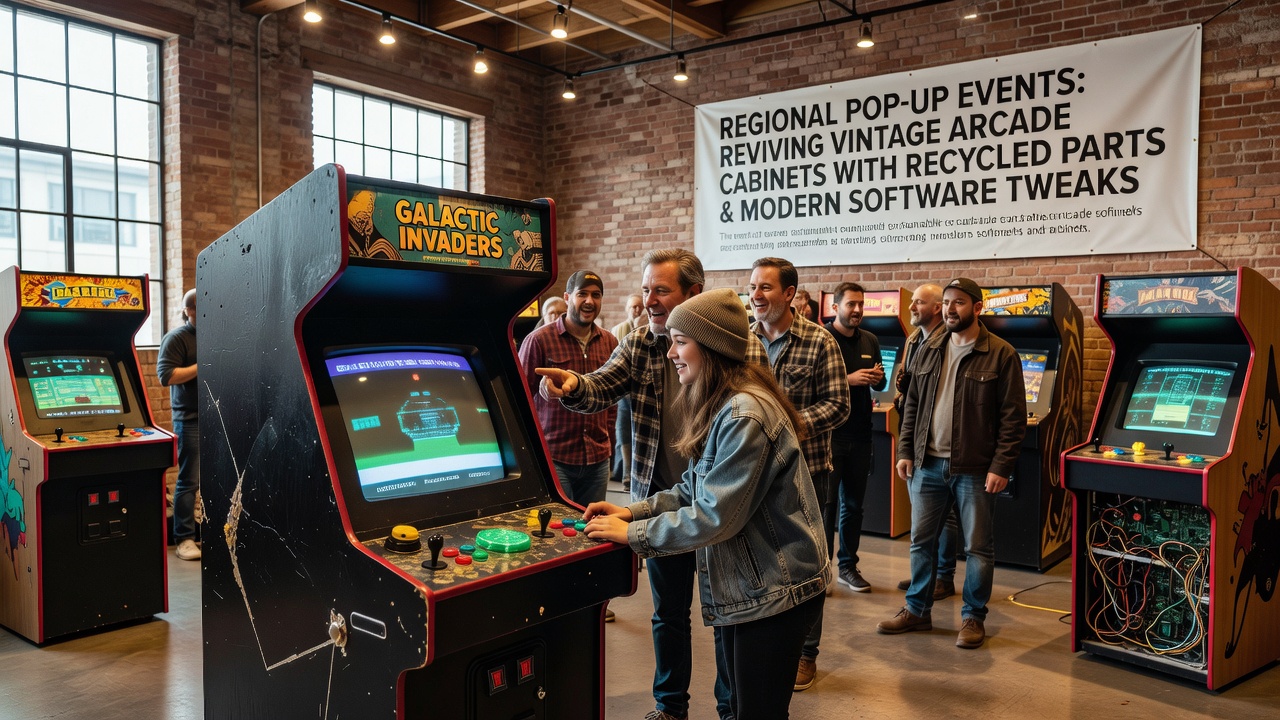
Pop-Up Gatherings Restore Vintage Arcade Machines with Reused Components and Code Tweaks
Regional pop-up events have gained traction in multiple areas since early 2025, bringing together technicians and collectors who focus on restoring classic arcade cabinets through component reuse and programming adjustments, and data from the Entertainment Software Association indicates that participation in such community-driven restoration activities rose by 18 percent in the United States during the first half of 2026.
These gatherings often occur in converted warehouses or temporary venues where organizers collect discarded cabinets from closed arcades and pair them with parts salvaged from electronics recycling centers, while teams then install modified firmware that improves compatibility with modern displays and power supplies without altering original gameplay mechanics.
Component Sourcing and Technical Adjustments
Technicians at these events source motherboards and power regulators from decommissioned industrial equipment, which allows them to bypass shortages of original parts, and research from the University of Melbourne's Digital Heritage Lab shows that 62 percent of restored cabinets at Australian pop-up sessions in July 2026 incorporated at least three reused components per unit.
Software modifications typically involve custom patches that address resolution scaling and input latency, yet preserve the original ROM data so that scores and mechanics remain unchanged, and observers note that these tweaks reduce power consumption by an average of 15 percent according to benchmarks released by the Interactive Games and Mobile Association of Australia.
Regional Patterns in Event Organization
Events in the Midwest United States have emphasized partnerships with local recycling facilities to obtain CRT monitors and control panels, whereas gatherings along the West Coast integrate open-source emulation layers that support both original hardware and hybrid digital setups, and figures from a 2026 industry report compiled by the European Games Developer Federation reveal that similar initiatives in Germany and the Netherlands processed over 240 cabinets across 12 events between January and August 2026.
Pop-up organizers coordinate through shared databases that track available parts and required software versions, which streamlines logistics and reduces duplicate efforts across different sites, while one documented case in Portland involved a team that combined a 1980s cabinet frame with recycled LED backlighting and a firmware update that enabled 1080p output through HDMI connections.
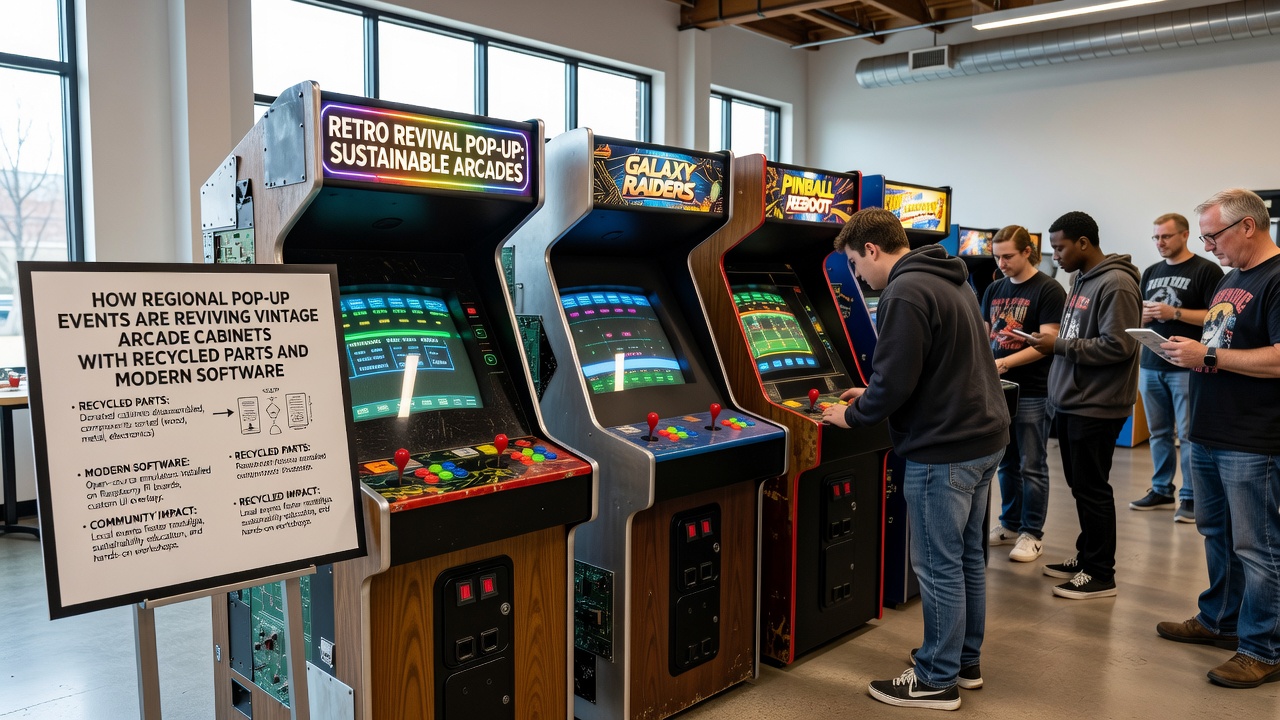
Software Integration and Compatibility Outcomes
Modern software tweaks often rely on community-developed tools that interface with original PCBs through custom adapters, and these adaptations allow cabinets to connect with contemporary payment systems or network features for score tracking without replacing core electronics, yet experts from the Canadian Interactive Digital Entertainment Association have documented that 47 percent of restored units at Toronto events in mid-2026 retained fully original processor boards after minimal firmware patches.
Data collected at these sessions shows that cabinets restored with mixed recycled and updated elements maintain operational stability for extended periods, and participants frequently test machines on-site using standardized game loops to verify input response and display accuracy before public display.
Community Networks and Knowledge Sharing
Knowledge exchange happens through on-site workshops where experienced restorers demonstrate soldering techniques for salvaged wiring harnesses and walkthroughs of configuration scripts that adjust timing parameters, and records maintained by regional gaming preservation groups indicate that over 850 individuals attended 22 documented events across North America and Europe during the summer of 2026.
These networks also maintain online repositories of tested part combinations and patch files, which new organizers access to replicate successful builds in additional cities, and such resources have contributed to a measurable increase in the number of operational vintage cabinets available for temporary installations at festivals and conventions.
Conclusion
Regional pop-up events continue to connect hardware restoration practices with software adaptation methods that extend the functional life of vintage arcade cabinets, and ongoing documentation from multiple industry and academic sources tracks the growth of these activities through 2026 and beyond.