Portable Cooling Stations Help US Tournament Organizers Maintain Peak Laptop Performance During Summer Esports Events
David Hansen · Aug 13, 2026
Portable Cooling Stations Help US Tournament Organizers Maintain Peak Laptop Performance During Summer Esports Events
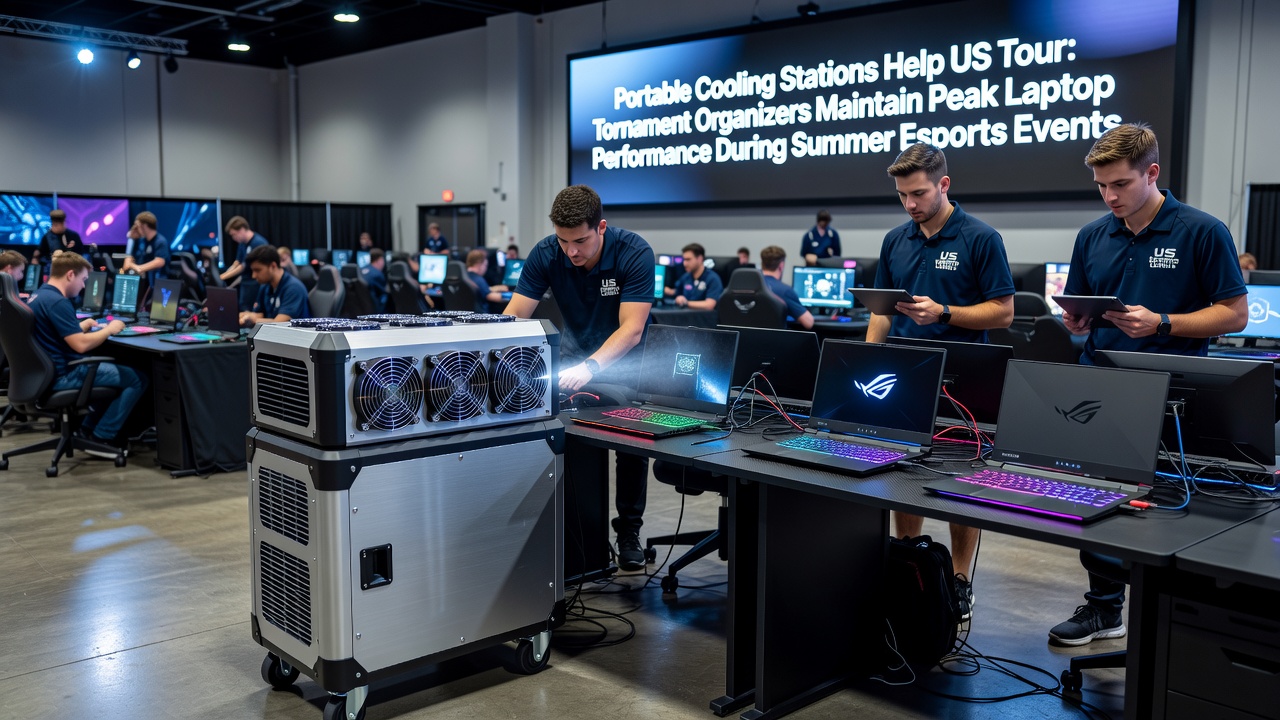
US esports tournaments scheduled during peak summer months face consistent challenges from elevated ambient temperatures that push laptop hardware beyond optimal operating ranges, and organizers have turned to portable cooling stations as a practical response. These units combine high-velocity fans, liquid cooling pads, and adjustable mounts to direct airflow across laptop chassis while competitors play, and data collected at multiple regional events shows reduced thermal throttling compared with standard venue setups alone.
Venues in states like Texas and California routinely record indoor temperatures above 85 degrees Fahrenheit during August gatherings, conditions that accelerate heat buildup in devices running intensive titles at maximum settings. Tournament staff report that without supplemental cooling, many laptops drop clock speeds within the first hour of matches, resulting in measurable frame rate declines that affect player input response and overall match fairness.
Deployment Patterns Across Summer Circuits
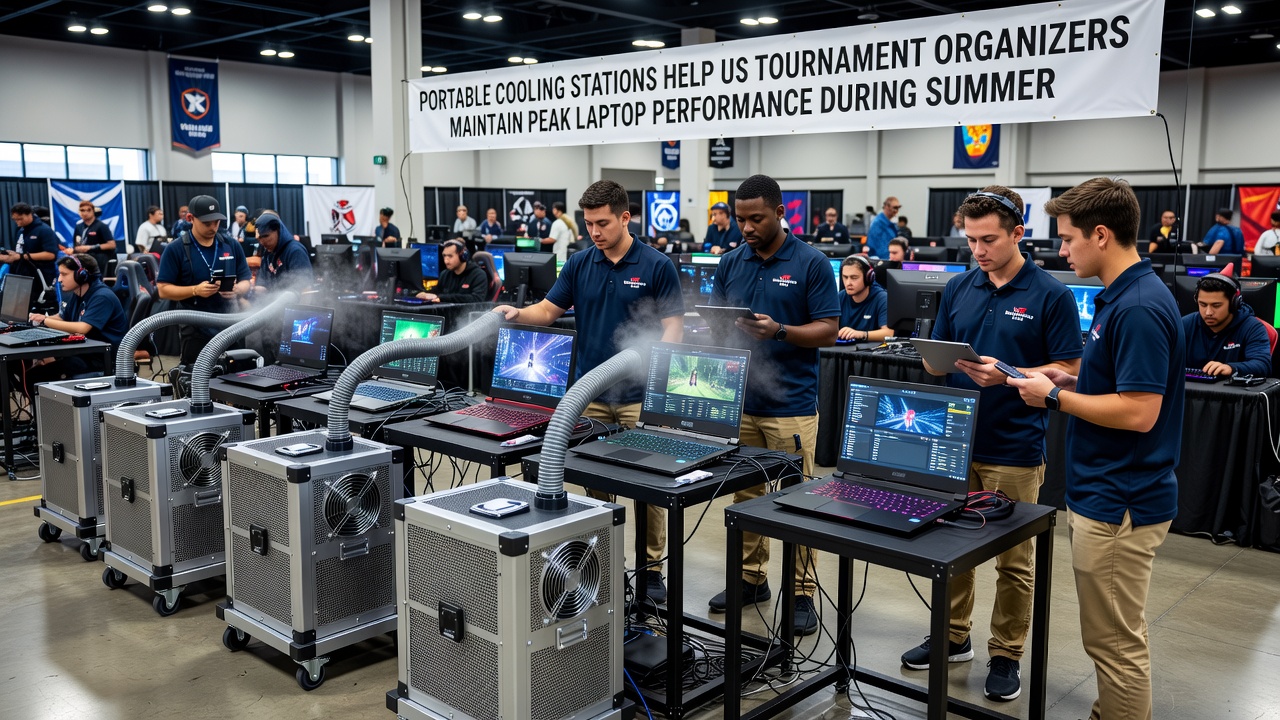
Organizers at events in August 2026 integrated modular cooling stations into registration and warm-up areas, allowing teams to connect laptops before matches begin and maintain temperatures through extended play sessions. Each station typically supports four to six devices simultaneously, with quick-release clamps that accommodate different laptop chassis sizes without requiring custom brackets for every model.
Technicians monitor temperature sensors embedded in the cooling pads, adjusting fan speeds in real time based on load indicators displayed on external dashboards. This approach keeps GPU and CPU junction temperatures within manufacturer-specified limits even when ambient humidity rises during afternoon sessions.
Performance Metrics and Hardware Compatibility
Independent testing conducted at university labs in the Midwest documented average temperature reductions of 12 to 18 degrees Celsius on high-performance gaming laptops when portable cooling stations operated alongside built-in chassis fans. These figures come from controlled comparisons using identical hardware configurations across multiple game engines, and the results align with observations shared by technicians at national qualifier events.
Compatibility extends across current laptop lines from major manufacturers, though units with bottom-intake vents require elevated mounting plates to avoid airflow obstruction. Organizers note that stations designed with modular fan arrays allow rapid reconfiguration when different device fleets arrive at successive stops on the summer circuit.
Logistics and Power Considerations
Power draw for a full station array remains under 800 watts per unit, which fits within the temporary electrical distribution systems most convention centers provide for esports setups. Organizers coordinate with venue electricians to allocate dedicated circuits, preventing competition with lighting or sound equipment during peak load periods.
Transport teams pack the stations in wheeled cases that meet standard airline and freight size limits, enabling quick setup and breakdown between events separated by only a few days. Maintenance logs from the 2025 season show that filter replacements and fan bearing checks occur on a fixed schedule, keeping downtime minimal across multi-week tours.
Integration with Existing Tournament Infrastructure
Many stations now include USB-C pass-through ports that allow simultaneous charging and data connections while cooling remains active, reducing cable clutter at player stations. Network administrators integrate temperature monitoring feeds into the same software platforms used for match scheduling and live statistics, creating a unified operational view for staff.
According to reports from the Entertainment Software Association, participation in summer esports events increased by 14 percent between 2024 and 2026, prompting organizers to standardize cooling provisions as part of venue contracts. This standardization helps ensure consistent hardware behavior regardless of geographic location or specific tournament organizer.
Future Equipment Trends
Manufacturers have begun releasing next-generation cooling stations with quieter variable-speed motors and integrated liquid circulation loops that further lower noise levels at the player desk. Early deployments at collegiate events demonstrate compatibility with emerging laptop designs that feature thinner chassis profiles, while still delivering the airflow volumes required for sustained high-performance sessions.
Research groups at technical institutions continue to publish comparative studies on cooling efficacy across different station configurations, providing organizers with updated selection criteria ahead of each season. These studies track variables such as dust accumulation rates and energy consumption alongside thermal performance, offering practical guidance for equipment procurement decisions.
Conclusion
Portable cooling stations have become a standard component in US summer esports tournament planning, supporting consistent laptop performance under elevated temperature conditions. Their modular design, power efficiency, and compatibility with current hardware fleets allow organizers to address thermal management without major alterations to existing venue infrastructure or schedules. As event calendars expand and hardware evolves, the role of these stations continues to develop through iterative testing and feedback from technicians and competitors alike.