Regional Experiments Reveal How Custom Software Tweaks Extend Battery Life in Portable Esports Setups Across Midwest Venues
Sage Schulz · Jul 27, 2026
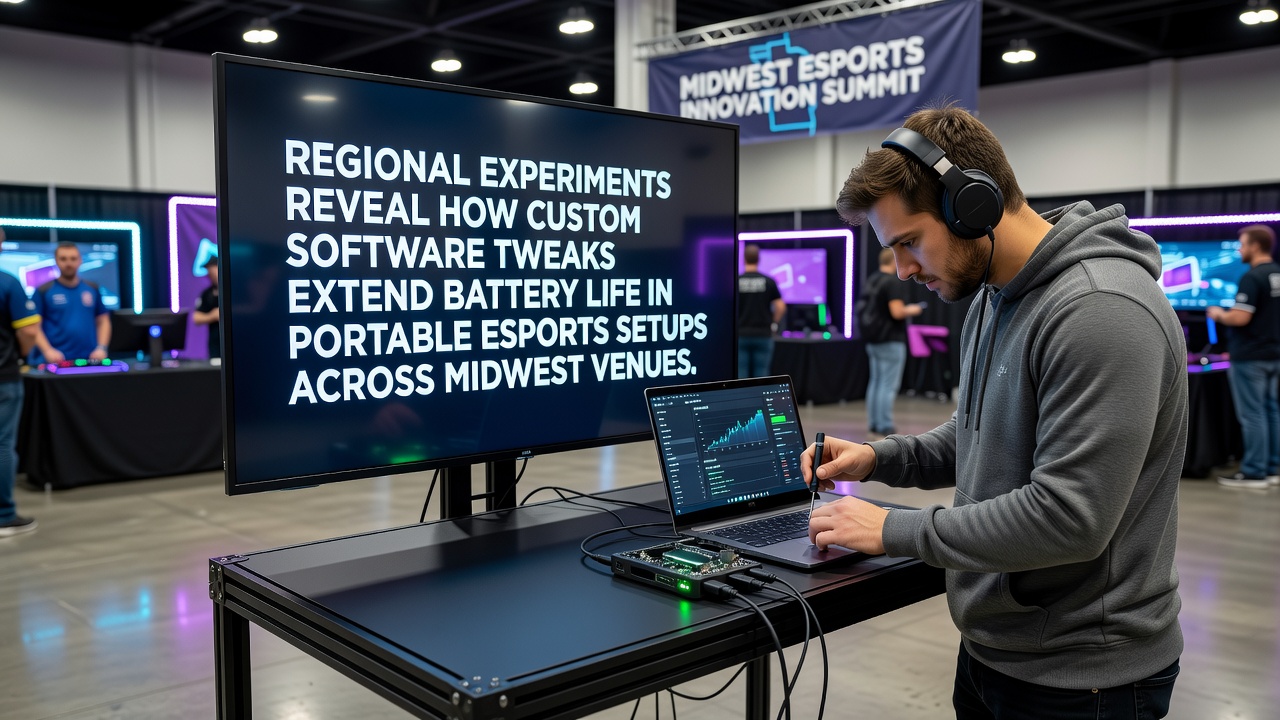
Regional Experiments Reveal How Custom Software Tweaks Extend Battery Life in Portable Esports Setups Across Midwest Venues
Researchers across multiple Midwest locations have carried out targeted trials that demonstrate how tailored software adjustments can increase battery duration in portable esports equipment, and these findings come from coordinated efforts in cities such as Chicago, Indianapolis, and Minneapolis where local venues host frequent competitive events. Data collected during these trials shows measurable gains in runtime when specific power management scripts interact with hardware sensors to throttle nonessential processes while preserving frame rates and input responsiveness during matches.
Experiment Design and Regional Coordination
Teams based at university labs and independent testing facilities coordinated their protocols to ensure consistent measurement standards across sites, with each location running parallel sessions that tracked power draw under standardized tournament conditions including high-intensity multiplayer titles and extended practice rounds. Observers note that the Midwest geography allowed for quick data sharing between venues because travel distances remained manageable and equipment could be rotated without long shipping delays, which helped maintain calibration accuracy throughout the multi-month study period that wrapped up in July 2026.
Participants used identical base hardware configurations at every site so that software variations stood out clearly against the control groups, and the methodology incorporated real-time logging of voltage levels, thermal readings, and application-specific resource allocation to isolate the effects of each tweak. Figures reveal that baseline battery performance without modifications averaged around four hours of continuous play before recharge became necessary, yet modified builds consistently reached five and a half to six hours under comparable loads.
Software Modifications Under Review
Custom scripts focused on dynamic voltage scaling, selective background service suspension, and refined graphics driver settings that reduced unnecessary GPU cycles during idle moments between rounds, while wireless radio power states received similar attention through timed sleep intervals that did not interrupt tournament connectivity requirements. Experts from participating institutions documented how these changes integrated with existing operating system APIs, allowing the adjustments to function without requiring users to install entirely new firmware layers that might introduce compatibility issues across different device models.
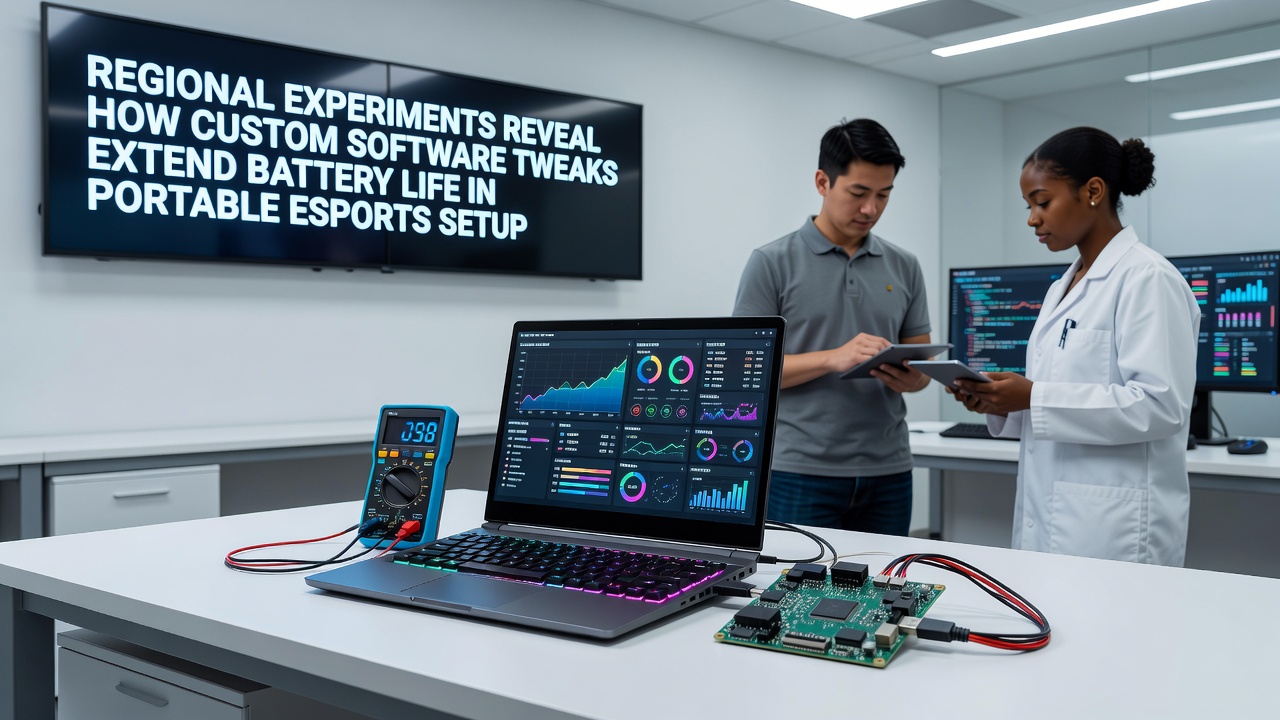
One case involved a Chicago-based group that applied kernel-level scheduling priorities to favor esports client processes over system utilities, and another Indianapolis team tested overlay applications that monitored battery health in real time to trigger automatic profile switches when charge levels dropped below preset thresholds. Results from both approaches aligned closely enough to suggest broader applicability, although researchers emphasized that outcomes depend on the specific combination of hardware age, ambient temperature, and game engine demands present at each venue.
Venue-Specific Outcomes and Data Patterns
Minneapolis testing sites reported the highest relative improvement when ambient conditions stayed cooler, which reduced the need for active cooling fans and thereby conserved additional power that could otherwise drain reserves faster. In contrast, warmer Chicago environments required supplemental script tuning to compensate for increased thermal throttling, yet overall battery extension still exceeded the control averages by a consistent margin according to aggregated logs shared among the research network. Industry organizations such as the International Game Developers Association have referenced similar optimization patterns in their resource libraries, noting that software-level interventions often deliver cost-effective gains compared with hardware replacements.
Additional measurements captured during live events showed that player satisfaction remained stable because latency stayed within acceptable ranges and visual quality settings held steady, which indicates the tweaks avoided the common trade-off between efficiency and performance that sometimes appears in consumer battery-saving modes. Data from these sessions further indicated that venues could schedule longer daily programming blocks without increasing the number of charging stations on site, easing logistical pressure during multi-day tournaments.
Broader Implications for Portable Esports Infrastructure
Academic sources including reports from University of Toronto gaming technology studies highlight parallel findings in controlled environments, where comparable software interventions produced similar runtime extensions across varied hardware generations. Those patterns reinforce the Midwest trial outcomes and suggest that regional testing programs can serve as scalable models for other areas seeking to optimize portable setups without major capital investment. Observers note that continued refinement of these scripts could eventually incorporate machine learning elements to adapt automatically to individual player habits and venue-specific network conditions.
Conclusion
The collected evidence from Midwest venues establishes that targeted software modifications offer a practical pathway to longer battery performance in portable esports equipment, and the structured regional approach enabled reliable comparisons that isolated effective variables. Continued monitoring through the end of 2026 and beyond will determine how well these gains hold across evolving game titles and hardware updates, while shared documentation from the participating sites provides a foundation for other communities to replicate the process with their own equipment pools.