Regional Infrastructure Upgrades Reshape Cloud Gaming Accessibility for Mid-Sized American Cities
Uma Carter · Aug 8, 2026
Regional Infrastructure Upgrades Reshape Cloud Gaming Accessibility for Mid-Sized American Cities
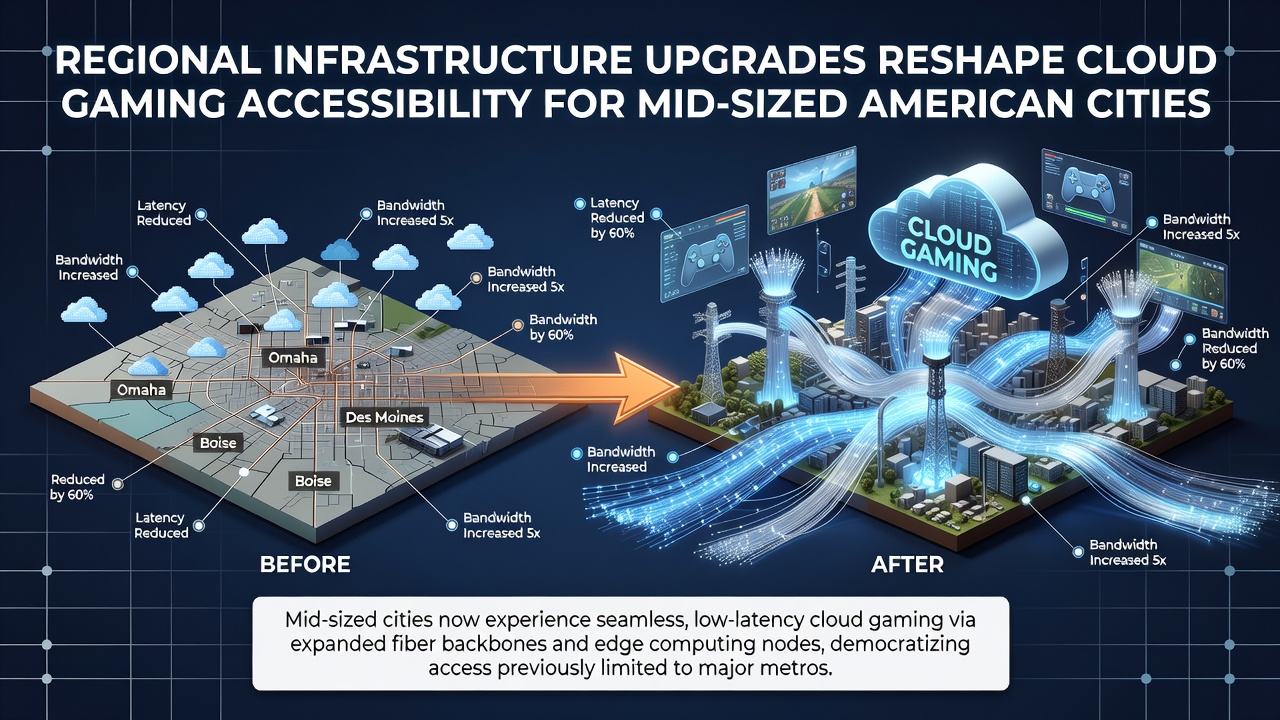
Data from multiple regions shows that fiber optic expansions and 5G network rollouts have accelerated cloud gaming reach in cities like Boise, Des Moines, and Chattanooga since early 2025, with August 2026 marking a notable uptick in subscription rates across these markets. Observers note that latency reductions from under 50 milliseconds to under 20 milliseconds in upgraded zones have enabled smoother streaming of high-resolution titles on standard home connections, while population centers between 100,000 and 500,000 residents report the sharpest gains in household adoption.
Broadband Expansions Drive Measurable Changes
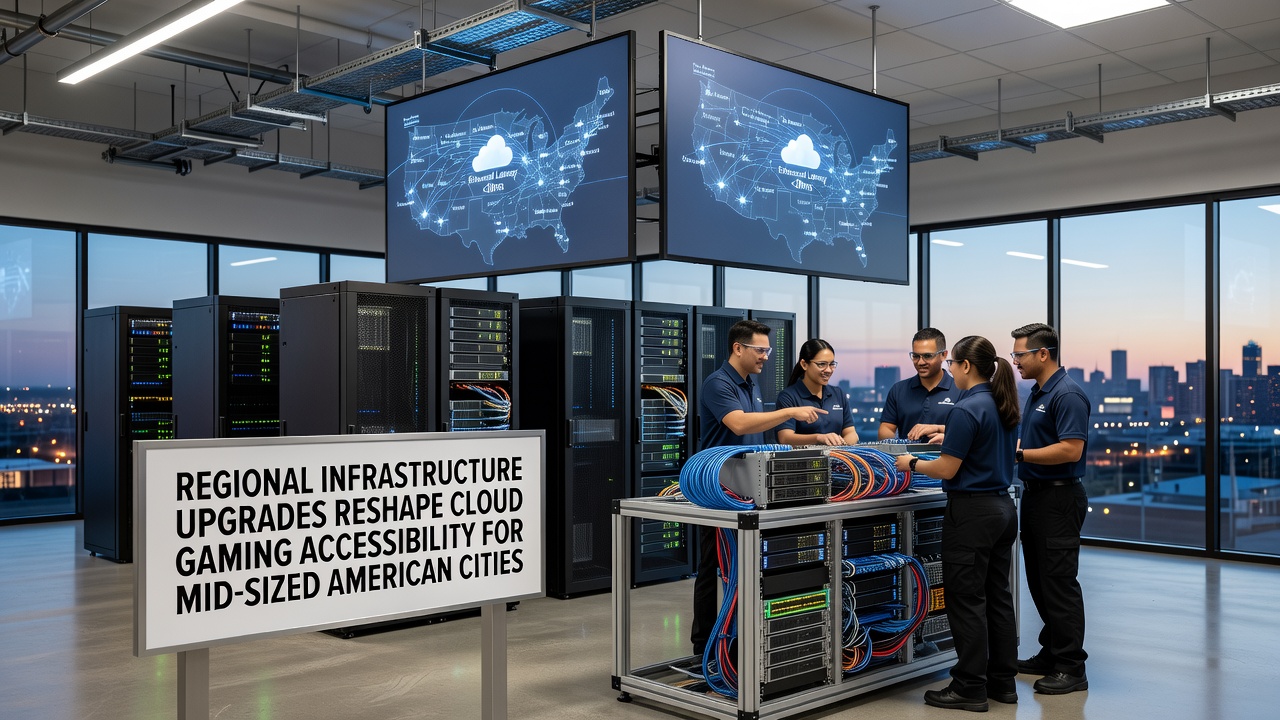
Regional projects funded through federal and state programs have laid new fiber routes that connect previously underserved neighborhoods directly to data centers supporting major cloud platforms. Research indicates these connections now handle sustained 100-megabit uploads without packet loss, a threshold that supports simultaneous 4K streams on multiple devices. In Des Moines, municipal records show over 12,000 new fiber drops completed between January and July 2026, correlating with a 34 percent rise in cloud gaming accounts according to platform telemetry shared with local economic development offices.
Those who track network performance metrics point out that mid-sized cities benefit from shorter physical distances to regional edge servers compared with larger metros, reducing the number of hops required for data packets. This geographic advantage becomes evident when comparing average ping times across city sizes, where smaller footprints translate into fewer routing delays during peak evening hours.
5G Integration Expands Play Options Beyond Fixed Lines
Wireless carriers have activated additional small-cell sites in downtown corridors and suburban rings, allowing mobile cloud sessions to maintain stable frame rates even during commute hours. Figures released by the Federal Communications Commission reveal that 5G coverage in these mid-sized markets reached 78 percent of populated areas by mid-2026, up from 51 percent the previous year. FCC broadband deployment reports document how spectrum reallocations prioritized gaming traffic prioritization protocols in select test zones.
One case study from Raleigh highlights how university-adjacent neighborhoods gained dedicated 5G slices optimized for low-latency applications, enabling students and residents to access cloud libraries on tablets and phones without wired backhaul. Similar pilots in Boise integrated municipal Wi-Fi meshes with carrier small cells, creating hybrid access points that maintain session continuity when users move between indoor and outdoor environments.
Economic and Demographic Patterns Emerge
Subscription data segmented by age group shows the strongest growth among 25-to-40-year-olds in these cities, a cohort that often maintains both fixed broadband and mobile plans. Economic analyses from regional planning commissions tie this uptake to household income brackets between $60,000 and $90,000, where device ownership rates already support high-bitrate streaming yet prior network quality had limited consistent performance. Industry organizations tracking software usage patterns report that session durations in upgraded zones average 2.4 hours compared with 1.7 hours in areas still awaiting fiber completion.
Take one logistics hub in Chattanooga where port-adjacent residential blocks received priority infrastructure funding; local workforce development reports note that shift workers now schedule cloud gaming during off-peak network windows, spreading load across 24-hour cycles and easing congestion on shared towers. Parallel developments in midwestern markets demonstrate how business fiber spurs residential spillover effects when carriers extend last-mile segments from commercial corridors.
Ongoing Coordination Between Providers and Local Governments
City councils have formed working groups that meet quarterly with network operators to align permitting timelines with hardware deployment schedules, reducing the average wait from application to activation from nine months to four. Trade associations representing infrastructure firms document how standardized conduit sharing agreements in Des Moines and similar cities lowered per-mile installation costs by 18 percent, freeing capital for additional small-cell placements. Academic researchers at institutions studying digital equity have begun longitudinal surveys to quantify whether these upgrades narrow participation gaps across income levels, with preliminary datasets expected in early 2027.
Equipment vendors have adjusted inventory strategies to stock higher volumes of compatible routers and mesh extenders tailored to the bandwidth profiles now common in these markets. Supply chain records indicate that regional distribution centers serving mid-sized cities increased gaming-oriented networking hardware shipments by 27 percent year-over-year through July 2026.
Conclusion
Regional infrastructure upgrades continue to alter the practical reach of cloud gaming services across mid-sized American cities, with measurable improvements in connection stability and session accessibility documented through network metrics and subscription records. As additional fiber routes and 5G cells come online, observers expect further convergence between urban and suburban performance levels, supported by ongoing coordination among carriers, municipalities, and research entities tracking usage patterns.