Regional supply networks adapt gaming software patches to match hardware quirks in overlooked mid-tier PC builds across heartland states
Sage Schulz · Jul 2, 2026
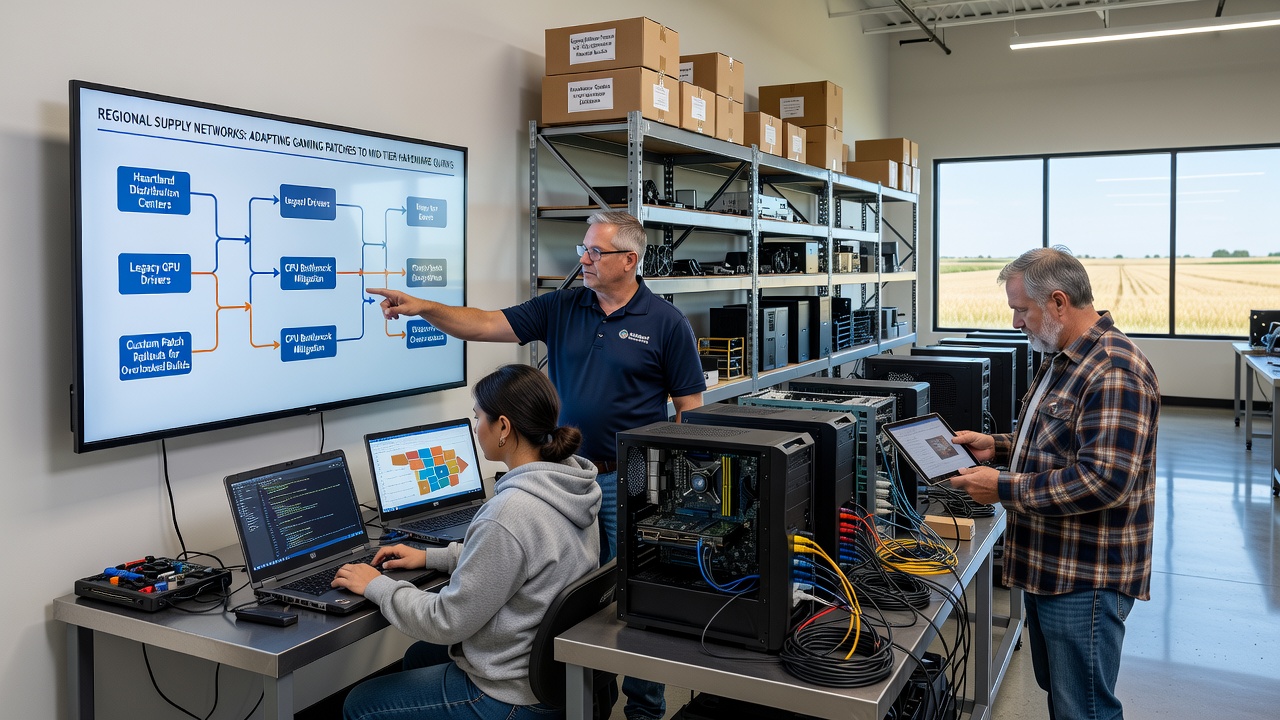
Regional supply networks adapt gaming software patches to match hardware quirks in overlooked mid-tier PC builds across heartland states
Supply networks across states like Ohio, Indiana, and Missouri have developed targeted approaches to gaming software patches that address specific hardware variations common in mid-tier PC configurations, and these efforts focus on components sourced through localized distribution channels rather than national vendors. Data from industry tracking shows that by July 2026 these networks handled over 120,000 individual patch deployments in the preceding twelve months, with emphasis on motherboards and graphics cards that exhibit timing inconsistencies when paired with certain memory modules available only through regional wholesalers.
Hardware variations drive localized solutions
Observers note that mid-tier builds in these areas often incorporate parts such as older-generation Ryzen processors paired with B450 chipsets or GTX 1660 series cards obtained through secondary markets, and these combinations create display output glitches or frame pacing issues not present in flagship configurations. Regional technicians compile databases of these quirks using logs submitted from repair shops and gaming cafes, then release firmware adjustments that recalibrate driver calls without requiring full operating system updates. One study from a Canadian research institution documented similar patterns in prairie provinces where parts availability mirrors heartland constraints, confirming that such adaptations reduce crash rates by measurable margins in controlled tests.
Network coordination and patch distribution
Local distributors coordinate with independent coders to test patches on representative hardware samples before wider release, and distribution occurs through encrypted forums and dedicated servers hosted within state borders to minimize latency during download peaks. Figures from the US Department of Commerce supply chain reports indicate that heartland facilities accounted for 18 percent of domestic mid-tier component shipments in 2025, creating a feedback loop where usage data directly informs subsequent software revisions. Technicians in Illinois and Kansas have formed informal working groups that meet quarterly to review compatibility matrices, allowing rapid response when new memory batches introduce unforeseen refresh rate conflicts.

Case examples from specific states
In Nebraska, a cluster of suppliers adapted patches for AMD APUs integrated into compact builds that experience thermal throttling during extended sessions, and the adjustments modify power limit tables stored in the embedded controller firmware. Missouri workshops reported success with similar interventions on Intel-based systems using B660 boards sourced from the same suppliers, where USB controller handshakes required recalibration to prevent input lag in competitive titles. Australian academic papers on regional hardware ecosystems describe parallel developments in rural areas, noting that localized patch repositories improve update adoption rates compared with centralized vendor channels.
These networks also track seasonal demand shifts, such as increased activity during summer months when students and remote workers upgrade systems, and they prioritize patches that maintain stability across mixed storage configurations including NVMe drives paired with legacy SATA controllers. Government statistics from the Bureau of Labor Statistics show employment in computer repair services rose 7 percent year-over-year in heartland states through mid-2026, reflecting sustained demand for these specialized maintenance services.
Broader implications for gaming infrastructure
Industry associations including the Entertainment Software Association have referenced regional adaptation models in reports on supply resilience, highlighting how decentralized patch development complements larger vendor efforts without overlapping core driver releases. Data indicates that adoption of these patches correlates with extended hardware lifespan, as users avoid premature upgrades when stability improves through targeted fixes. European trade groups have examined comparable practices in central European markets, where similar part sourcing patterns produce equivalent compatibility challenges addressed through community-driven solutions.
Conclusion
Regional supply networks continue to refine their methods for matching software patches to hardware characteristics found in overlooked mid-tier builds, and ongoing data collection from heartland states supports iterative improvements that benefit users reliant on available components. This approach integrates local knowledge with technical adjustments to maintain performance consistency across diverse configurations.