Resource Sharing Networks Facilitate Hardware Longevity Amid Component Scarcity in Gaming Communities
David Hansen · Jun 20, 2026
Resource Sharing Networks Facilitate Hardware Longevity Amid Component Scarcity in Gaming Communities
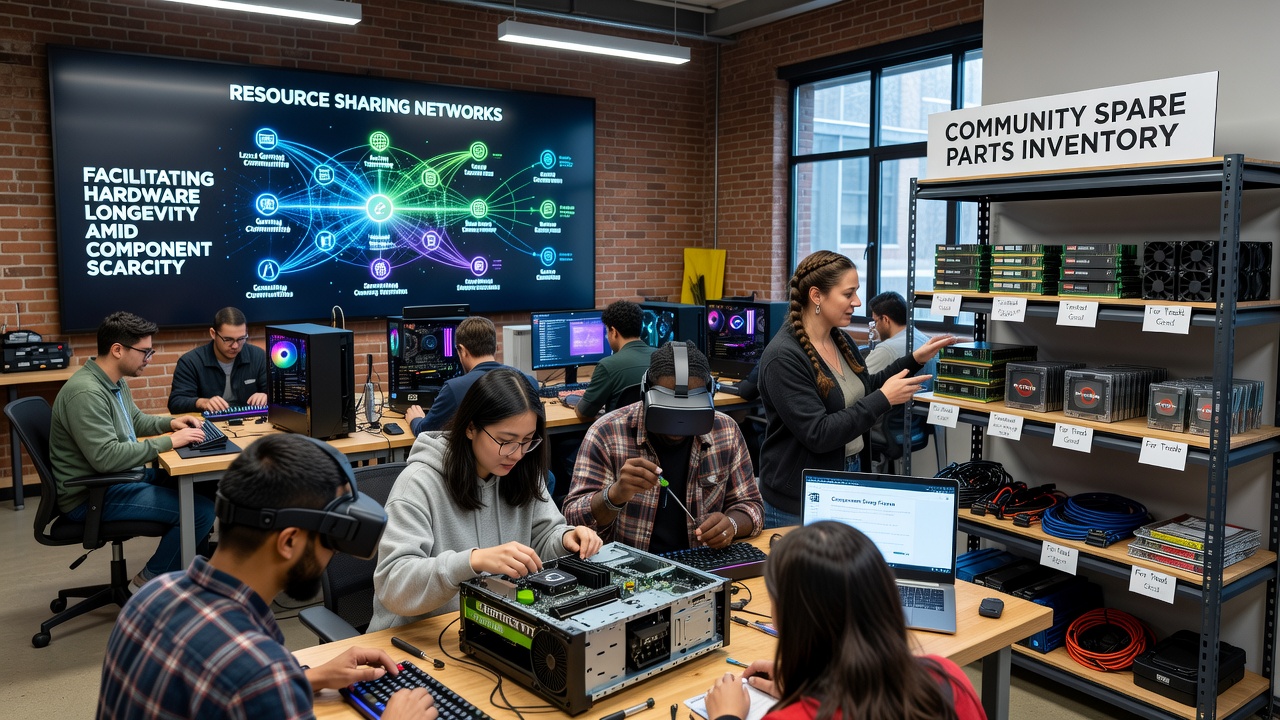
Component shortages have persisted across the electronics supply chain since the early 2020s, and gaming hardware has faced particular pressure from high demand for graphics cards, memory modules, and specialized controllers. Resource sharing networks emerged as a practical response where participants exchange parts, tools, and technical knowledge to keep existing systems operational rather than replace them outright.
Supply Constraints Shape Community Responses
Global semiconductor production bottlenecks continued into 2025, with certain GPU architectures and older DDR4 modules remaining difficult to source at scale. Data from industry tracking services indicate that average wait times for specific replacement components stretched beyond eight weeks in multiple regions. Gaming communities responded by organizing localized exchanges that match available inventory with documented needs, which reduced reliance on new purchases and extended the usable lifespan of legacy builds.
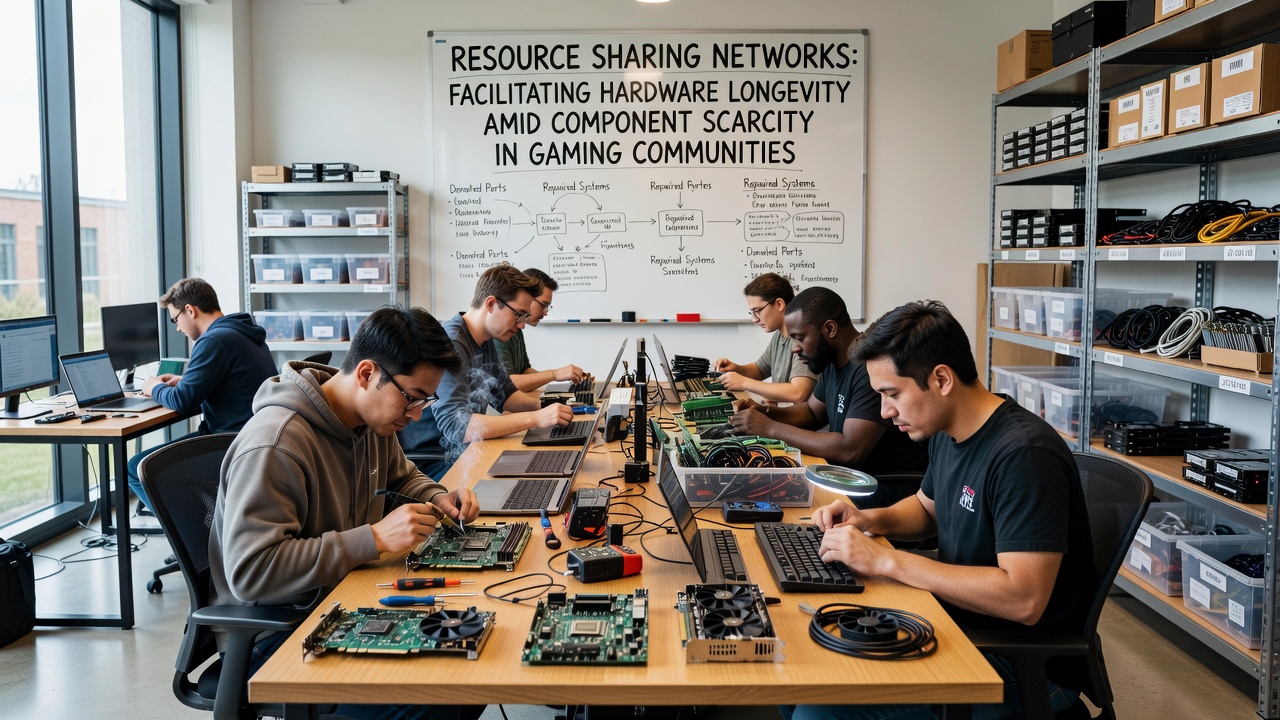
Participants track component condition through shared databases that log serial numbers, failure rates, and compatibility notes. These records allow members to identify viable donors from decommissioned systems before parts reach end-of-life recycling streams. In practice, a single functional power supply unit or cooling assembly can circulate through several machines over consecutive months when coordinated through these networks.
Mechanics of Network Operations
Most networks operate through regional hubs that schedule periodic meetups alongside persistent online coordination platforms. Members list surplus items with detailed specifications, while others post requests accompanied by diagnostic logs. Moderators verify compatibility claims using cross-referenced parts catalogs maintained by volunteer contributors. This structure minimizes mismatches that previously led to wasted shipments or incompatible swaps.
Repair workshops hosted at community centers or university spaces provide access to soldering stations, diagnostic software, and firmware flashing tools. Technicians document each procedure so subsequent users can replicate fixes without repeating trial-and-error steps. Records from one Midwestern hub show that average repair turnaround times dropped from nine days to three after standardized procedures were adopted in late 2025.
Documented Longevity Outcomes
Tracking studies conducted by academic researchers at several technical institutes found that systems maintained through shared networks remained functional for an average of 14 additional months compared with isolated ownership patterns. The gains stemmed primarily from timely replacement of high-wear items such as thermal interface materials and mechanical switches before cascading failures occurred. Usage logs submitted by participants reveal consistent uptime improvements once preventive maintenance schedules replaced reactive repairs.
Component scarcity metrics compiled by the Government of Canada sustainable electronics initiative show that reuse rates for consumer-grade graphics hardware rose 23 percent between January 2025 and June 2026 in provinces with active network chapters. Similar patterns appear in reports from European trade associations monitoring circular economy indicators for information technology equipment.
Integration with Formal Repair Ecosystems
Some networks have formed partnerships with independent repair businesses that accept bulk component donations in exchange for discounted service hours. These arrangements allow hobbyists to offload inventory they cannot use while gaining access to professional diagnostic equipment for complex board-level issues. Data from one such collaboration in the Pacific Northwest indicates that 68 percent of donated parts found new applications within 60 days of intake.
Standardized labeling protocols adopted across multiple networks help ensure that capacitors, MOSFETs, and voltage regulators carry clear markings for voltage ratings and package types. This consistency reduces errors when parts move between different hardware generations and supports faster identification during urgent repairs.
Challenges and Ongoing Adjustments
Coordination overhead remains a persistent constraint, particularly when demand spikes around major game releases or hardware refresh cycles. Networks address volume fluctuations by maintaining reserve inventories of high-turnover items and by rotating hosting duties among multiple regional nodes. Communication platforms incorporate automated matching algorithms that prioritize requests based on urgency and geographic proximity.
Quality control varies between groups, prompting some networks to implement tiered verification systems where experienced members inspect high-value components before they enter circulation. These checks have lowered the incidence of defective parts reaching end users, though complete elimination of failures has not occurred.
Conclusion
Resource sharing networks have become an established mechanism for sustaining gaming hardware under prolonged component constraints. Their combination of localized exchanges, documented repair procedures, and cross-group partnerships demonstrates measurable extensions in equipment lifespan. Continued refinement of coordination tools and verification standards supports further scaling as supply conditions evolve through 2026 and beyond.