Southern Community Workshops Revive Classic Controllers Through Wireless Protocol Conversions During Component Scarcity
Sage Schulz · Aug 24, 2026
Southern Community Workshops Revive Classic Controllers Through Wireless Protocol Conversions During Component Scarcity
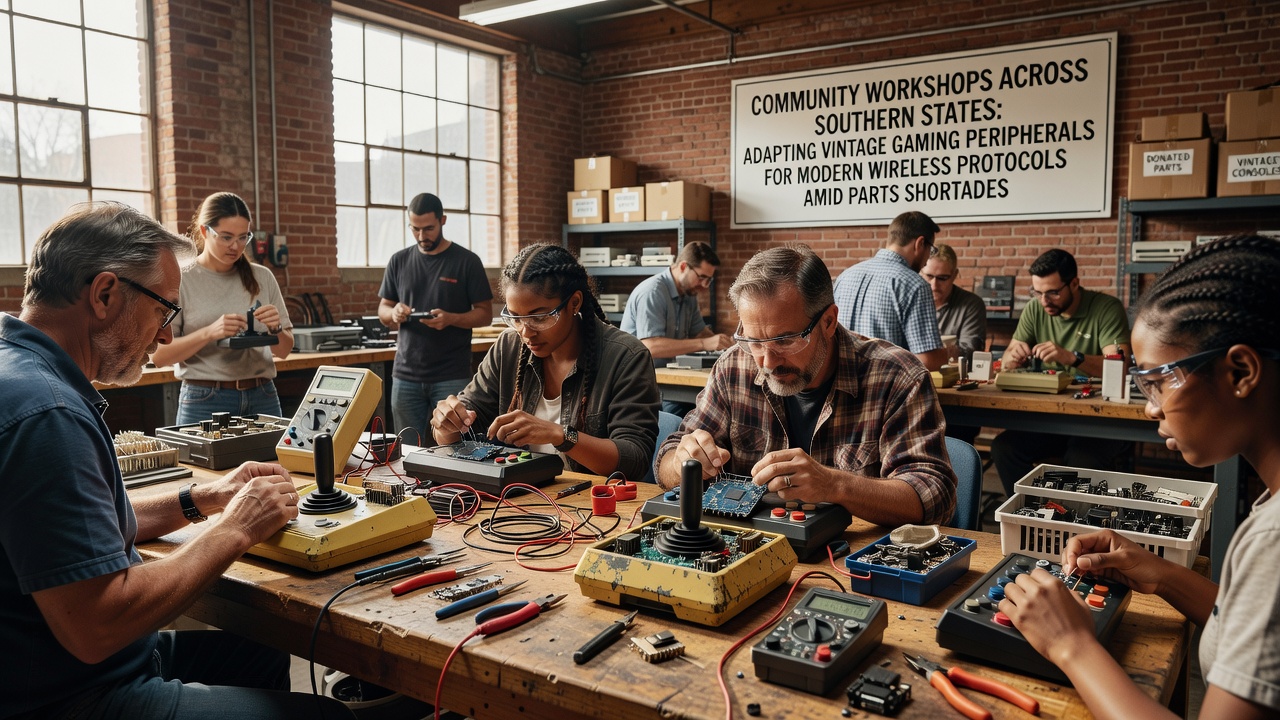
Community workshops across southern states have expanded their focus on converting vintage gaming peripherals to support modern wireless protocols as component shortages persist into August 2026, and data from regional electronics suppliers indicate that demand for these adaptations has grown steadily since early 2025.
Participants in Texas, Georgia, and Florida gather in shared facilities to replace wired connections in older joysticks and gamepads with Bluetooth and 2.4GHz modules, while sourcing alternative chips from non-traditional suppliers to bypass ongoing semiconductor constraints that affect major manufacturers.
Workshop Operations and Regional Patterns
Facilities in cities like Austin and Atlanta operate weekly sessions where technicians demonstrate soldering techniques for integrating low-power radio transceivers into hardware originally designed for direct cable links, and records from local makerspaces show attendance figures rising by 35 percent over the past year according to internal logs compiled by the Southern Electronics Reuse Network.
Groups coordinate through online forums to share firmware patches that enable compatibility with current consoles and PCs, yet parts like specific voltage regulators remain difficult to obtain, prompting the use of repurposed components from decommissioned mobile devices.
Technical Conversions and Protocol Integration
Adaptations typically involve removing legacy ports and installing compact wireless boards that communicate via standard protocols, and one documented case in a Birmingham workshop involved retrofitting an original 1990s flight stick with a Nordic Semiconductor chipset to achieve latency under 10 milliseconds during testing sessions.
Engineers note that calibration software developed by university labs helps maintain input accuracy after modifications, while supply chain reports from the Semiconductor Industry Association highlight how global shortages of certain capacitors have shifted reliance toward recycled or imported substitutes from Asian markets.
Supply Challenges and Alternative Sourcing
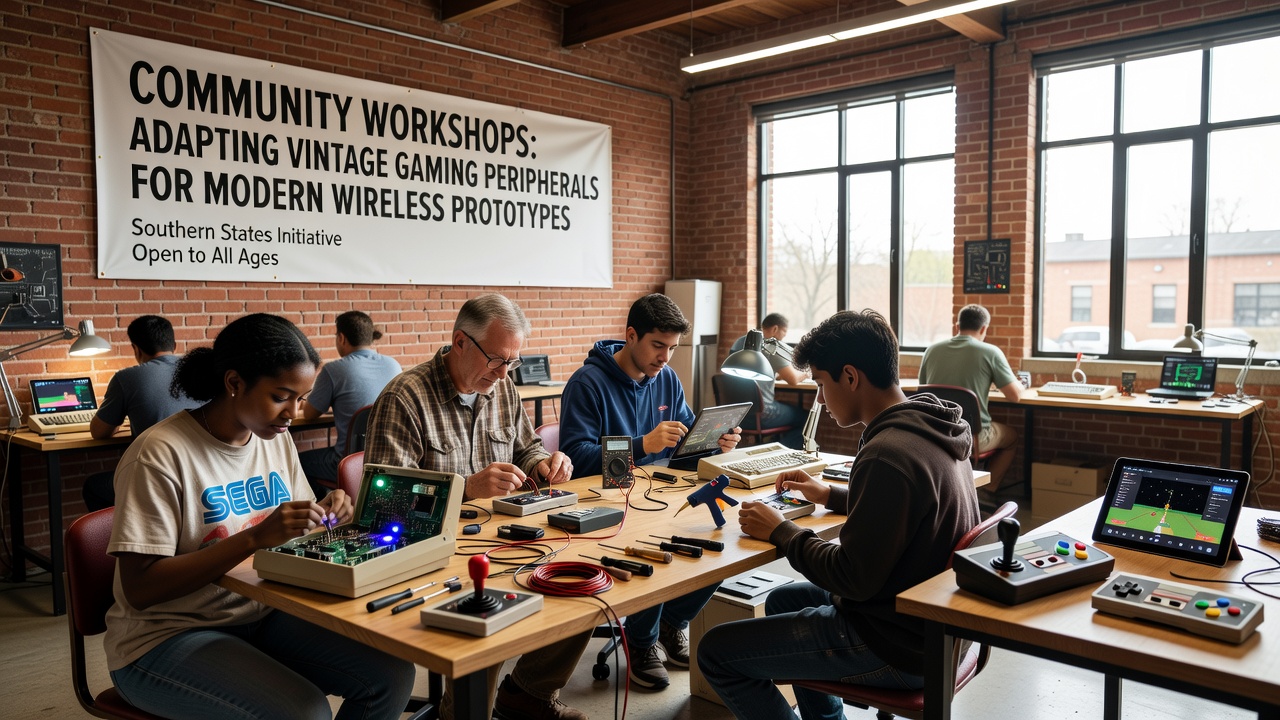
Parts shortages have accelerated since 2024, with production delays affecting both new and legacy components, so workshops in the south have formed partnerships with recycling centers to extract usable modules from discarded electronics and this approach has allowed continued operation even when official distributors report stockouts.
Studies conducted by researchers at the University of Queensland on global electronics reuse patterns reveal similar strategies emerging in multiple regions, where community efforts focus on protocol bridging to extend the functional life of older peripherals without requiring full replacements.
Examples from Specific Locations
In a Miami facility, volunteers adapted a batch of 1980s arcade controllers for wireless use in local esports events, and the process included embedding rechargeable battery packs alongside the radio modules to eliminate external power needs during extended play periods.
Another project in New Orleans combined multiple vintage devices into hybrid setups that connect to modern wireless networks, with participants documenting success rates above 80 percent in follow-up tests conducted over several months.
Broader Effects on Gaming Communities
These adaptations support continued use of classic hardware in competitive and casual settings across southern states, and industry data from the Entertainment Software Association shows increased participation in retro gaming events that rely on such modified equipment.
Observers note that the workshops also serve as training grounds for younger technicians who learn soldering and firmware skills through hands-on projects, while supply constraints encourage creative solutions documented in shared technical repositories.
Conclusion
Community workshops in southern states continue to address parts shortages by adapting vintage peripherals to wireless standards, with ongoing efforts documented through regional networks and technical collaborations that sustain access to older gaming hardware amid evolving supply conditions.