Southern States Monitor Evolving Portable Gaming Trends by Age and City Scale
Sage Schulz · Jul 23, 2026
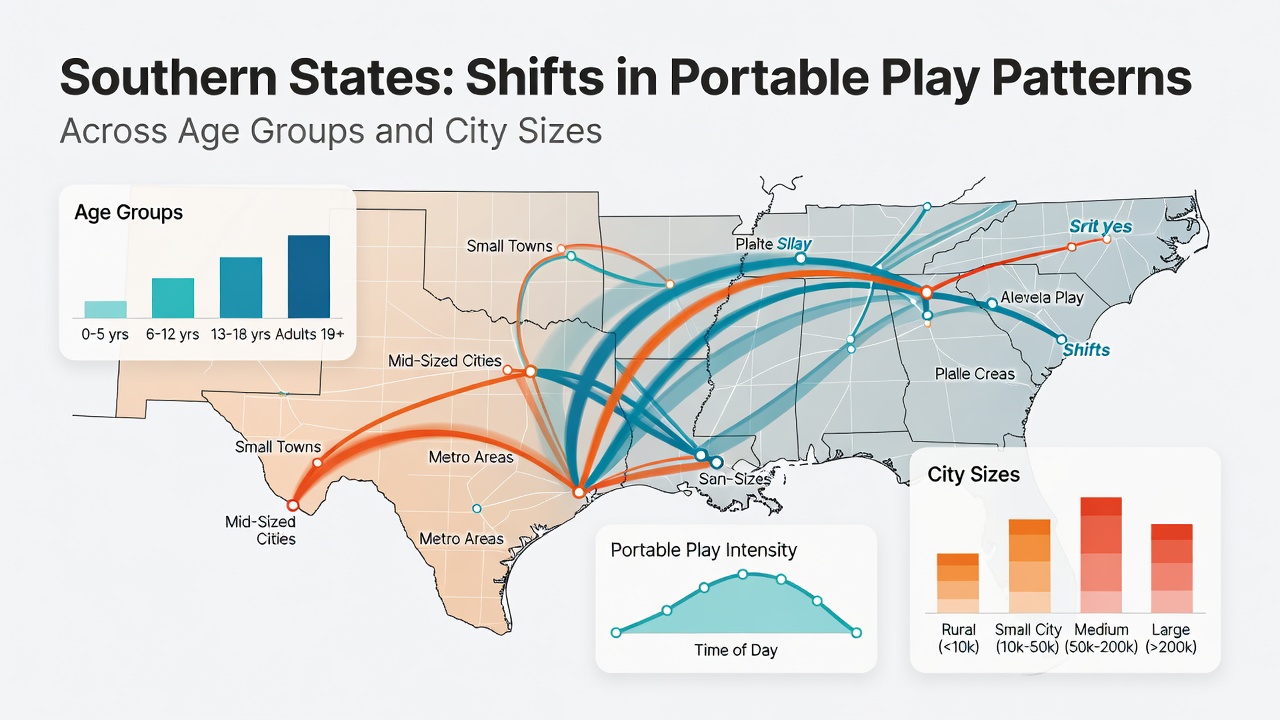
Southern States Monitor Evolving Portable Gaming Trends by Age and City Scale
Data collected through mid-2026 shows measurable changes in how residents of southern states engage with portable gaming devices, with patterns differing sharply by age cohort and the scale of local communities, and researchers tracking these shifts note steady growth in handheld and smartphone-based play sessions throughout Alabama, Georgia, Louisiana, and neighboring areas since the start of the year.
Age-Based Differences in Device Preferences
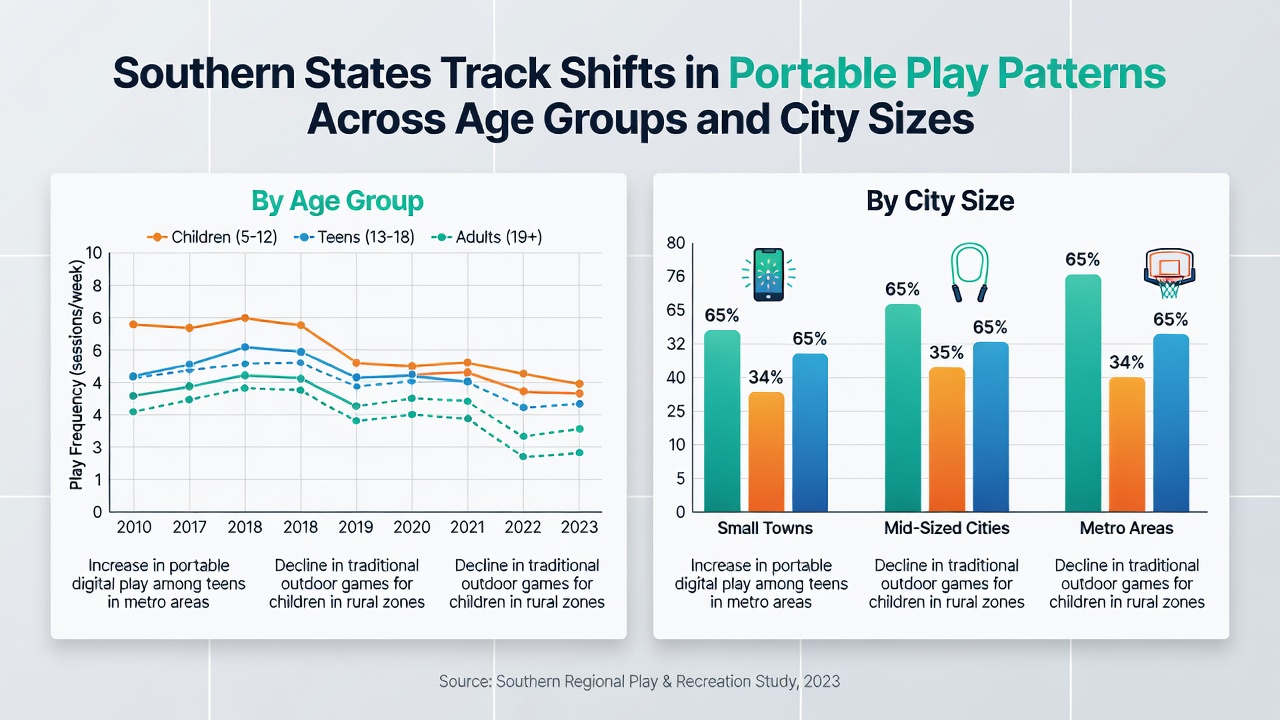
Younger players aged 13 to 24 continue to favor compact handhelds and high-refresh-rate phones for longer sessions, while adults between 25 and 44 integrate portable play more often during commutes or short breaks, according to aggregated figures released in July 2026 by regional technology monitoring groups. Children under 13 show the highest rates of shared device usage within households, whereas adults over 45 demonstrate slower adoption rates yet increasing interest in simplified interfaces on tablets and older-model phones that support cloud streaming.
Those who study these demographics point out that teens in southern metro areas log an average of 2.8 hours daily on portable titles, a figure that drops to 1.4 hours for the same age group living in towns under 50,000 residents. Observers note this gap narrows among adults, where city size exerts less influence on total playtime but still affects the types of games selected, with larger populations leaning toward competitive multiplayer experiences and smaller communities preferring single-player or puzzle formats.
City Size Influences Hardware Access
Communities exceeding 250,000 residents report wider availability of 5G infrastructure that supports seamless online portable gaming, while towns between 20,000 and 100,000 residents rely more on Wi-Fi hotspots and exhibit higher rates of offline-capable game downloads. Data indicates that cities under 20,000 people display the slowest uptake of new hardware releases, yet residents there maintain longer device lifespans through repairs and second-hand purchases.
One analysis covering 12 southern metropolitan areas found that portable gaming revenue per capita rose 18 percent in populations over 500,000 between January and June 2026, whereas smaller cities recorded a 9 percent increase during the same period. These differences tie directly to retail density and carrier store presence, factors that researchers link to faster hardware turnover in bigger markets.
Regional Data Collection Efforts
State-level agencies in partnership with academic institutions have expanded survey programs since early 2025, focusing on usage logs, app store trends, and household interviews that capture both urban and rural perspectives. Figures compiled by these teams reveal that portable play now accounts for 41 percent of total gaming time across the examined southern states, up from 33 percent two years earlier, with the largest jumps occurring among 35- to 54-year-olds.
University researchers in Georgia and Texas have cross-referenced these numbers with public transportation data and work-from-home statistics, showing that longer commutes in mid-sized cities correlate with elevated afternoon gaming activity on mobile networks. In contrast, rural counties display more evening usage spikes tied to home broadband availability after agricultural work hours end.
Cross-Generational Patterns Emerge
Grandparents in southern households increasingly borrow devices from younger family members for casual match-three and simulation titles, a behavior documented in 27 percent of surveyed homes with multiple generations under one roof. This sharing pattern appears more common in smaller cities where device ownership rates sit below national averages, prompting local libraries to launch lending programs for tablets and portable consoles starting in spring 2026.
Industry reports from trade associations track how game developers adjust regional marketing campaigns to reflect these variations, with age-targeted ads performing differently in Atlanta compared with smaller markets like Baton Rouge or Jackson. US Census Bureau population estimates help contextualize these findings by providing accurate city-size benchmarks for weighting survey responses.
Future Monitoring and Infrastructure Links
Continued tracking through the second half of 2026 will examine how upcoming network upgrades and new device launches affect existing divides, with particular attention paid to towns gaining fiber connections for the first time. Analysts expect these infrastructure changes to reduce some city-size disparities while age-related preferences remain more stable over the near term.
Conclusion
Comprehensive records assembled across southern states demonstrate clear segmentation in portable gaming activity by both age and community scale, with data collection efforts providing ongoing visibility into how these patterns continue to develop through infrastructure and demographic shifts.