US College Esports Programs Integrate Custom Software Dashboards to Track Player Metrics and Training Schedules
Xander Carter · May 28, 2026
US College Esports Programs Integrate Custom Software Dashboards to Track Player Metrics and Training Schedules
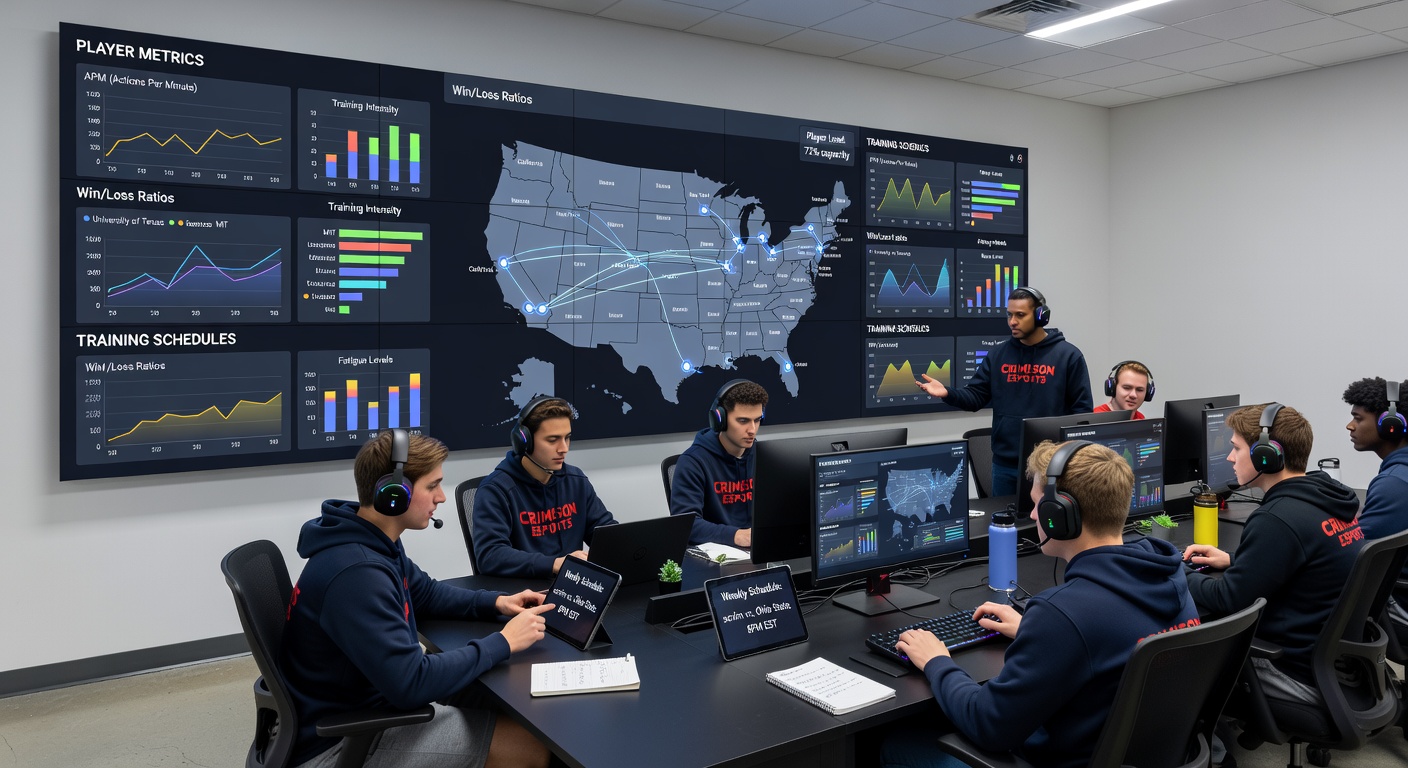
Colleges across the United States have begun rolling out custom software dashboards that compile player performance data and training timelines into centralized platforms, and these systems now operate in programs spanning California, Texas, New York, and Illinois as of May 2026. Universities coordinate schedules for hundreds of student athletes who compete in titles such as League of Legends and Valorant while coaches adjust regimens based on real-time indicators like reaction times, accuracy percentages, and sleep duration logs.
Programs at institutions including the University of California Irvine and the University of Texas at Dallas started pilot versions in 2024 before expanding to full deployment the following year, and similar tools reached New York University and Northwestern University shortly afterward. Data from these platforms flows through secure university servers that comply with student privacy regulations, allowing staff to view aggregated trends without accessing individual medical records.
Regional Rollouts and Platform Development
Teams in the Midwest collaborated with software developers based in Chicago to create interfaces that sync with existing university learning management systems, and those same developers later adapted the code for East Coast schools where different conference rules apply. In Texas, dashboards incorporate state-specific compliance modules that flag training hours exceeding recommended limits, while California programs added features for cross-time-zone coordination among players spread across multiple campuses.
One study from the University of Waterloo examined similar monitoring approaches in Canadian collegiate settings and found measurable improvements in schedule adherence when visual summaries replaced paper logs. Observers note that US programs have since referenced those findings when selecting vendors, and several athletic departments now require annual audits of dashboard algorithms to maintain transparency with student athletes.
Metrics Tracked and Training Integration
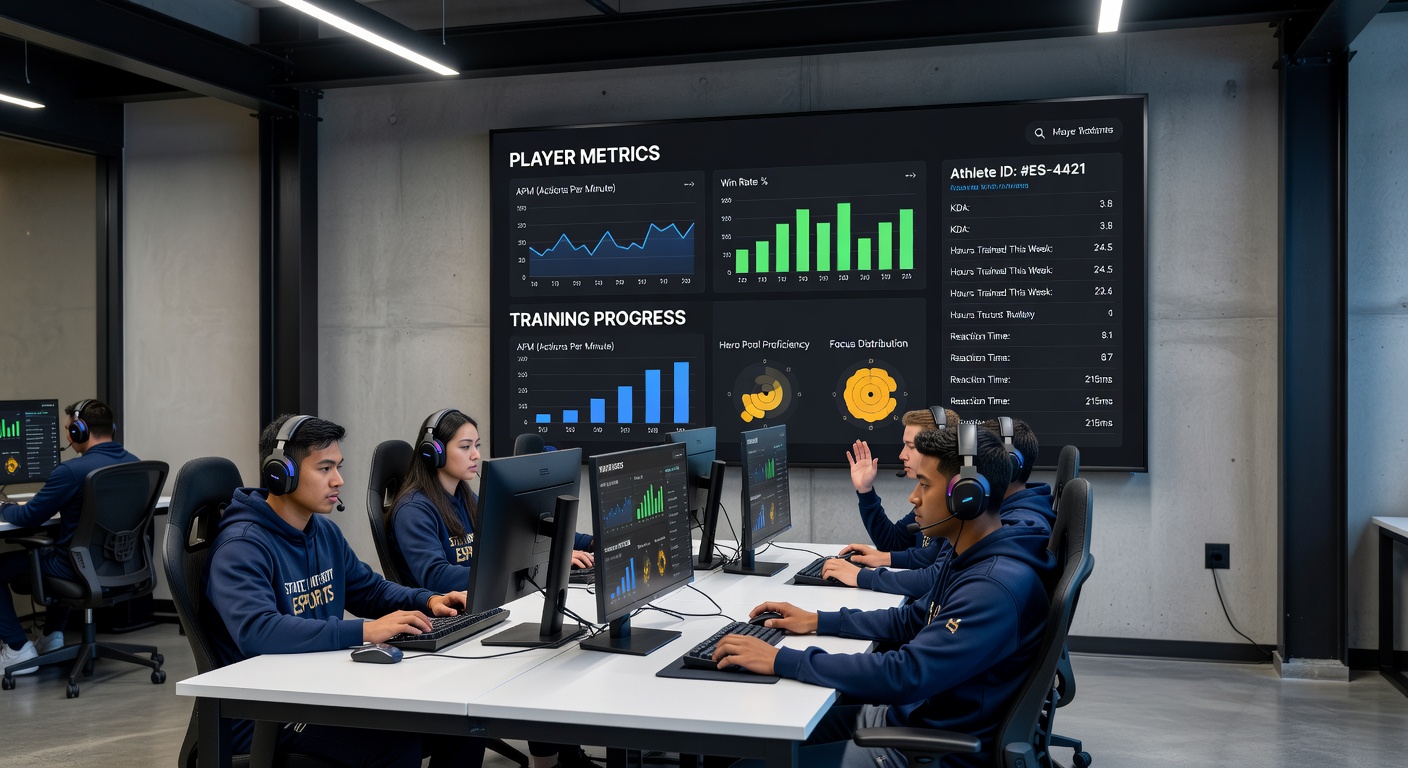
Dashboards typically display categories such as average damage per minute in matches, practice session completion rates, and heart rate variability captured through wearable devices that athletes already use for general fitness. Coaches receive alerts when individual metrics deviate from established baselines for more than three consecutive days, prompting schedule adjustments that might include reduced scrimmage time or added recovery blocks.
Training schedules appear as color-coded calendars within the same interface, and players log their availability directly through mobile applications that push updates to the central system. At the University of Illinois, staff reported that synchronization between academic calendars and esports commitments reduced conflicts during final exam periods in spring 2026, while programs in New York integrated similar features ahead of their own semester deadlines.
Data Sources and External Benchmarks
Figures released by the National Association of Collegiate Esports indicate that over 120 member institutions now employ some form of digital monitoring, though the depth of customization varies by budget and technical staff availability. Researchers at the University of Sydney published comparative analysis in 2025 that contrasted US dashboard adoption rates with slower uptake in Australian universities, citing differences in funding structures and regulatory environments around student data.
Those same reports highlight how programs in multiple states share anonymized datasets through consortium agreements, allowing smaller schools to benchmark against larger conferences without developing tools from scratch. Integration with existing campus Wi-Fi and device management policies has simplified rollout for many departments, though initial setup still requires coordination between IT services and athletic compliance offices.
Future Adjustments Across States
By May 2026 several states had introduced legislative discussions around data retention periods for collegiate esports records, prompting programs to review their dashboard settings in advance of potential new rules. Illinois and California teams adjusted export functions to support longer audit trails, while New York programs focused on encryption upgrades after reviewing guidance from regional higher education networks.
Additional modules under development include automated scouting reports that pull from public match data and integrate directly into the same dashboards, and early tests at select institutions show reduced administrative time for roster evaluations. Partnerships with hardware manufacturers have also produced standardized export formats that work across different controller types and headset models commonly used by college players.
Conclusion
Custom software dashboards have become standard infrastructure for many US college esports programs operating across state lines, and their continued refinement depends on collaboration between athletic departments, software developers, and regulatory bodies. As adoption expands, the focus remains on accurate data handling and schedule alignment that supports both competitive performance and academic responsibilities for student participants.