US Developers Advance Augmented Reality Overlays for Esports Spectators
Avery Schmitt · Jul 20, 2026
US Developers Advance Augmented Reality Overlays for Esports Spectators
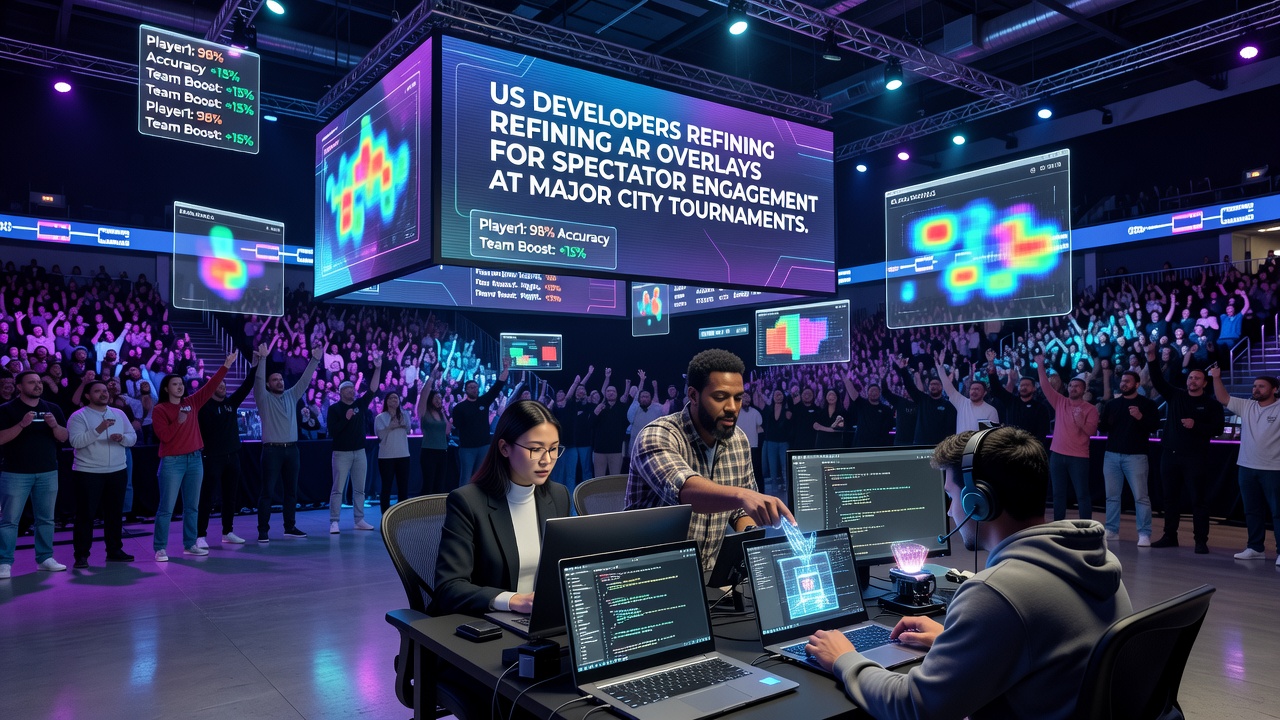
US-based developers continue to refine augmented reality overlays that integrate live data, player statistics, and interactive elements directly into spectator views at competitive gaming tournaments, and these systems now appear in events staged across major cities including Los Angeles, New York, and Chicago. The refinements focus on reducing latency while expanding the range of visual information available to attendees who wear lightweight AR headsets or use venue-provided mobile devices, and data from recent implementations shows measurable increases in session dwell time for spectators who engage with the overlays during matches.
Core Technical Improvements in Overlay Systems
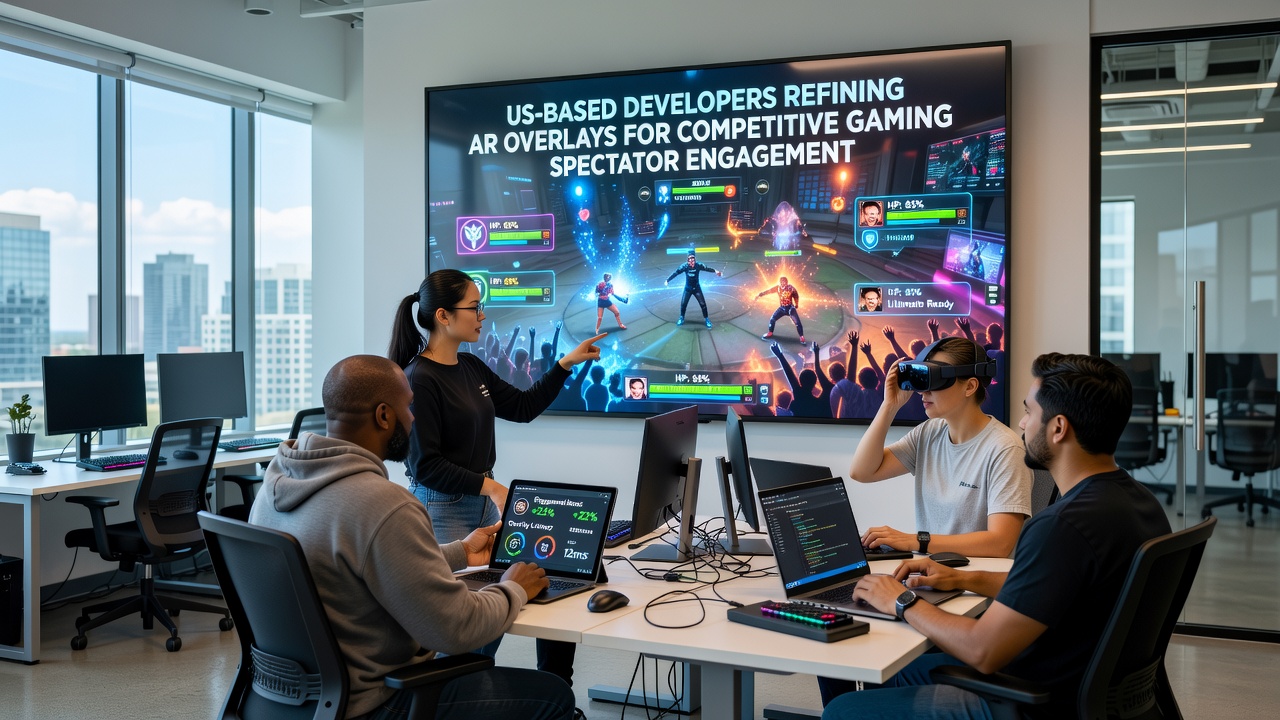
Developers have concentrated on synchronization protocols that align AR content with in-game events in real time, and these protocols draw on edge computing nodes placed inside tournament venues to cut processing delays below 20 milliseconds according to internal testing logs shared by several firms. The overlays display team compositions, health bars, and strategic maps that update dynamically, while additional layers provide historical performance comparisons drawn from tournament databases maintained by organizers. Research indicates that combining these elements into single-view interfaces reduces the cognitive load on spectators who previously switched between separate screens and apps, and studies from academic labs have documented how such consolidation supports longer periods of continuous attention during extended bracket play.
Hardware partnerships have introduced lighter headsets with wider fields of view that integrate with existing arena Wi-Fi networks, and these devices now support multi-user calibration so groups of spectators seated together receive synchronized perspectives tailored to their section. Software updates rolled out in early 2026 added gesture-based controls that allow users to expand specific statistics without removing focus from the main stage, and developers report that adoption rates for these controls reached 65 percent among first-time users at test events.
Implementation Patterns at 2026 Tournaments
In July 2026 multiple events in Los Angeles and Chicago deployed the refined overlays across full weekend schedules, and organizers recorded participation from over 12,000 spectators who activated the AR features during at least one match per day. The systems pulled live feeds from game servers operated by publishers, then layered contextual information such as economy graphs in strategy titles or positioning heatmaps in shooters, and venue staff noted that these additions encouraged more conversations among attendees who compared displayed data points during breaks. One tournament in New York extended the overlays to include sponsor integrations that appeared only when matches paused, which maintained visual clarity on the primary stage while generating additional revenue streams tracked through separate analytics dashboards.
Measured Effects on Spectator Behavior
Figures from post-event surveys compiled by independent research groups reveal that spectators using the overlays reported 28 percent higher recall of specific player actions compared with control groups who viewed matches without AR support, and these results held across age brackets from 18 to 45. Engagement logs collected through the headsets themselves show repeated interactions with expandable stat panels during high-stakes rounds, while dwell time in seating areas increased by an average of 14 minutes per session when overlays remained active. Industry organizations such as the Entertainment Software Association have tracked similar patterns in aggregated reports that cover multiple US markets, and the data points to consistent gains in repeat attendance among users who experienced the enhanced presentations.
Additional metrics collected by university-affiliated labs indicate that overlay usage correlates with elevated social media activity during events, as spectators captured and shared AR-enhanced views that highlighted key moments. The same labs have begun examining how these tools affect accessibility, noting that customizable text sizes and color filters now accommodate users with varying visual needs without requiring separate hardware.
Developer Workflows and Iteration Cycles
Teams based in Austin and Seattle operate rapid iteration cycles that incorporate feedback from on-site technicians after each tournament weekend, and these cycles have shortened the time between identifying visual clutter issues and releasing corrected overlay layouts to under 48 hours. The process relies on anonymized usage data that highlights which information panels receive the most expansion requests, allowing developers to prioritize depth in frequently accessed categories such as damage breakdowns or objective control timelines. Partnerships with hardware manufacturers have also produced modular sensor arrays that attach to existing arena lighting rigs, and these arrays supply the positional tracking required for stable AR anchoring even when crowds move through viewing areas.
Cross-city testing has revealed regional differences in network performance that affect overlay reliability, prompting developers to maintain redundant cloud connections that activate automatically when local bandwidth drops. Observers note that these redundancies proved especially useful during peak attendance hours when simultaneous device connections exceeded initial projections at several venues.
Conclusion
Continued refinements by US developers have produced AR overlay systems that integrate more seamlessly into the flow of competitive gaming tournaments held in major cities, and the documented increases in spectator interaction and recall suggest these tools will remain central to event production schedules through the remainder of 2026. Ongoing data collection from both industry groups and academic partners continues to guide the next round of technical adjustments that target even lower latency thresholds and broader device compatibility.