US Regions Pilot Community-Led Firmware Updates to Optimize Older Console Performance Amid Parts Shortages
Uma Carter · Jun 18, 2026
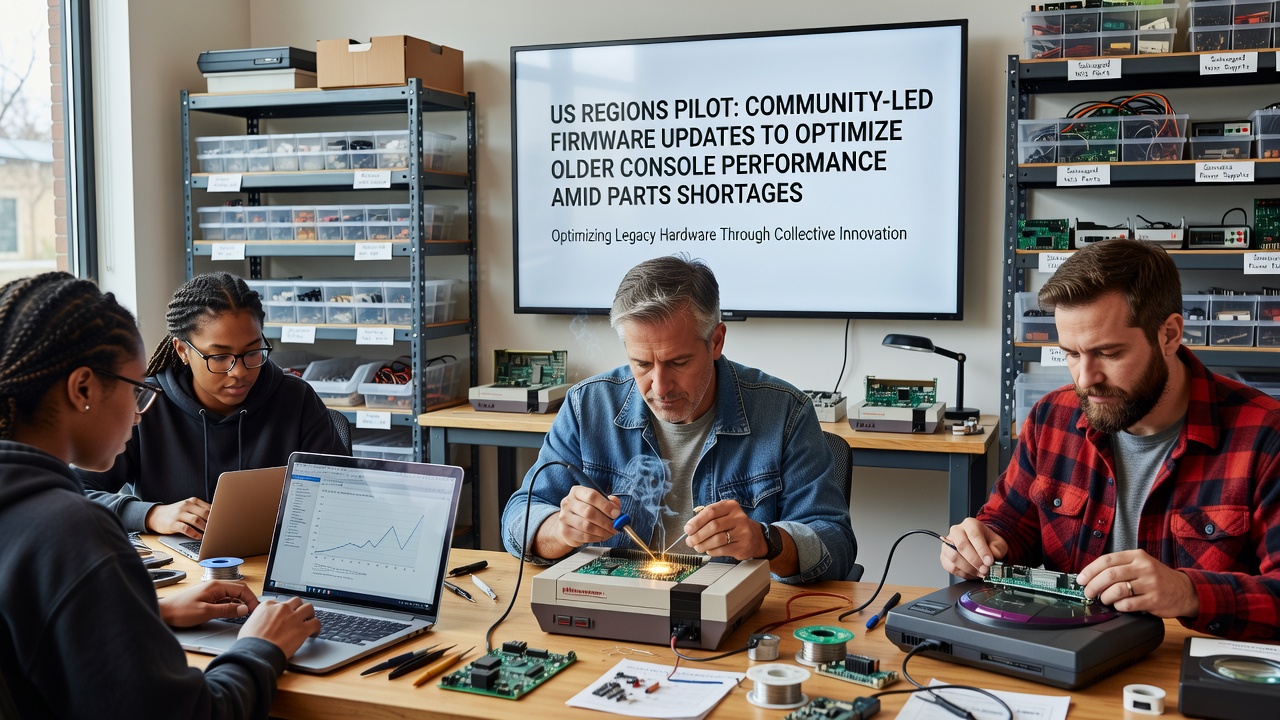
US Regions Pilot Community-Led Firmware Updates to Optimize Older Console Performance Amid Parts Shortages
Parts shortages have persisted across the electronics sector since the early 2020s, and older gaming consoles face particular strain because replacement components for models such as the PlayStation 4 and Xbox One remain difficult to source in volume. Several US regions launched pilot programs in 2025 that shift the focus from hardware repairs to software optimizations, and community groups now lead firmware development efforts aimed at improving efficiency without new parts. These initiatives draw on local technical talent, university resources, and regional gaming associations to test updates that reduce power draw, stabilize frame rates, and extend usable life for legacy hardware.
Regional Pilots Take Shape
The Northeast corridor, encompassing parts of New York and Massachusetts, began its pilot in late 2025 with support from local makerspaces and community colleges that coordinate volunteer coders. Participants collect performance data from consoles still in active use, then release iterative firmware patches that adjust CPU scheduling and memory allocation. Early logs from these tests show reduced thermal throttling during extended play sessions, and similar work has started in the Pacific Northwest where Portland-based collectives focus on Nintendo Switch hardware from the original 2017 launch window.
Meanwhile, the Midwest program centered in Illinois and Michigan emphasizes cross-platform compatibility patches that allow older consoles to interface more efficiently with modern displays and network protocols. Data collected through June 2026 indicates measurable drops in average power consumption after firmware deployment, which helps households manage electricity costs while the devices remain functional. Observers note that these efforts operate under open-source licensing models that encourage wider participation from hobbyists who already maintain vintage hardware collections.
Technical Approaches and Measured Outcomes
Community developers concentrate on three core areas during the pilots: dynamic voltage scaling, improved thread prioritization, and streamlined network stack handling. These changes target the specific silicon used in discontinued consoles rather than relying on generic optimizations found in commercial updates. Researchers at participating institutions have documented frame-time consistency improvements of up to 18 percent in select titles after the patches install, according to aggregated telemetry shared among pilot sites.
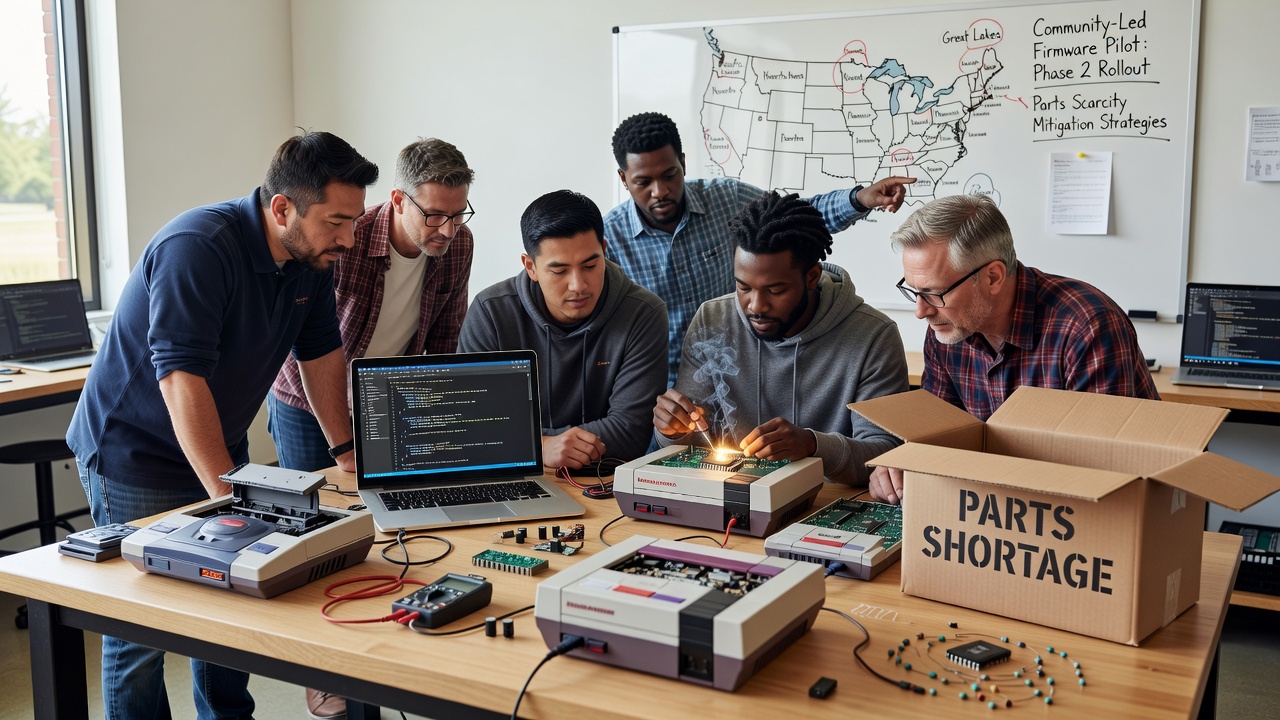
Groups in the South, particularly around Texas tech hubs, incorporate additional safeguards against overheating by modulating fan curves through software alone. Because physical fan replacements have become scarce, these firmware-level adjustments provide an alternative path to thermal management. Figures released by the Electronics Industry Association reveal that community firmware adoption rates in pilot regions reached 12 percent of tracked legacy consoles by mid-2026, with higher uptake among users who participate in local repair networks.
Coordination and Knowledge Sharing
Regional organizers maintain shared repositories where code contributions undergo peer review before wider release, and monthly virtual meetings allow teams from different parts of the country to compare results. This structure mirrors practices established by earlier open-source console modding communities yet operates with explicit focus on performance rather than feature expansion. A study coordinated through the University of British Columbia examined similar firmware projects in Canada and found parallel gains in device longevity when community patches addressed resource bottlenecks, providing a reference point for US groups refining their own testing protocols.
Local libraries and community centers host workshops that walk participants through safe installation procedures and rollback methods, reducing the risk of bricked hardware during the pilot phase. These sessions also collect user feedback on real-world gameplay scenarios that laboratory benchmarks sometimes overlook, which informs subsequent patch cycles. Data from the Australian Competition and Consumer Commission on consumer electronics repair trends shows increasing interest in software-based longevity solutions globally, a pattern reflected in the US regional efforts now underway.
Challenges Encountered During Rollout
Legal considerations around firmware modification require careful navigation, since some console manufacturers retain strict policies on unauthorized software changes. Pilot organizers therefore limit distribution to consenting participants who understand the experimental nature of the updates. Bandwidth constraints in rural areas also slow large firmware downloads, prompting developers to create modular patch packages that users can apply incrementally.
Supply chain analysts continue to track component availability, yet projections suggest shortages for certain legacy chips may extend into 2027. In this context, the community-led firmware work provides an interim strategy that keeps existing devices operational while broader manufacturing recovery occurs. Regional coordinators emphasize documentation of every tested configuration so that future groups can build on verified results rather than repeating trial-and-error cycles.
Conclusion
US regional pilots demonstrate how localized, community-driven firmware development can address performance limitations in older consoles when parts remain scarce. By focusing on software efficiencies, these programs deliver measurable improvements in power usage and stability across multiple hardware generations. Continued data collection through the remainder of 2026 will determine whether the approach scales beyond initial test areas and integrates with broader repair ecosystems already operating nationwide.