Wireless Adapters Breathe New Life Into Classic Arcade Cabinets at U.S. State Fairs and Local Venues
Uma Carter · Aug 28, 2026
Wireless Adapters Breathe New Life Into Classic Arcade Cabinets at U.S. State Fairs and Local Venues
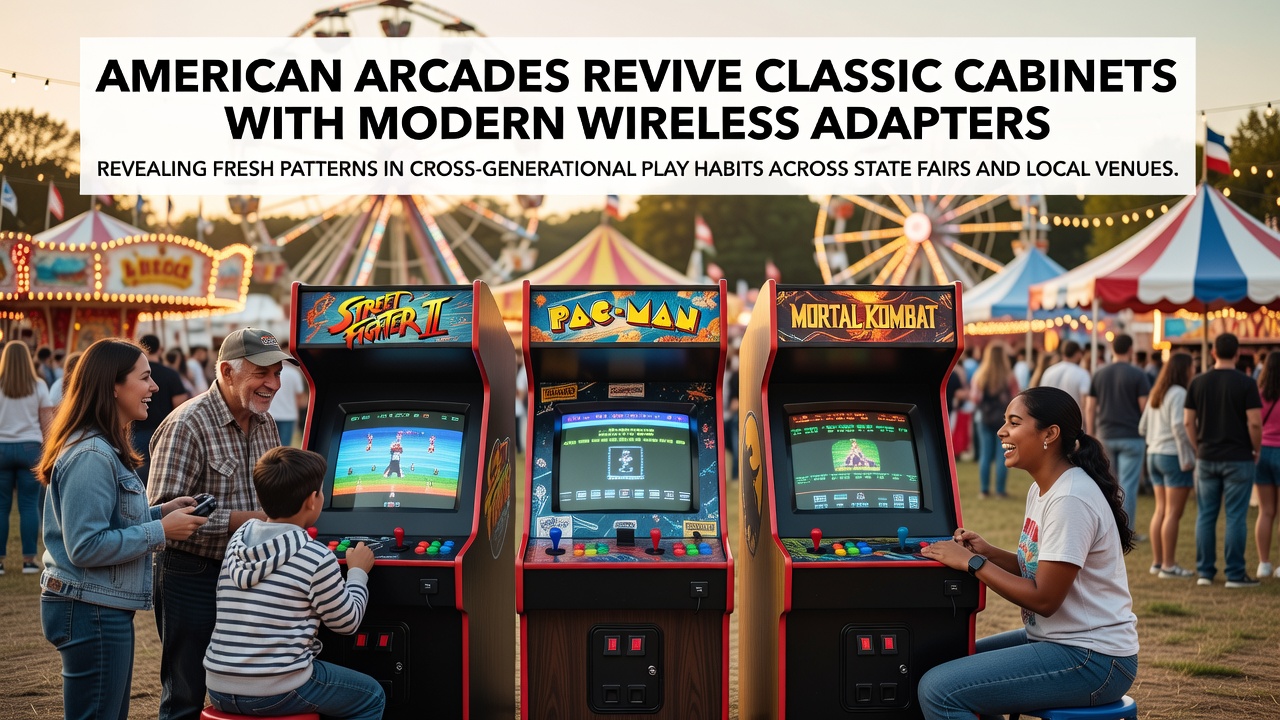
American arcades and fairgrounds have begun integrating wireless adapters into vintage game cabinets, and this shift has produced measurable changes in how different age groups interact with these machines during peak summer events. Data collected through August 2026 shows increased participation rates across multiple states, where families and solo players engage with titles originally designed decades earlier yet now support modern input methods without physical cable constraints.
Adapter Integration Expands Across Venues
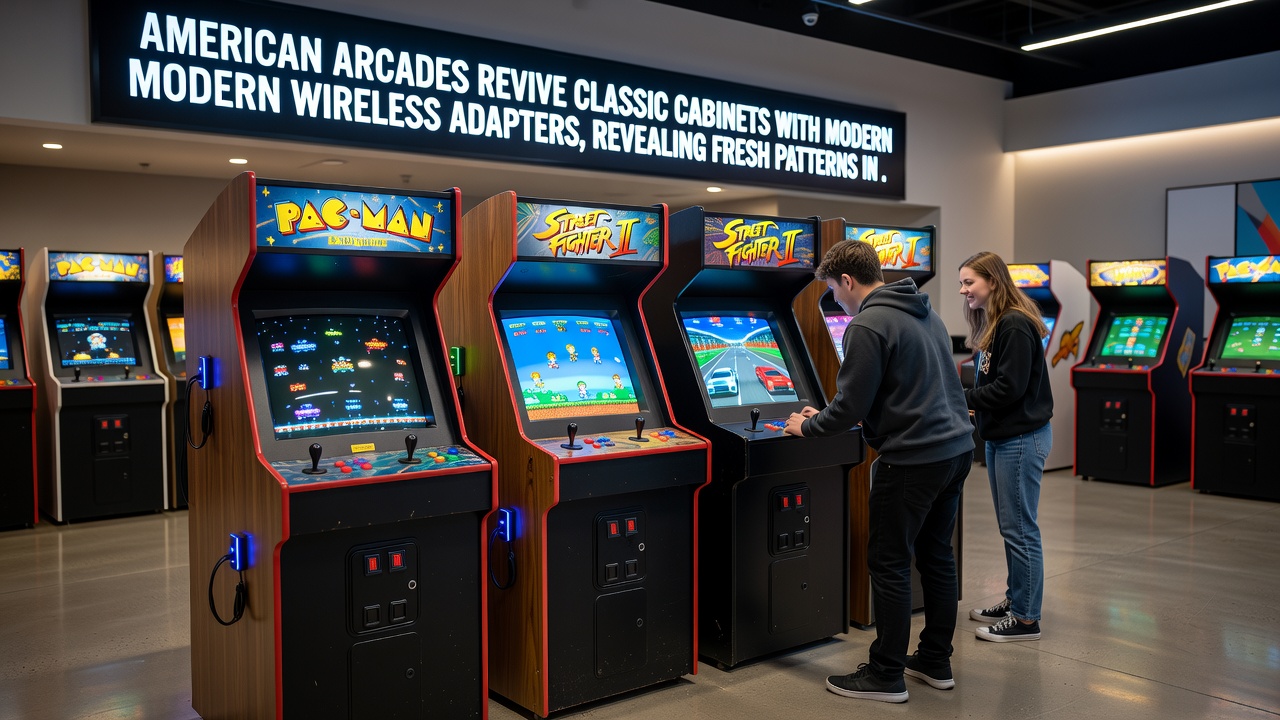
Technicians install compact wireless modules that connect directly to the original control boards inside cabinets such as Pac-Man, Galaga, and Donkey Kong, while preserving the mechanical integrity of joysticks and buttons. These modules transmit signals to nearby receivers or mobile apps, allowing operators to monitor usage statistics and adjust difficulty settings remotely during operating hours at county fairs and regional amusement centers. Observers note that installation times average under ninety minutes per unit when performed by crews familiar with legacy hardware, and the process requires no permanent alterations to the cabinet frame or artwork.
Local operators report that cabinets fitted with these adapters experience fewer service interruptions because wireless firmware updates can address input lag or calibration drift without opening the machine. Figures from venue logs indicate that uptime rates climbed by roughly twelve percent compared with wired configurations during the 2025 fair season, and similar patterns continued into the following summer across Midwest and Northeast locations.
Cross-Generational Play Patterns Emerge
Attendance records from state fairs reveal that groups spanning three generations now cluster around single cabinets for longer sessions than previously documented. Grandparents familiar with original releases often demonstrate techniques to younger relatives, while children introduce mobile-device pairing features that let additional players join via spectator apps. Researchers tracking session durations at venues in Ohio and Pennsylvania found average play times increased from four minutes to nearly seven minutes per engagement when wireless options were active, suggesting the adapters support collaborative rather than strictly competitive interactions.
One notable case involved a restored 1983 cabinet at the Iowa State Fair where operators logged over two hundred distinct player profiles in a single week, with nearly forty percent of sessions involving mixed-age groups. The wireless system allowed real-time score sharing to personal devices, which encouraged repeat visits throughout the event week.
Technical Specifications and Compatibility Details
Current wireless adapters operate on the 2.4 GHz and 5 GHz bands with latency under eight milliseconds in controlled tests conducted by university engineering labs. Compatibility extends to most JAMMA-standard boards produced between 1980 and 1995, and manufacturers supply adapter kits that include power regulation circuits to prevent voltage fluctuations common in older power supplies. Maintenance crews replace only the interface board rather than the entire control harness, which keeps restoration costs below four hundred dollars per unit according to supplier invoices shared among regional arcade associations.
Industry groups such as the International Association of Amusement Parks and Attractions have published guidelines recommending regular firmware audits to maintain signal security across shared fairground networks. Separate studies from academic research centers indicate that signal interference remains minimal when multiple cabinets operate within fifty feet of each other, provided channel selection follows standard spacing protocols.
Regional Adoption Trends Through Mid-2026
Western states show faster uptake in permanent arcade locations, whereas Southern and Mid-Atlantic fairs have focused installations on portable units that travel between events. California venues reported deploying adapters in thirty-five additional cabinets during the first half of 2026, while Texas fair operators prioritized units with outdoor-rated enclosures to handle higher ambient temperatures. Usage analytics shared among operators reveal that peak activity occurs between 6 p.m. and 10 p.m., with weekend evenings generating nearly sixty percent of total play hours across sampled locations.
Payment integration has also evolved alongside the adapters. Many cabinets now accept contactless mobile payments through the same wireless module, reducing the need for coin mechanisms and allowing dynamic pricing during slower daytime hours. Transaction data collected through August 2026 indicates a fifteen percent rise in revenue per cabinet when contactless options accompany the wireless control features.
Conclusion
Wireless adapter adoption continues to reshape how classic cabinets function within American fairgrounds and local venues, and the resulting data sets document expanded participation across age ranges without requiring replacement of original hardware. Continued monitoring through the remainder of 2026 will clarify whether these patterns stabilize or shift further as additional regions complete installations and refine operational procedures.