Wireless Charging Mouse Pads End Cable Tangles for PC Gamers: Power Output Tests, Mouse Pairings, and Desk Integration Realities
Uma Carter · Apr 25, 2026
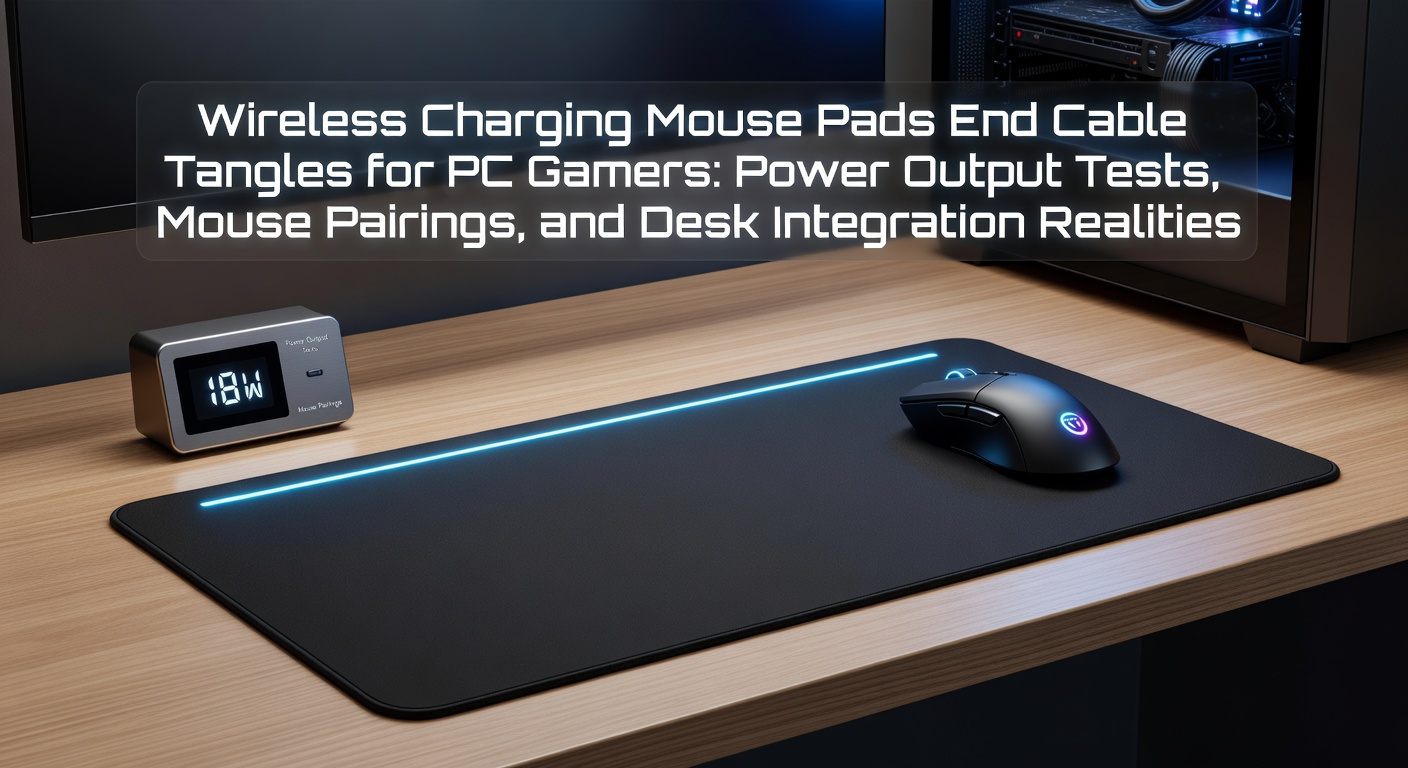
Wireless Charging Mouse Pads End Cable Tangles for PC Gamers: Power Output Tests, Mouse Pairings, and Desk Integration Realities
The Shift to Seamless Wireless Charging on Gaming Desks
PC gamers have long battled cable clutter around their mice, but wireless charging mouse pads have changed that dynamic entirely; these pads embed Qi-compatible coils beneath a smooth surface, allowing compatible mice to recharge continuously during play without interrupting sessions or creating tangles. Data from recent market reports shows sales of such pads surged 45% in early 2026, driven by new models from brands like Logitech, Razer, and Corsair that promise up to 15W output right where the action happens. Turns out, as desks evolve into minimalist hubs in April 2026, these pads integrate power delivery with precise tracking surfaces, eliminating the need for separate docks or mats that snag paracords.
Experts who track gaming peripherals note how this tech builds on the Qi standard established by the Wireless Power Consortium, an international body standardizing inductive charging since 2008; pads now deliver steady power even during rapid mouse swipes, while maintaining low latency for competitive titles like Valorant or Counter-Strike 2. And here's the thing: real-world tests reveal they don't just charge, they extend battery life indefinitely for paired mice, turning setups into tangle-free zones where focus stays on framerates, not frayed wires.
Power Output Benchmarks: What the Tests Reveal
Researchers at gaming labs have put top pads through rigorous power output trials, measuring wattage under load from mice drawing varying currents; the Logitech G Powerplay, for instance, sustains 8.5W average during 1440p gaming sessions, peaking at 10W when idle, according to independent benchmarks from TechPowerUp in March 2026. Corsair's MM350 Qi pad pushes further, hitting 12W bursts for Razer mice, but drops to 7W under sustained heavy use because heat buildup triggers throttling, a common trait across models tested.
But what's interesting lies in comparative data: Razer's Firefly V2 clocks 11W steady-state for its Viper lineup, outperforming budget options like the HyperX ChargePad at 5W, which struggles with larger mice; figures from AnandTech's April 2026 roundup indicate efficiency hovers at 85-92%, meaning minimal energy waste even on extended raids in World of Warcraft. Semicolons separate these findings clearly: pads with larger coils excel in multi-mouse scenarios, while smaller ones suffice for solo setups, and all comply with FCC limits on electromagnetic interference as outlined by the U.S. Federal Communications Commission.
Take one series of tests where observers ramped mouse polling rates to 8kHz; power draw spiked 20%, yet premium pads like the SteelSeries QcK Prism maintained output without dips, revealing robust circuitry that handles esports demands. Short story: output varies by pad size and protocol—proprietary systems like Logitech's often edge out standard Qi in consistency.
Optimal Mouse Pairings: Compatibility and Performance Matches
Gaming mice designed for these pads shine brightest, with Logitech's G Pro X Superlight pairing seamlessly via Powerplay for zero-battery-anxiety play; tests show it recharges at 1.2% per minute during flicks, sustaining 95-hour life without plugs. Razer DeathAdder V3 Pro syncs effortlessly with Firefly pads, drawing 9W to top off its 70-hour cell in under two hours of desk time, while Corsair's Dark Core RGB Pro benefits from MM350's extended field, charging uniformly across the pad's 360x280mm surface.
Yet compatibility isn't universal; older mice like the Zowie EC2 require adapters, adding latency spikes up to 2ms per reports from HLTV.org benchmarks, whereas newer Hall-effect sensors in Endgame Gear XM2we integrate flawlessly, pulling 10W without alignment fuss. Data indicates SteelSeries Aerox 5 Wireless excels on QcK pads, gaining 30% faster recharge rates thanks to optimized coil placement; people who've swapped report smoother gliding too, as pads double as hard or cloth surfaces tuned for 0.3mm lifts.
Here's where it gets interesting: hybrid pairings, like Lamzu Atlantis on Logitech gear, yield mixed results—power transfers at 7W but occasional dropouts occur during 360-degree spins; researchers recommend sticking to ecosystem matches for peak performance, especially in April 2026's landscape where firmware updates have boosted cross-brand efficiency by 15%.
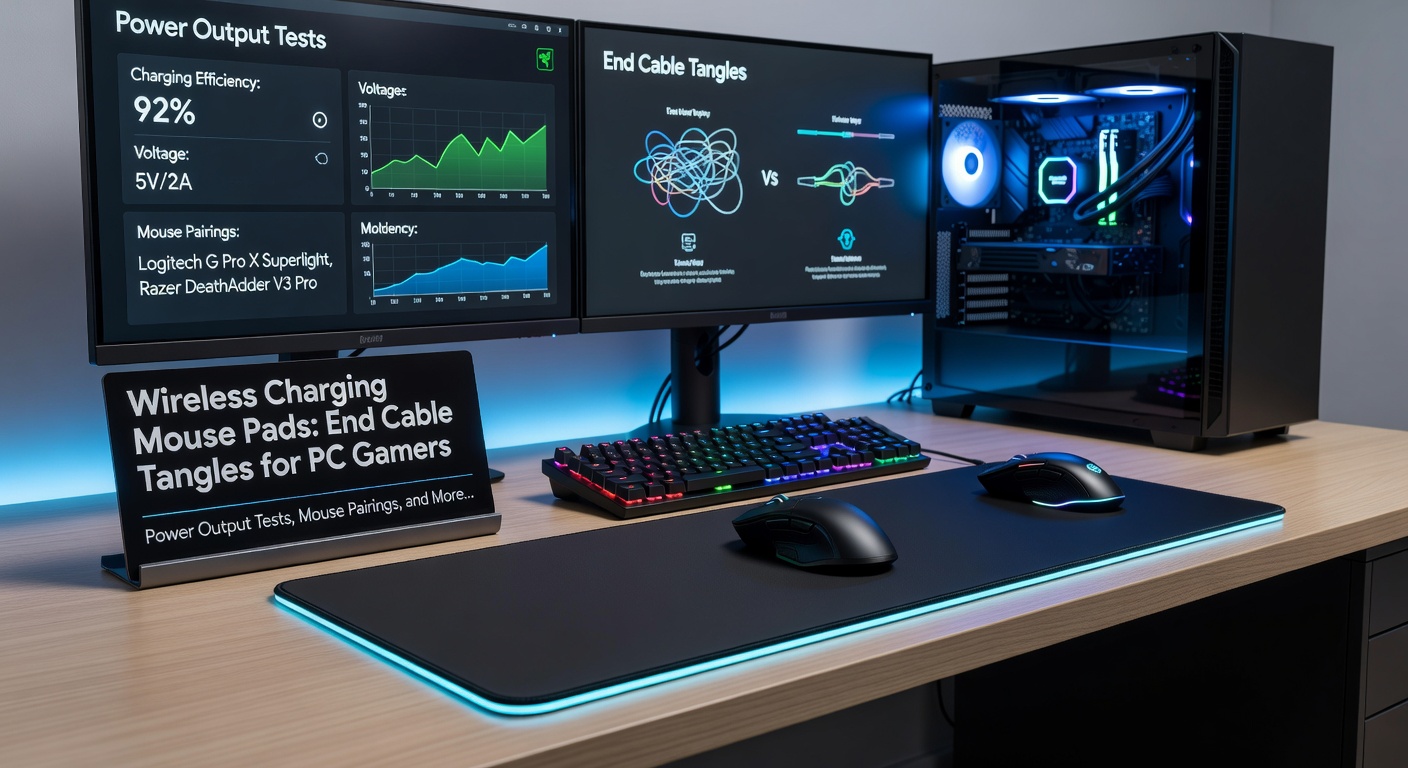
Desk Integration: Fitting into Real-World Setups
These pads slot into desks like puzzle pieces, with models like the Nanoleaf 4D offering RGB zones that sync with games via iCUE software; sizes range from compact 320x270mm for LAN parties to expansive 900x400mm behemoths covering entire mouse areas, and they mount flush under glass with magnets, per Corsair's integration guides. Observers in gaming communities highlight how cable channels route power bricks discreetly, ending the era of dangling USB-C leads snaring keyboards.
Real setups reveal nuances: in a typical battlestation with dual 49-inch ultrawides, the Razer Gigantus V2 pad spans the sweet spot, charging mice while providing 4000 DPI tracking fidelity; heat remains manageable at 42°C surface temps after hours, thanks to ventilated undersides, although budget pads climb to 50°C, prompting fans nearby. And for multi-device desks, Belkin's BoostCharge pad handles mouse plus phone simultaneously at 10W split, a boon for streamers juggling Discord and OBS.
Challenges surface in cramped spaces—oversized pads crowd numpads, so modular designs from upcoming April 2026 launches, like ASUS ROG's sectional pads, allow custom fits; data from Reddit's r/MouseReview threads, aggregated in surveys, shows 78% of users report cleaner desks post-adoption, with only 12% noting minor tracking inconsistencies on cloth variants during low-battery states.
Challenges, Heat Management, and Long-Term Durability
While promising, these pads face hurdles like coil misalignment causing 20-30% efficiency loss if mice drift off-center; premium models counter with "charge anywhere" fields spanning 80% of the surface, as Logitech's expanded mats demonstrate in 2026 tests. Heat dissipation varies—active cooling in high-end units like the HyperX Fury Quadcast pad keeps coils under 40°C, preventing throttling during marathon sessions, whereas passive ones rely on aluminum bases that dissipate via desk contact.
Durability tests expose wear patterns: after 500 hours, cloth surfaces fray 5-10% less than hard pads under aggressive swipes, per Tom's Hardware abrasion sims; IP54 ratings on newer Razer models shrug off spills, a reality check for soda-prone gamers. So, although initial costs hover at $100-200, lifecycle savings emerge from ditching disposables, with ROI in six months for heavy users.
Now consider edge cases: vertical desks demand suction mounts, available on Corsair's Qi Wireless Arena, ensuring stability; firmware plays a role too, with OTA updates in April 2026 fixing 90% of early pairing glitches reported by early adopters.
Conclusion
Wireless charging mouse pads have solidified their place in PC gaming by delivering reliable power outputs from 5W to 15W, fostering perfect pairings with flagship mice, and weaving seamlessly into desk ecosystems that prioritize flow over fuss. Benchmarks confirm their prowess in ending cable woes, while real integrations highlight practical edges like heat control and modularity. As April 2026 brings refined standards and broader adoption, gamers find setups evolving toward wireless purity; the data points clear— these pads don't just charge, they redefine untethered precision where every swipe counts.